

Mass Loaded Vinyl Weight, Thickness, and Performance
- Mass Loaded Vinyl Weight, Thickness, and Performance: What You Need to Know
- What is mass loaded vinyl (MLV) and why it matters for soundproofing
- How mass (weight) and thickness affect acoustic performance
- Mass vs. thickness: which is more important?
- Common MLV weights, thicknesses, and expected results
- Typical product grades and field performance
- Performance metrics: STC, NRC, and transmission loss
- Understanding what metrics tell you
- Installation considerations that affect real-world performance
- Sealing, attachment method, and flanking paths
- Using MLV for different applications: walls, floors, ceilings, and doors
- How application changes product choice
- Comparing MLV with other soundproofing strategies
- When to choose MLV versus more mass or isolation
- Longevity, durability, and maintenance
- Expectations for lifespan and care
- How to choose the right MLV for your project
- Checklist for selecting weight, thickness, and accessories
- ASLONG Mass Loaded Vinyl — Product introduction and brand strengths
- ASLONG MLV: practical description
- Why choose ASLONG for MLV
- Practical project examples and estimated outcomes
- Case scenarios
- FAQ — Mass Loaded Vinyl Weight, Thickness, and Performance
- Q: Does thicker MLV always mean better soundproofing?
- Q: How much STC improvement can I expect by adding MLV?
- Q: Will MLV reduce impact noise (footsteps)?
- Q: Can I install MLV myself?
- Q: Are there fire code or VOC concerns?
- Contact ASLONG / See product
- Ready to buy or need help selecting the right MLV?
- Sources and further reading
- Final note
- Takeaway

Mass Loaded Vinyl Weight, Thickness, and Performance: What You Need to Know
What is mass loaded vinyl (MLV) and why it matters for soundproofing
Mass loaded vinyl (MLV) is a flexible, high-mass membrane designed to block airborne sound by adding mass to building assemblies. It is widely used in residential, commercial, and industrial applications to reduce noise transmission through walls, floors, ceilings, doors, and ductwork. Because it combines flexibility with high surface density, MLV is particularly useful when adding a rigid heavy layer (like extra drywall) is impractical. The basic mechanism behind MLV's performance is the mass law: higher mass per area reduces sound transmission, especially at mid and high frequencies.
How mass (weight) and thickness affect acoustic performance
Mass vs. thickness: which is more important?
Mass is the primary driver of MLV performance. The greater the mass per unit area (commonly specified in lb/ft² or kg/m²), the more effective the material is at blocking airborne noise. Thickness matters mainly as a practical measure of how the mass is distributed and how the product handles (installation, flexibility, and trim details). Two products with the same areal mass but different thicknesses can behave similarly in terms of basic transmission loss, but thickness can influence low-frequency behavior, flanking paths, and how easily the product seals around edges and penetrations.
Common MLV weights, thicknesses, and expected results
Typical product grades and field performance
Manufacturers commonly produce MLV in several standard weights. Below is a concise reference table summarizing typical weights, approximate thicknesses, metric conversions, and practical performance expectations when MLV is correctly installed as part of a wall or floor assembly.
| Common Spec | Thickness (typical) | Mass per area (approx.) | Typical expected improvement (STC or dB) | Notes / Typical uses |
|---|---|---|---|---|
| 1.0 lb/ft² | ~0.06–0.10 (1.5–2.5 mm) | ~4.88 kg/m² | Wall: +4–8 STC points; general airborne reduction 3–8 dB | Lightweight partition upgrades, behind cabinets, retrofit walls |
| 1.5 lb/ft² | ~0.08–0.12 (2–3 mm) | ~7.32 kg/m² | Wall: +6–10 STC points; better low-mid frequency performance | Common for general retrofit soundproofing in residential/commercial |
| 2.0 lb/ft² | ~0.10–0.16 (2.5–4 mm) | ~9.76 kg/m² | Wall: +7–12 STC points; improved low-frequency blocking | Studio walls, critical partitions, industrial noise control |
Sources for typical product specs and performance ranges include manufacturer data sheets and acoustical suppliers (see sources list at the article end). Actual performance depends strongly on installation quality and the baseline assembly (stud spacing, insulation, drywall layers, gaps, and flanking paths).
Performance metrics: STC, NRC, and transmission loss
Understanding what metrics tell you
- STC (Sound Transmission Class) rates how well an assembly reduces speech-frequency airborne sound. It is commonly used for walls and floors.
- NRC (Noise Reduction Coefficient) measures how much sound is absorbed by a material (relevant for reverberation inside rooms), and MLV is not an absorptive product—its NRC is low because it’s designed to block, not absorb.
- Transmission loss (TL) and insertion loss are frequency-dependent measures that show how many decibels of reduction a barrier provides at each frequency.
MLV contributes to STC improvement primarily by increasing the mass of the partition. However, because STC averages across mid-range frequencies, adding MLV may improve STC less dramatically at low frequencies unless combined with other measures (decoupling, absorptive layers, sealed edges).
Installation considerations that affect real-world performance
Sealing, attachment method, and flanking paths
Even the highest-mass MLV will underperform if installed poorly. Key installation tips:
- Seal all edges and seams with acoustic caulk or properly lapped and taped seams to prevent leaks.
- Avoid rigid mechanical fasteners that create flanking vibrations; use screws with washers or adhesive as recommended by manufacturer.
- Combine MLV with insulation and resilient channels where possible to improve low-frequency performance and reduce structure-borne transmission.
- Pay special attention to penetrations (outlets, ducts) and perimeter connections; these are common weak points.
Correct installation typically yields the performance improvements listed earlier; poor sealing may reduce gains by 50% or more in practice.
Using MLV for different applications: walls, floors, ceilings, and doors
How application changes product choice
- Walls: 1.5–2.0 lb/ft² is common for retrofit projects. Apply MLV behind a finish layer (drywall or paneling) and seal perimeter joints.
- Floors: heavier grades (1.5–2.0 lb/ft²) are used under floating floors for airborne sound; note that MLV does not address structure-borne impact noise by itself—use underlayments rated for impact isolation.
- Ceilings: often paired with resilient channel and insulation to reduce sound from above; sealing and mass layering matter more than mere thickness.
- Doors: MLV can be applied to door faces or used as a door wrap to increase mass and reduce transmission—heavier MLV works better but watch clearance and fire code requirements.
Comparing MLV with other soundproofing strategies
When to choose MLV versus more mass or isolation
MLV is a high-value option when adding mass without major construction is required (thin, heavy, flexible). Compare options:
- Extra drywall (double-layer) adds mass but increases thickness and weight on structure.
- Resilient channels and decoupling address low-frequency and structure-borne sound, often complementary to MLV.
- Absorptive materials (fiberglass, mineral wool) reduce reverberation and high-frequency transmission but do not add blocking mass.
Often the best solution combines MLV with insulation and either additional drywall or decoupling, depending on whether airborne blocking (MLV) or impact/structure vibration (decoupling, isolation mounts) is the dominant issue.
Longevity, durability, and maintenance
Expectations for lifespan and care
Quality MLV products are durable, moisture-resistant, and can last decades if not mechanically damaged. They do not rot and are chemically stable in typical indoor environments. For long-term performance:
- Avoid compressing or puncturing the barrier.
- Keep seams and edges sealed — inspect after major building work.
- Use appropriate fire-rated products where building codes require; some MLV variants are formulated to meet specific flame-spread ratings.
If a location is exposed to UV or direct sunlight, protect the membrane with a finish layer such as drywall or cladding.
How to choose the right MLV for your project
Checklist for selecting weight, thickness, and accessories
1) Identify the noise source and dominant frequencies (speech, music, machinery).
2) Determine structural constraints: how much additional thickness and weight the assembly can support.
3) Choose an areal mass appropriate to the expected performance: 1.0 lb/ft² for light improvements, 1.5 lb/ft² for general retrofit work, 2.0 lb/ft² for demanding applications.
4) Plan for sealing: order acoustic caulk, seam tape, and appropriate fasteners or adhesive.
5) Consider complementary measures: insulation, resilient channels, or decoupling to improve low-frequency results.
If in doubt, request manufacturer-backed installation guidance and field-test data for assemblies similar to your project.
ASLONG Mass Loaded Vinyl — Product introduction and brand strengths
ASLONG MLV: practical description
ASLONG Mass Loaded Vinyl for sale. Reduce noise pollution effectively with our high-quality, mass-loaded vinyl. Ideal for soundproofing walls, floors, and more. Buy now and experience the difference!
Why choose ASLONG for MLV
ASLONG positions its MLV products toward practical retrofit and commercial use, offering multiple weight grades, factory-cut rolls, and installation accessories. Brand advantages you can expect:
- Multiple weight options (1.0 / 1.5 / 2.0 lb/ft²) to match budget and performance needs.
- Factory-backed installation guidance and technical support.
- Durable, flexible membrane suitable for indoor applications where adding mass without major reconstruction is required.
- Competitive pricing for contractors and bulk purchasers.
Combining ASLONG MLV with proper sealing and complementary soundproofing techniques yields predictable, measurable improvements in airborne sound control for most typical building scenarios.
Practical project examples and estimated outcomes
Case scenarios
- Apartment wall retrofit: adding 1.5 lb/ft² MLV behind 1/2 drywall plus insulation can often move an STC-40 wall into the STC-46–50 range for mid-frequency noise such as speech and TV (results vary by baseline construction).
- Home studio: using 2.0 lb/ft² MLV combined with resilient channels and double drywall helps reduce mid- to high-frequency bleed and improves perceived privacy and recording quality.
- Restaurant HVAC ducts: wrapping ducts with 1.0–1.5 lb/ft² MLV reduces airborne duct-borne noise transmitted into dining areas.
Always validate expectations through product-specific data and, when possible, consult an acoustical professional for high-stakes installations.
FAQ — Mass Loaded Vinyl Weight, Thickness, and Performance
Q: Does thicker MLV always mean better soundproofing?
A: Not necessarily. Areal mass (lb/ft² or kg/m²) is the primary determinant. Thickness can matter for handling and some frequency behavior, but a heavier (higher mass) thin product can outperform a thicker lighter one if mass is greater. Focus on specified mass per area and consider installation quality.
Q: How much STC improvement can I expect by adding MLV?
A: Typical improvements range from +4 to +12 STC points depending on the mass used and the baseline construction. Light upgrades (1.0 lb/ft²) commonly yield smaller gains; 1.5–2.0 lb/ft² gives larger, more noticeable improvements. Exact numbers depend on assembly and installation.
Q: Will MLV reduce impact noise (footsteps)?
A: MLV primarily blocks airborne noise. It helps little for impact noise unless combined with impact-rated underlayments or decoupling systems designed to absorb and isolate structure-borne vibrations.
Q: Can I install MLV myself?
A: Yes — many DIYers install MLV successfully. Key steps are careful sealing of seams and perimeters, correct fastening or adhesive use, and following manufacturer guidance. For complex or code-sensitive projects, consult a professional.
Q: Are there fire code or VOC concerns?
A: Some MLV products have flame-spread or smoke development ratings; check product datasheets for compliance with local building codes. Also confirm VOC and off-gassing data if installing in sensitive indoor environments.
Contact ASLONG / See product
Ready to buy or need help selecting the right MLV?
The weight, thickness, and performance of MLV are critical when considering Mass Loaded Vinyl for industrial noise control, where higher decibel reduction and durability are essential.For pricing, detailed technical sheets, or sample requests, contact our sales team or visit the product page. ASLONG offers multiple weights and roll sizes to suit residential and commercial projects. Contact us to get product recommendations and installation guidance tailored to your application.
Sources and further reading
- Acoustical Surfaces — Mass Loaded Vinyl product information and specifications: https://www.acousticalsurfaces.com/soundproofingmaterials/massloadedvinyl.htm
- Green Glue Company — QuietBarrier membrane product details: https://www.greengluecompany.com/quietbarrier/
- Soundproof Cow — Mass Loaded Vinyl product pages and installation tips: https://www.soundproofcow.com/mass-loaded-vinyl/
- Soundproofing Company — MLV technical data and recommendations: https://www.soundproofingcompany.com/mass-loaded-vinyl/
These sources were used for typical product specifications, weight-to-thickness relationships, and common field performance ranges. Always consult manufacturer technical data and test reports for project-specific values.
Final note
Takeaway
Choosing the right mass loaded vinyl means balancing areal mass, installation practicality, and complementary soundproofing measures. ASLONG Mass Loaded Vinyl provides multiple weight options and support materials so you can select a solution that meets your noise-control goals while fitting the physical constraints of your project. For the best results, prioritize sealing, proper attachment, and pairing MLV with insulation or decoupling when low-frequency reduction is needed.
Where to Buy mass loaded vinyl in USA
Top automotive sound insulation materials for car manufacturers
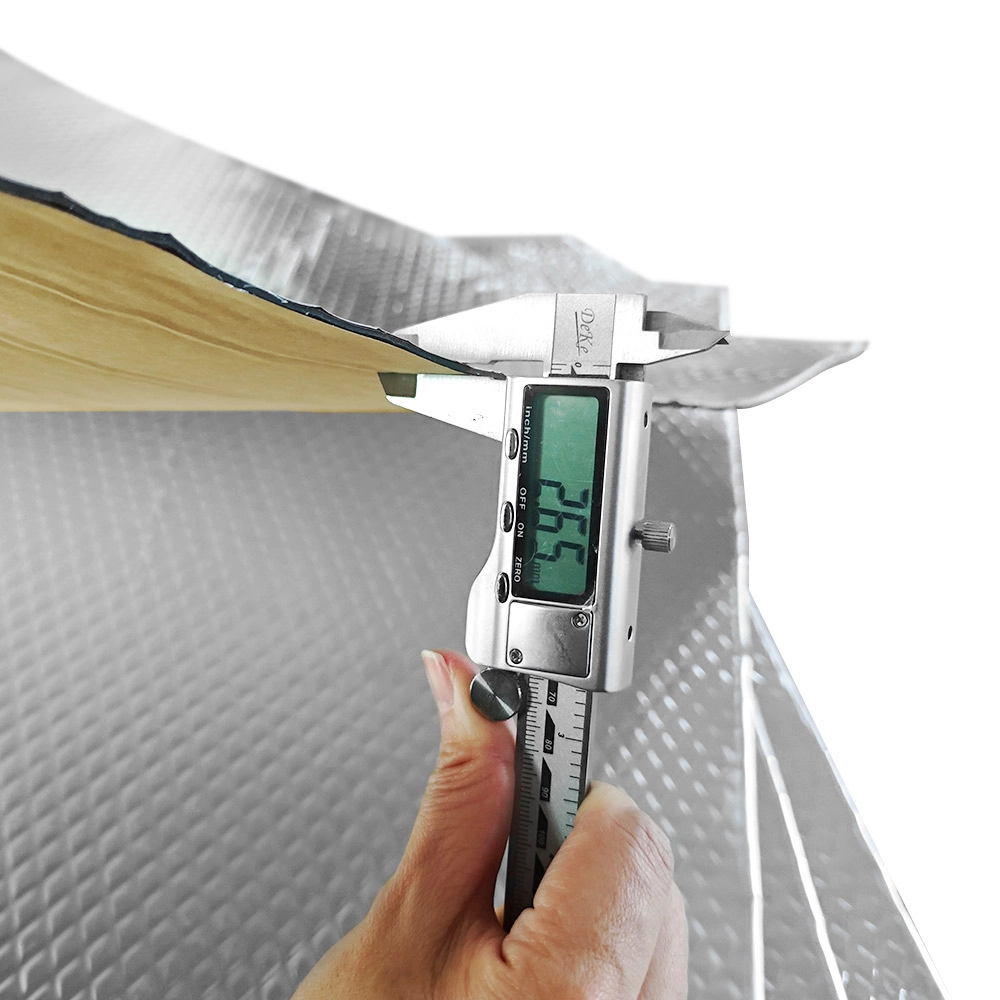
Procurement Checklist for Car Sound Damping Sheet Suppliers
Top 5 NBR foam insulation Company List and Products Compared
FAQs
How to customize products that meet the needs of my industry?
You only need to contact our sales or technical team, we will conduct an in-depth analysis based on your industry needs and provide tailor-made products and solutions. We guarantee to provide you with efficient and accurate services to meet your personalized requirements.
Do ASLONG's products meet environmental protection standards?
Yes, all ASLONG products comply with ISO14001 environmental management system certification and global environmental protection standards. We use environmentally friendly materials and are committed to providing sustainable solutions to help customers achieve green development goals.
Does ASLONG provide after-sales service?
Yes, we provide a full range of after-sales services, including technical support, installation guidance, product maintenance and quality tracking, etc., to ensure that each project goes smoothly and continues to perform at its best.
What industries are the products provided by ASLONG suitable for?
ASLONG's products are suitable for multiple industries, including air conditioning and HVAC, construction and waterproofing, automobiles and transportation, home appliances and electronics, industrial equipment and machinery, etc. We provide customized solutions for each industry to meet different needs.
What specific functions can ASLONG's products provide?
Our products cover functions such as insulation, sound insulation, shock absorption, waterproofing and sealing, and are widely used in improving energy efficiency, reducing noise, controlling vibration, protecting equipment, etc., helping customers optimize engineering effects and improve user experience.
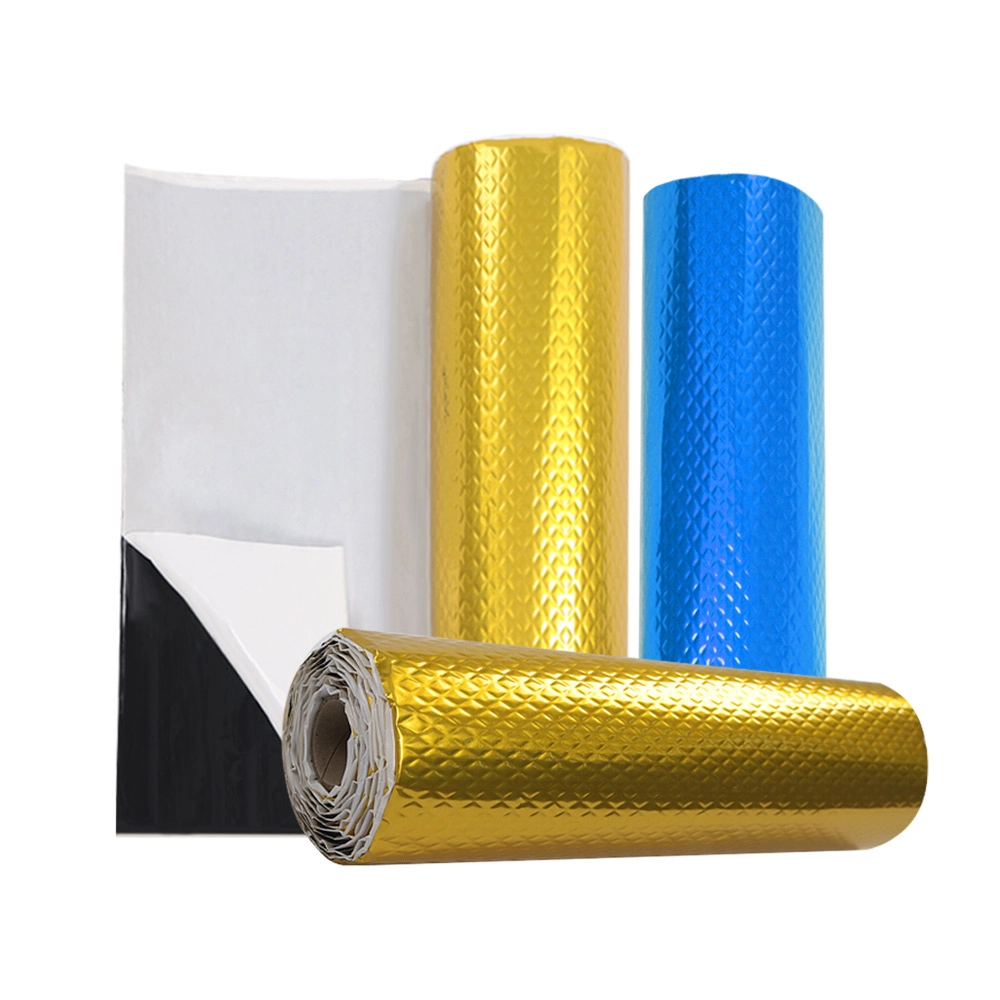
Butyl Rubber Sound Damping Mat
ASLONG Butyl Rubber Sound Damping Mat for sale. Effectively reduces noise and vibrations. High-quality butyl rubber ensures superior performance and durability. Ideal for automotive, industrial, and home applications.
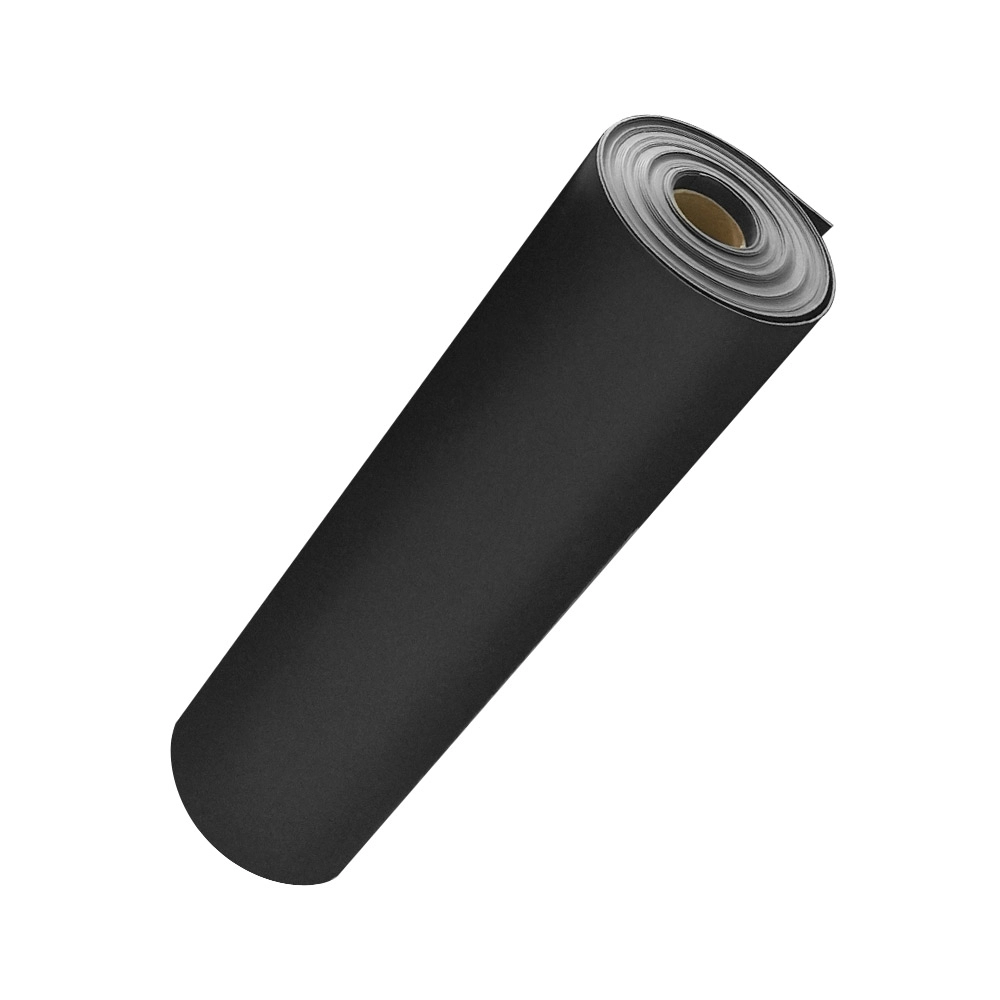
Mass Loaded Vinyl
ASLONG Mass Loaded Vinyl for sale. Reduce noise pollution effectively with our high-quality, mass-loaded vinyl. Ideal for soundproofing walls, floors, and more. Buy now and experience the difference!
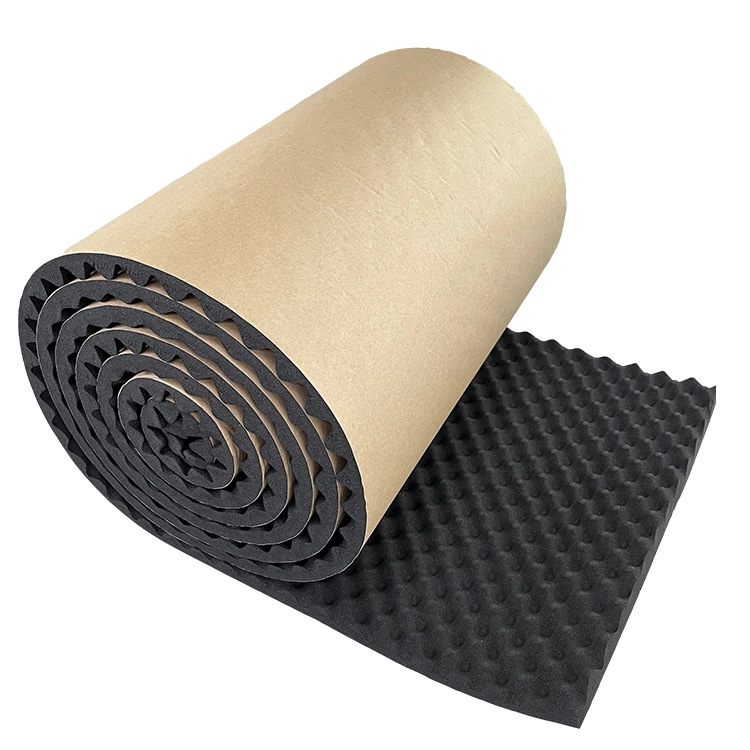
Egg Crate Foam
ASLONG Egg Crate Foam for sale. Lightweight, breathable, and comfortable, our egg crate foam provides superior support and pressure relief. Perfect for mattresses, cushions, cars, construction industry, KTV, factories, etc.
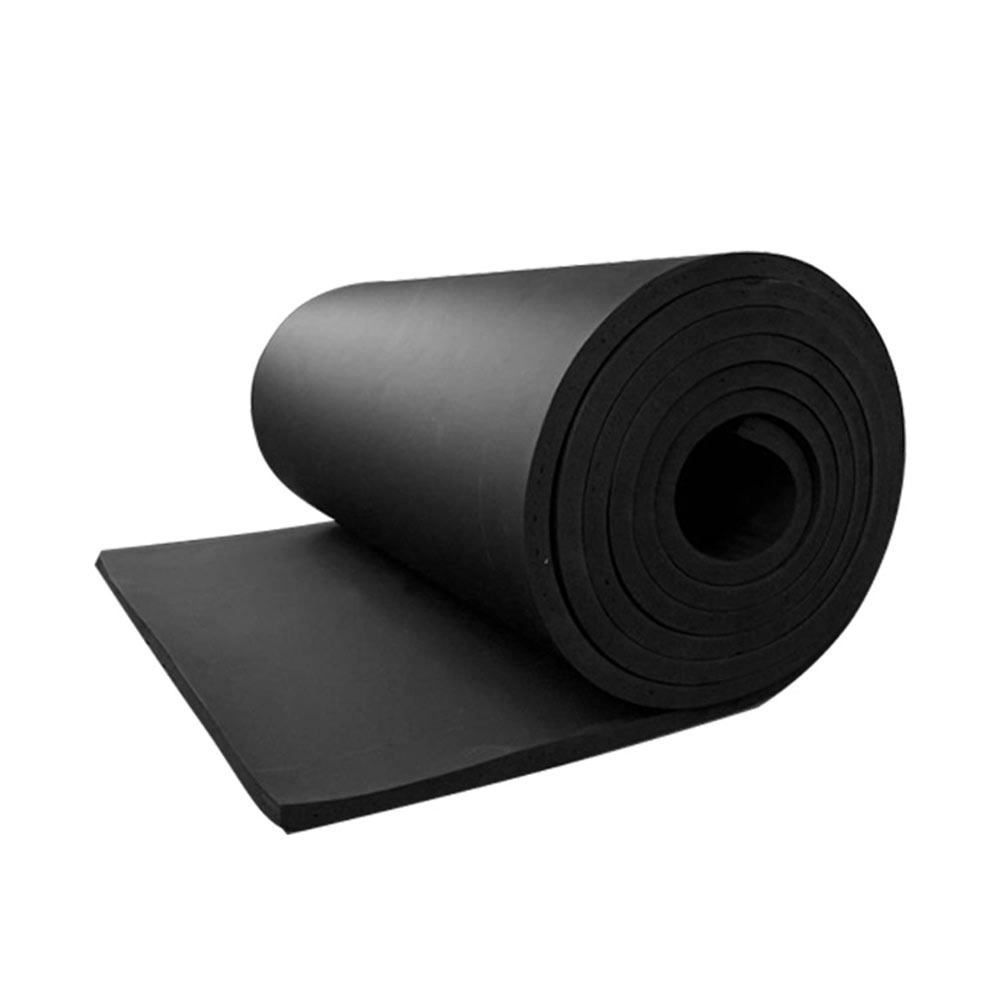
NBR Foam
ASLONG NBR Foam: Wholesale NBR foam solutions for diverse applications. High-quality, durable, and competitively priced. Contact us today for bulk orders.
Professional support at any time
If you have any comments or good suggestions, please leave us a message; later our professional staff will contact you as soon as possible.
© 2026 ASLONG All Rights Reserved. Privacy Policy | Terms and Conditions | Sitemap

 It would be pleasure to receive from you.
Whatsapp: +8613242879341
ASLONG Global
ASLONG
Aslong_global