

Best Sound Deadening Material For Car In 2026
A comprehensive 2026 guide to automotive sound deadening, covering the science of noise reduction, detailed material comparisons (Butyl, MLV, NBR), installation steps, and future trends.
- Introduction: Why Silence Matters in Your Car
- Understanding Automotive Noise: The Enemy Within (and Without)
- The Science of Silence: How Sound Deadening Works
- Comprehensive Breakdown of Sound Deadening Materials
- Choosing the Right Material for Your Vehicle and Needs
- The Ultimate DIY Sound Deadening Installation Guide
- Targeted Application Areas: Where to Apply Sound Deadening
- Beyond the Quiet: Additional Benefits of Sound Deadening
- Maintaining Your Silence: Longevity and Care
- The Future of Car Sound Deadening: Innovations and Trends
- Frequently Asked Questions
- References
Introduction: Why Silence Matters in Your Car
Driving should be a sanctuary, not a source of stress. However, for many, the constant hum of road friction, wind turbulence, and engine roar turns a daily commute into a fatigue-inducing ordeal. In 2026, the demand for a quieter cabin is higher than ever, driven by the rise of electric vehicles which, while quieter mechanically, often expose structural rattles and wind noise previously masked by combustion engines. Finding the best sound deadening for car applications is no longer just about audio system performance; it is about driver wellness and comfort.
Effective car noise insulation does more than just silence the outside world. It drastically improves thermal efficiency, reduces driver exhaustion caused by low-frequency drone, and creates a studio-quality environment for your music. Whether you are restoring a classic muscle car or refining a modern daily driver, understanding the nuances of car sound deadening is the first step toward a transformative driving experience.
Understanding Automotive Noise: The Enemy Within (and Without)
Before selecting a sound deadening material for car use, it is critical to distinguish between the different types of noise invading your cabin. According to automotive engineering standards, noise generally falls into two categories: airborne and structure-borne.
· Structure-borne Noise: This occurs when the vehicle's chassis and panels vibrate. Energy from the road, tires, and engine transfers into the metal, causing it to resonate like a drum skin. This is often perceived as a low-frequency "hum" or rattle.
· Airborne Noise: This is sound transmitting directly through the air and penetrating the vehicle's shell. Examples include wind rushing past the mirrors, traffic noise entering through thin glass or door seals, and exhaust notes.
Identifying the source is crucial because the solution for a vibrating door panel is physically different from the solution for blocking tire roar.
The Science of Silence: How Sound Deadening Works
To achieve a truly quiet ride, one must employ a multi-layered approach relying on three physical principles: Damping, Blocking, and Absorption.
1. Sound Damping (Vibration Control): This involves adding mass and viscoelastic properties to metal panels to stop them from resonating. When a panel tries to vibrate, the damping material resists this movement, converting the mechanical energy into low-level heat.
2. Sound Blocking (Transmission Loss): This requires a dense, heavy barrier to reflect airborne sound waves away from the cabin. The effectiveness is often measured by the material's Sound Transmission Class (STC).
3. Sound Absorbing (Decoupling): Porous materials trap sound waves within their structure, preventing them from bouncing around the cabin (reverberation). They also act as a "decoupler," creating a physical gap between the hard metal and the heavy blocking layer.
Comprehensive Breakdown of Sound Deadening Materials
Selecting the right car sound deadening material can be overwhelming. Below is a detailed breakdown of the primary materials used in professional automotive soundproofing.
1. Butyl Rubber Sound Damping Mats
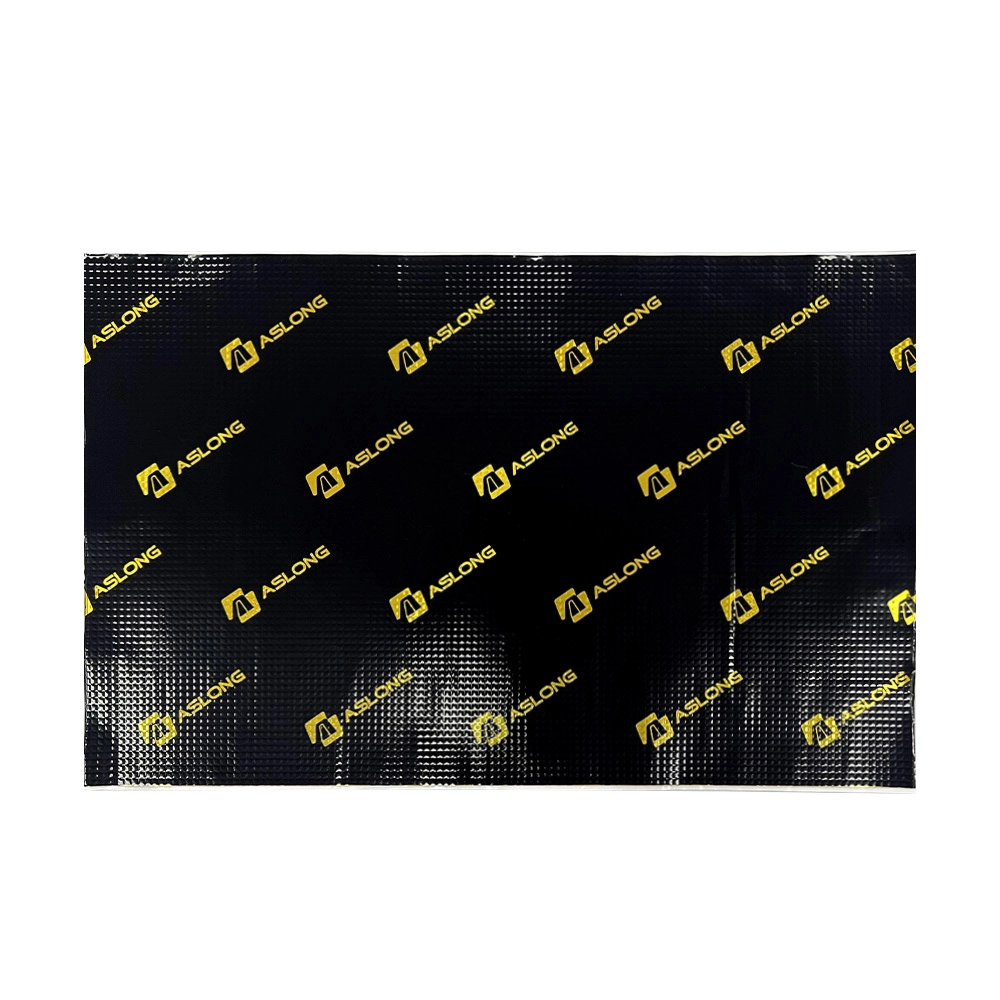
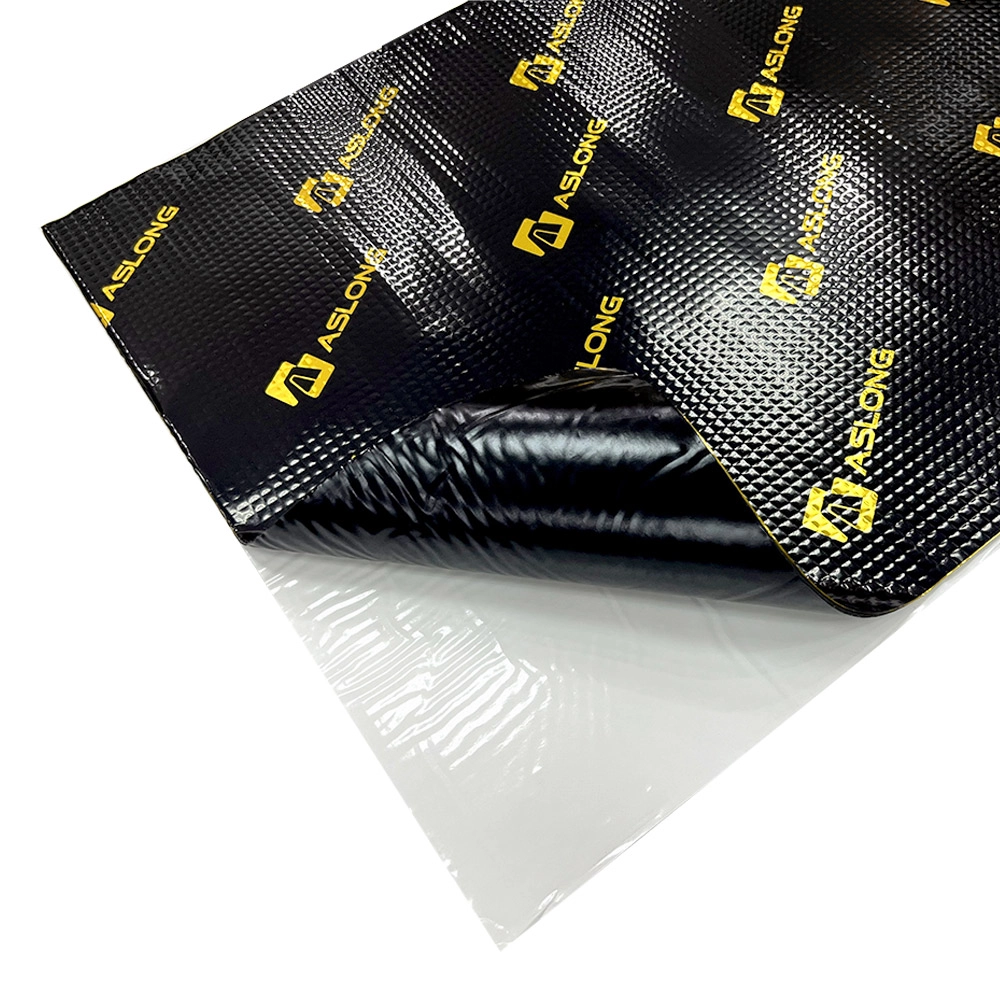
This is the foundation of any soundproofing project. High-quality car sound deadening mat options are made from butyl rubber with a foil constraint layer. Unlike old-school asphalt-based mats, butyl does not off-gas toxic chemicals or melt in high heat. It bonds directly to sheet metal to lower its resonant frequency.
2. Mass Loaded Vinyl (MLV)
For blocking airborne noise, mass loaded vinyl is the gold standard. As stated on Wikipedia and various acoustic engineering resources, MLV is a dense, flexible material—typically comprised of vinyl impregnated with heavy particles like barium sulfate or calcium carbonate. It acts as a heavy curtain that sound waves cannot easily penetrate. It is essential for floorboards and firewalls.
3. Closed Cell Foam (CCF) & NBR Foam
Foams serve as isolators. NBR foam (Nitrile Butadiene Rubber) is particularly effective because of its closed-cell nature, which makes it waterproof and an excellent thermal insulator. It is often used as a rubber mat roll layer between the butyl mat and the MLV to prevent the two dense layers from touching, maximizing the blocking effect.
Comparison Table: Material Types at a Glance
|
Material Type |
Primary Function |
Best Use Case |
Pros |
Cons |
|
Butyl Rubber Mat |
Vibration Damping |
Metal panels (Doors, Roof, Trunk) |
Excellent adhesion, heat resistant, stops rattles |
Does not block airborne noise well on its own |
|
Mass Loaded Vinyl (MLV) |
Sound Blocking |
Floor, Firewall, Wheel Wells |
High density, superior noise barrier |
Heavy, harder to install around curves |
|
Closed Cell Foam (CCF) |
Decoupling / Thermal |
Layered under MLV |
Waterproof, thermal insulation, prevents squeaks |
Minimal sound absorption |
|
Open Cell / Acoustic Foam |
Sound Absorption |
Door cavities, Headliner |
Reduces echo, lightweight |
Absorbs water (risk of rust/mold) |
Choosing the Right Material for Your Vehicle and Needs
When browsing for sound deadening for cars, consider your specific vehicle profile. A vintage restoration requires extensive sound deadening insulation car products to modernize the ride, whereas a newer luxury SUV might only need targeted treatment in the wheel wells.
· Budget vs. Performance: While it is tempting to save money, avoid asphalt-based products. They may look like a sound deadening material for car use, but they can become brittle and emit volatile organic compounds (VOCs).
· Material Safety: Always prioritize materials like butyl and NBR foam that are non-toxic and odorless.
· The Hybrid Approach: The most effective strategy is arguably to use a combination: a base layer of butyl, followed by a layer of CCF, and topped with MLV.
For a deeper dive into material composition, you should understand Why Butyl Rubber Is the Superior Choice for Sound Deadening before making a purchase.
The Ultimate DIY Sound Deadening Installation Guide
Installing car sound deadening is a labor-intensive but rewarding process. Here is how to achieve professional results.
Essential Tools
· Application Roller
· Utility Knife with heavy-duty blades
· Acetone or Alcohol (for cleaning)
· Heat Gun (optional, but helpful for stiff materials)
· Panel Removal Tools
Step-by-Step Installation
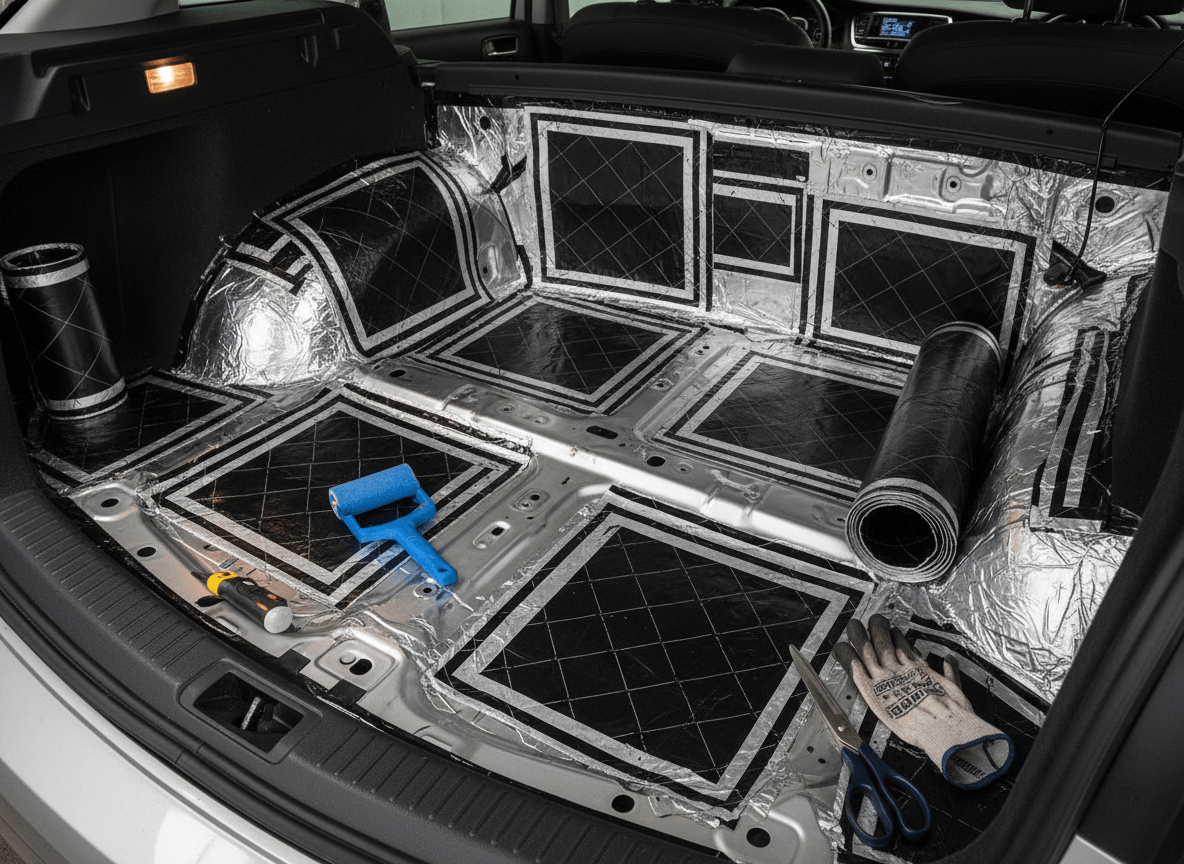
1. Strip and Clean: Remove seats, carpet, and door panels. Thoroughly clean the bare metal with a degreaser. Adhesion is key; if the surface is dirty, the mat will not stick.
2. Apply Vibration Damper: Cut your butyl car sound deadening mat to size. You do not need 100% coverage here—25% to 50% coverage on the center of flat panels is often sufficient to stop resonance. Roll it down firmly to eliminate air bubbles.
3. Layer the Decoupler: Apply a layer of Closed Cell Foam or NBR foam over the butyl. This provides thermal insulation and a cushion.
4. Install the Blocker: Measure and cut the mass loaded vinyl. Unlike the damper, MLV requires 100% coverage with no gaps. Seal seams with vinyl cement or specific acoustic tape to create an airtight barrier.
For a detailed walkthrough on this specific process, read our guide on how to Install Car Sound Insulation for Maximum Noise Reduction.
Common Pitfalls
· Ignoring Gaps: Even a small gap in your MLV layer allows sound to leak through, significantly reducing effectiveness.
· Over-application: Adding too many layers of heavy material can weigh down the vehicle, affecting fuel economy and suspension performance.
Targeted Application Areas: Where to Apply Sound Deadening
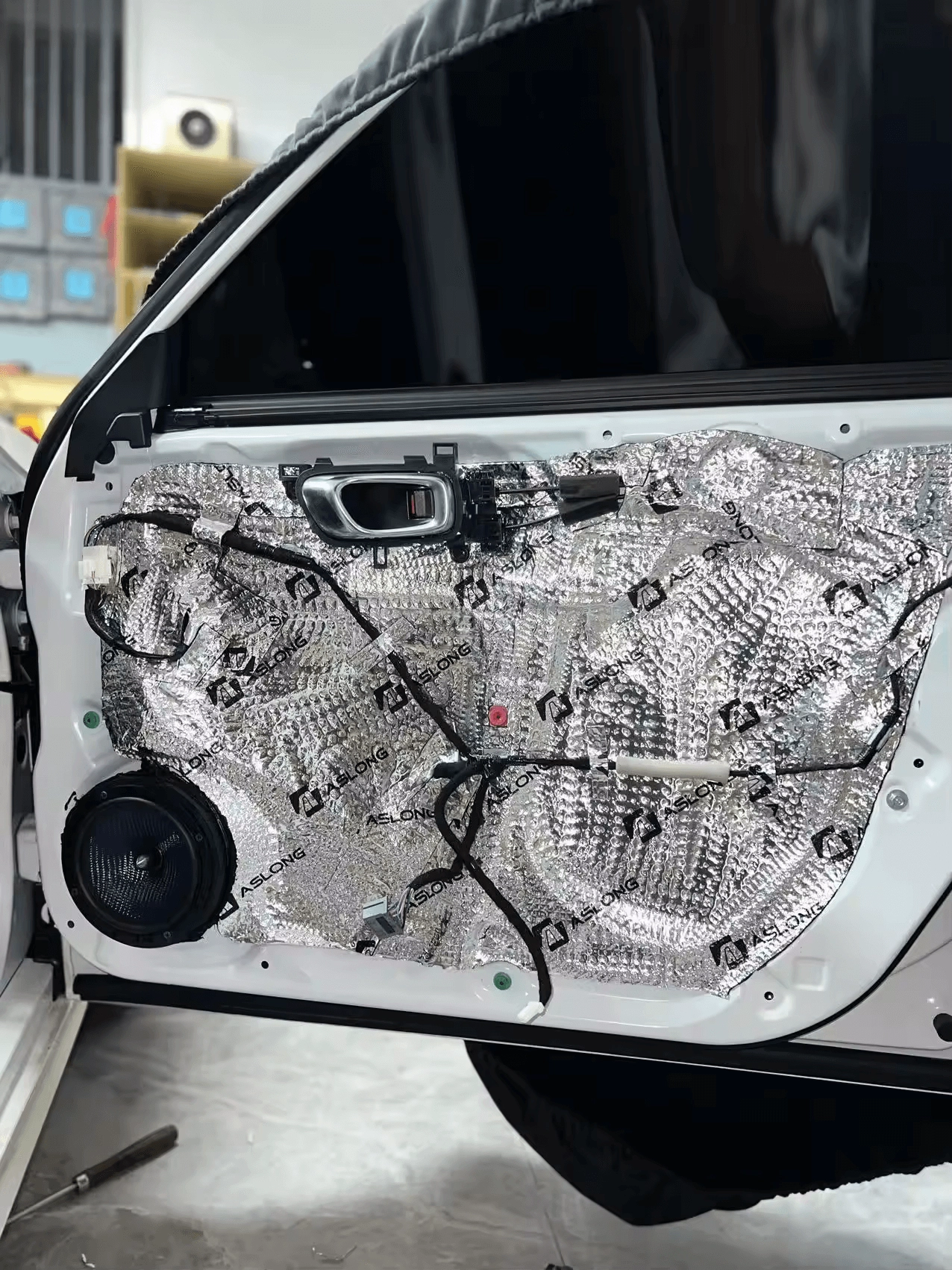
· Doors: The most common entry point for road noise. Treating the outer skin reduces traffic sound, while sealing the inner skin improves mid-bass response from speakers.
· Floorboards: A primary source of road roar and exhaust heat. A combination of butyl and MLV is essential here.
· Wheel Wells: High-impact areas for tire noise. Spray-on deadeners or heavy-duty MLV are recommended.
· Roof: Often overlooked, but damping the roof drastically reduces wind noise and rain drumming.
Beyond the Quiet: Additional Benefits of Sound Deadening
Investing in sound deadening insulation car systems offers high returns beyond silence.
1. Thermal Efficiency: Materials like NBR foam act as excellent insulators, reducing the load on your air conditioning by keeping heat out in summer and retaining warmth in winter.
2. Audio Fidelity: By killing panel resonance, your car speakers no longer have to compete with the vibrating metal door. The result is punchier bass and clearer vocals.
3. Solid Feel: A treated car door closes with a solid, premium "thud" rather than a hollow clang, enhancing the perceived quality of the vehicle.
Maintaining Your Silence: Longevity and Care
High-quality butyl and vinyl materials are designed to last the life of the vehicle. However, it is vital to check for water ingress periodically. If water gets trapped behind a layer of open-cell foam, it can lead to rust. This is why closed-cell variants like NBR foam are preferred for wet areas like doors. Regular inspection of door drains ensures that your sound deadening material remains effective and your chassis stays rust-free.
The Future of Car Sound Deadening: Innovations and Trends
As we move into 2026, the industry is seeing a shift toward lightweight composites. Electric vehicle manufacturers are pushing for materials that offer high Sound Transmission Class (STC) ratings without the weight penalty of traditional mass loaded vinyl. We are also seeing the integration of "active" noise cancellation systems working in tandem with passive sound deadening for cars, using microphones to detect frequencies and speakers to cancel them out. Furthermore, eco-friendly materials using recycled fibers are becoming more prevalent, offering effective car noise insulation with a lower environmental footprint.
Frequently Asked Questions
How much sound deadening material do I need for my car?
The amount varies by vehicle size. A typical sedan requires approximately 36-50 sq ft of car sound deadening mat for 50% coverage of doors, floor, and trunk. For full coverage with MLV, measure the total surface area of the floor and firewall, typically 40-60 sq ft.
Can sound deadening material also help with car temperature?
Yes. Materials like NBR foam and closed-cell foam are excellent thermal insulators. They significantly reduce heat transfer from the engine and hot asphalt, improving the efficiency of your climate control system.
Is DIY sound deadening worth it, or should I hire a professional?
DIY is highly cost-effective and allows for custom attention to detail. However, stripping a car interior requires patience. If you are uncomfortable removing seats and trim panels, professional installation is recommended.
What's the difference between sound deadening, sound blocking, and sound absorbing?
· Deadening: Stops vibration (Butyl).
· Blocking: Stops airborne sound transmission (MLV).
· Absorbing: Reduces echo and reverb (Acoustic Foam).
Will sound deadening improve my car's audio quality?
Yes. It creates a stable, non-resonant baffle for speakers and lowers the noise floor, allowing you to hear subtle details in the music without cranking the volume.
How long does sound deadening material last?
Quality butyl-based materials can last 10-15 years or more without degrading. Asphalt-based materials may harden and crack within 3-5 years.
Can I use household insulation for car sound deadening?
No. Household insulation (fiberglass/rock wool) retains moisture, causing rust and mold. It is also not designed to withstand the intense vibration and temperature fluctuations of a vehicle.
What are the common mistakes to avoid during installation?
The most common mistake is poor surface preparation. If the metal isn't degreased, the material will peel off. Another error is leaving gaps in the blocking layer (MLV), which compromises its ability to stop noise.
References
Practical Case Studies: Door, Floor & Roof Soundproofing Solutions for Cars
Importance & Optimization of Soundproofing Materials in Electric Vehicles (EVs)
Where to Apply Sound Deadening Material in a Car for Maximum Effect
Butyl vs Bitumen Sound Damping: Which Material Is Best for Car Soundproofing?

Global Competitive Landscape of the Automotive Noise & Vibration Materials Industry (2026–2035)
FAQs
What industries are the products provided by ASLONG suitable for?
ASLONG's products are suitable for multiple industries, including air conditioning and HVAC, construction and waterproofing, automobiles and transportation, home appliances and electronics, industrial equipment and machinery, etc. We provide customized solutions for each industry to meet different needs.
Do ASLONG's products meet environmental protection standards?
Yes, all ASLONG products comply with ISO14001 environmental management system certification and global environmental protection standards. We use environmentally friendly materials and are committed to providing sustainable solutions to help customers achieve green development goals.
What specific functions can ASLONG's products provide?
Our products cover functions such as insulation, sound insulation, shock absorption, waterproofing and sealing, and are widely used in improving energy efficiency, reducing noise, controlling vibration, protecting equipment, etc., helping customers optimize engineering effects and improve user experience.
Does ASLONG provide after-sales service?
Yes, we provide a full range of after-sales services, including technical support, installation guidance, product maintenance and quality tracking, etc., to ensure that each project goes smoothly and continues to perform at its best.
How to customize products that meet the needs of my industry?
You only need to contact our sales or technical team, we will conduct an in-depth analysis based on your industry needs and provide tailor-made products and solutions. We guarantee to provide you with efficient and accurate services to meet your personalized requirements.
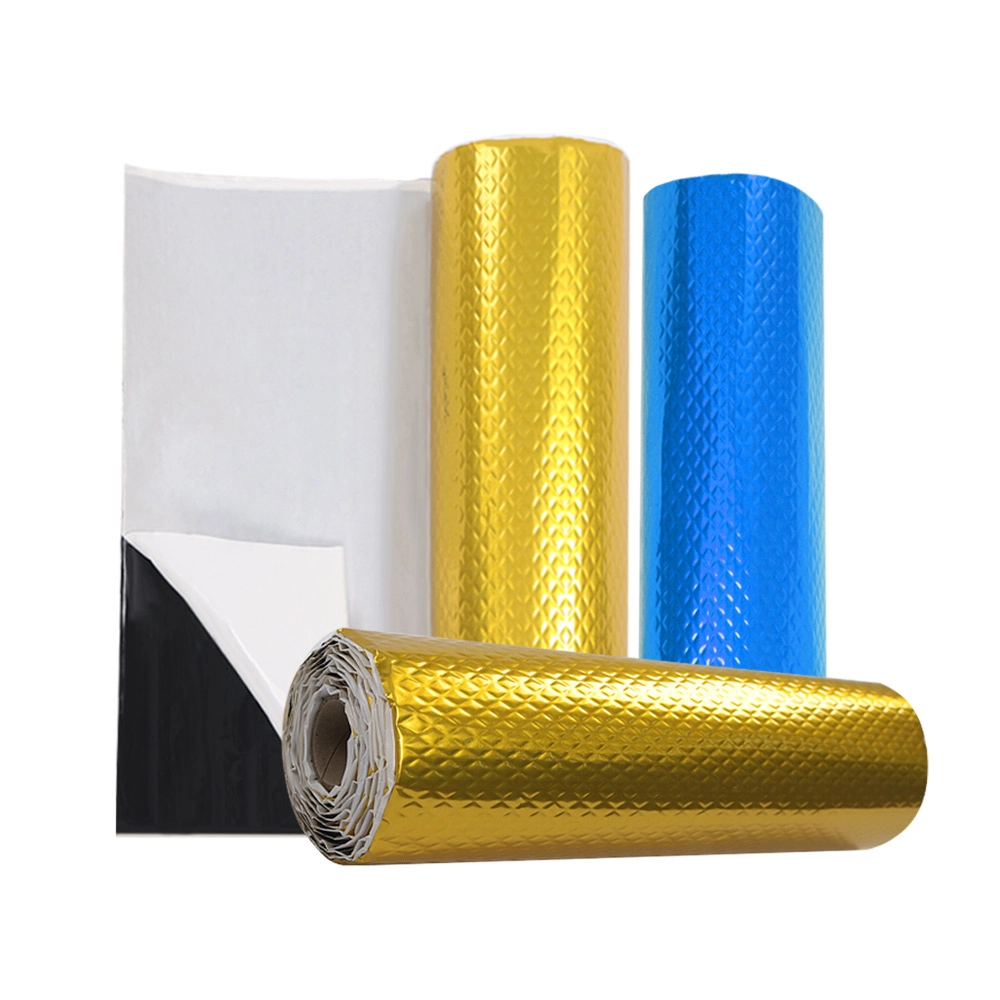
Butyl Rubber Sound Damping Mat
ASLONG Butyl Rubber Sound Damping Mat for sale. Effectively reduces noise and vibrations. High-quality butyl rubber ensures superior performance and durability. Ideal for automotive, industrial, and home applications.
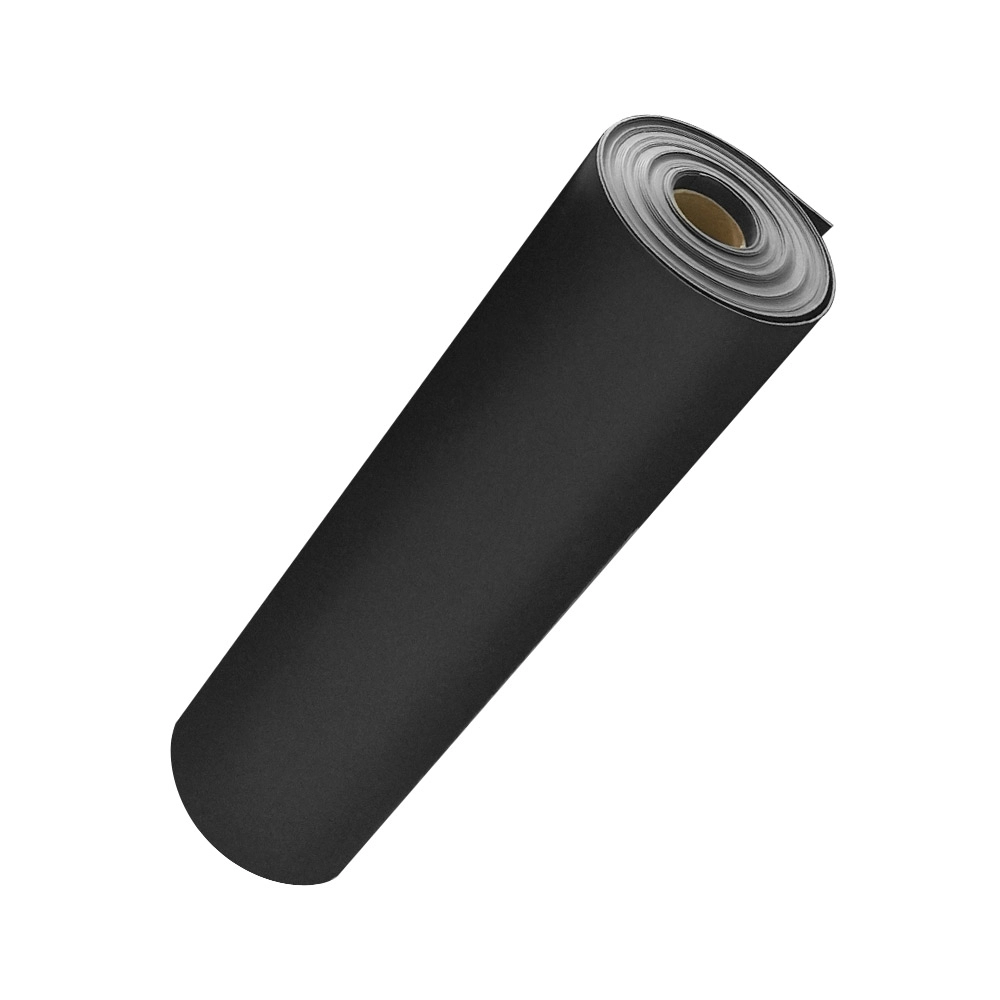
Mass Loaded Vinyl
ASLONG Mass Loaded Vinyl for sale. Reduce noise pollution effectively with our high-quality, mass-loaded vinyl. Ideal for soundproofing walls, floors, and more. Buy now and experience the difference!
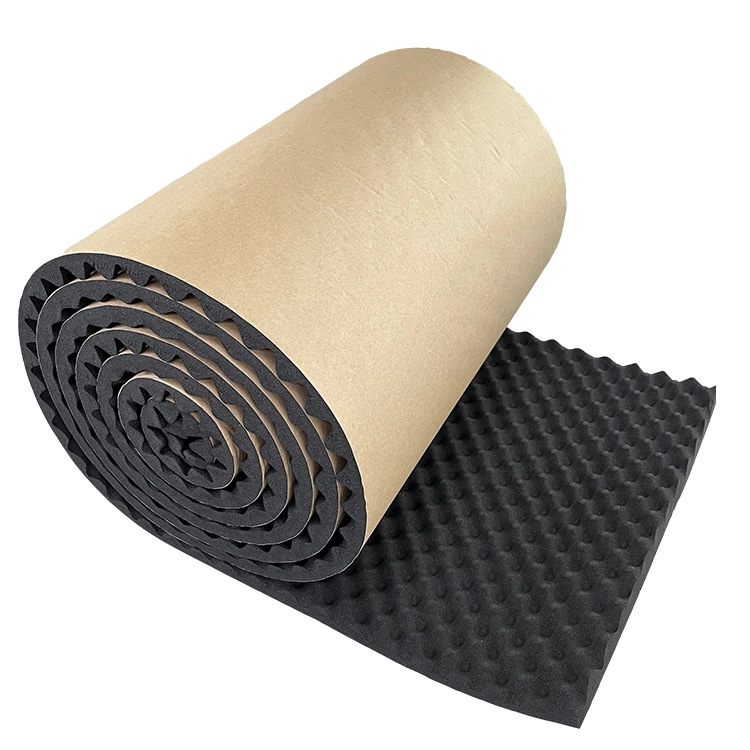
Egg Crate Foam
ASLONG Egg Crate Foam for sale. Lightweight, breathable, and comfortable, our egg crate foam provides superior support and pressure relief. Perfect for mattresses, cushions, cars, construction industry, KTV, factories, etc.
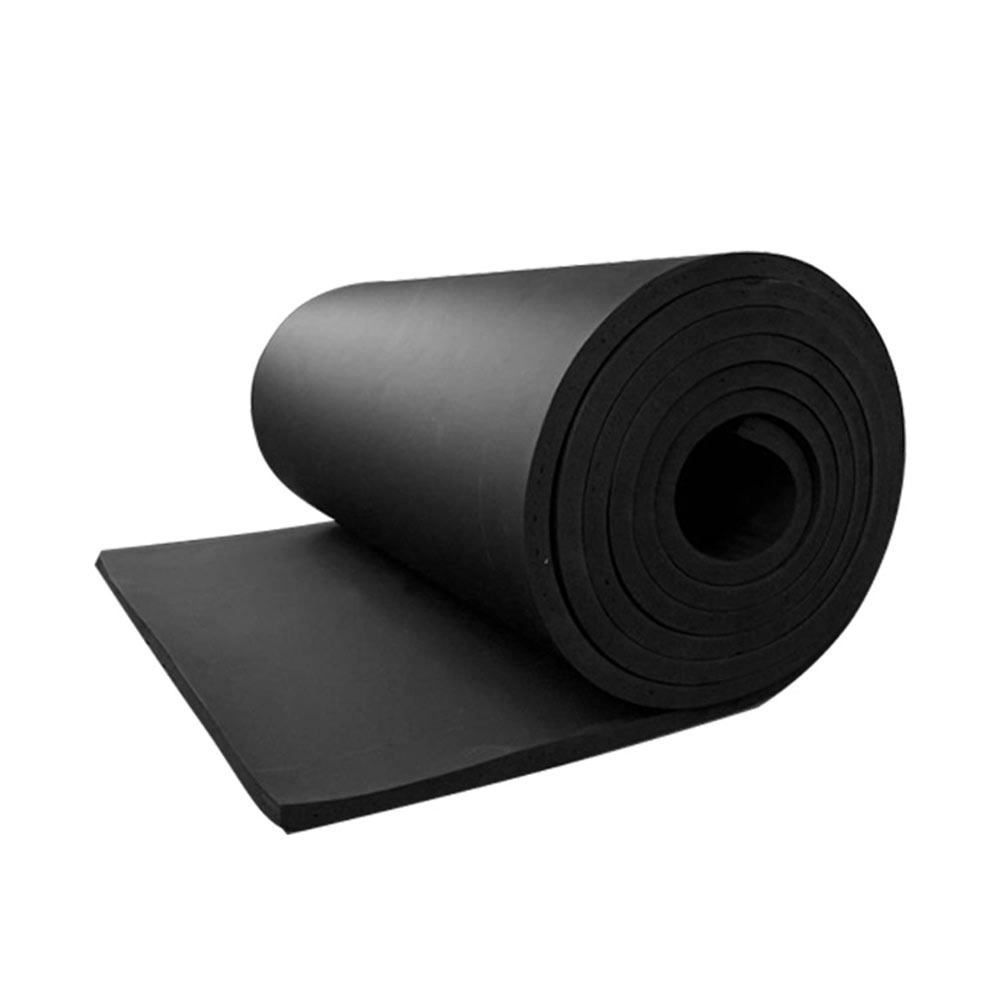
NBR Foam
ASLONG NBR Foam: Wholesale NBR foam solutions for diverse applications. High-quality, durable, and competitively priced. Contact us today for bulk orders.
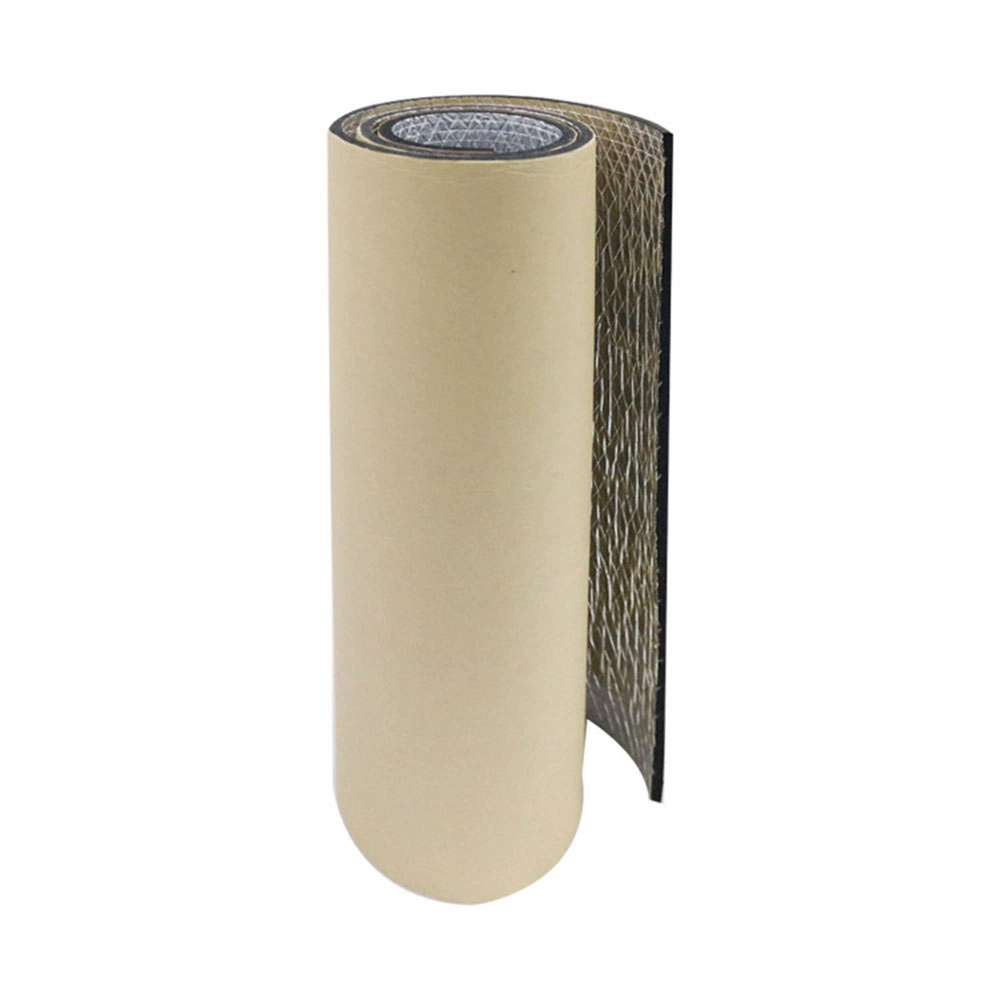
Multi layer Composite NBR foam
ASLONG's multi-layer composite NBR foam is your premium choice for superior cushioning and durability. Ideal for diverse applications, this high-quality NBR foam is available for sale now. Contact us for bulk orders.
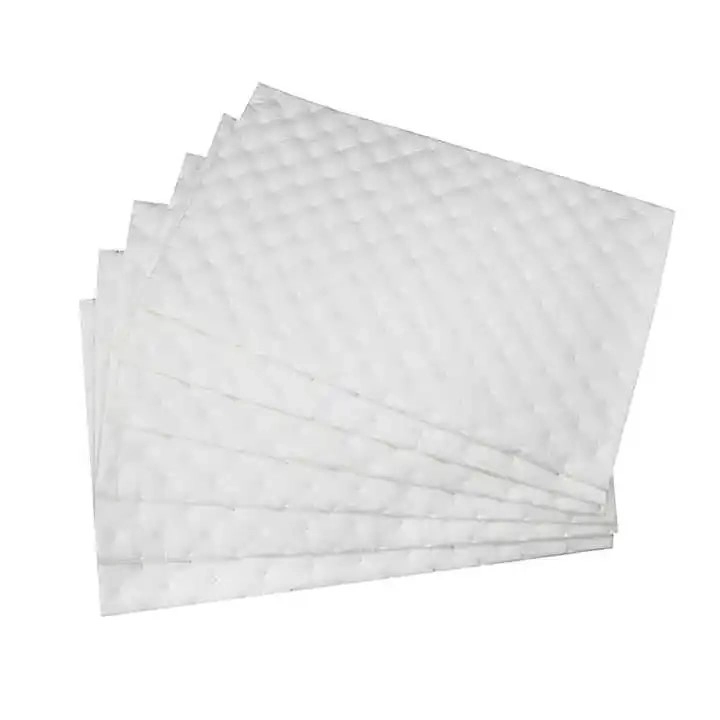
Sound Absorbing White Cotton
Sound-absorbing white cotton Made from PP and PET fibres by melt-blowing, special processes are used to achieve density diversification, sound absorption and noise reduction, thermal insulation, moisture-proof and mold resistance.
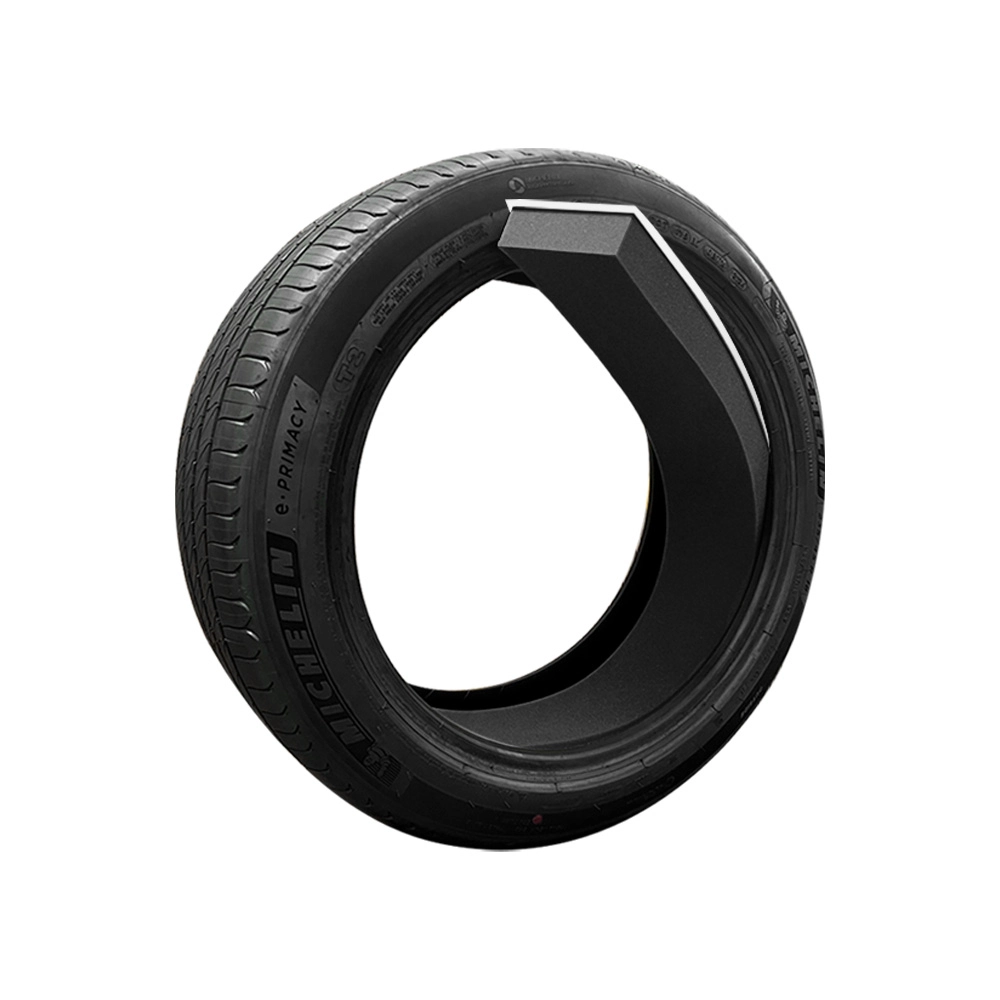
Puncture-Proof Soundproof Tire Foam, Self-Sealing Noise-Reducing Liner for Cars, Anti-Puncture Wheel Protection, Anti-Puncture Noise Reduction
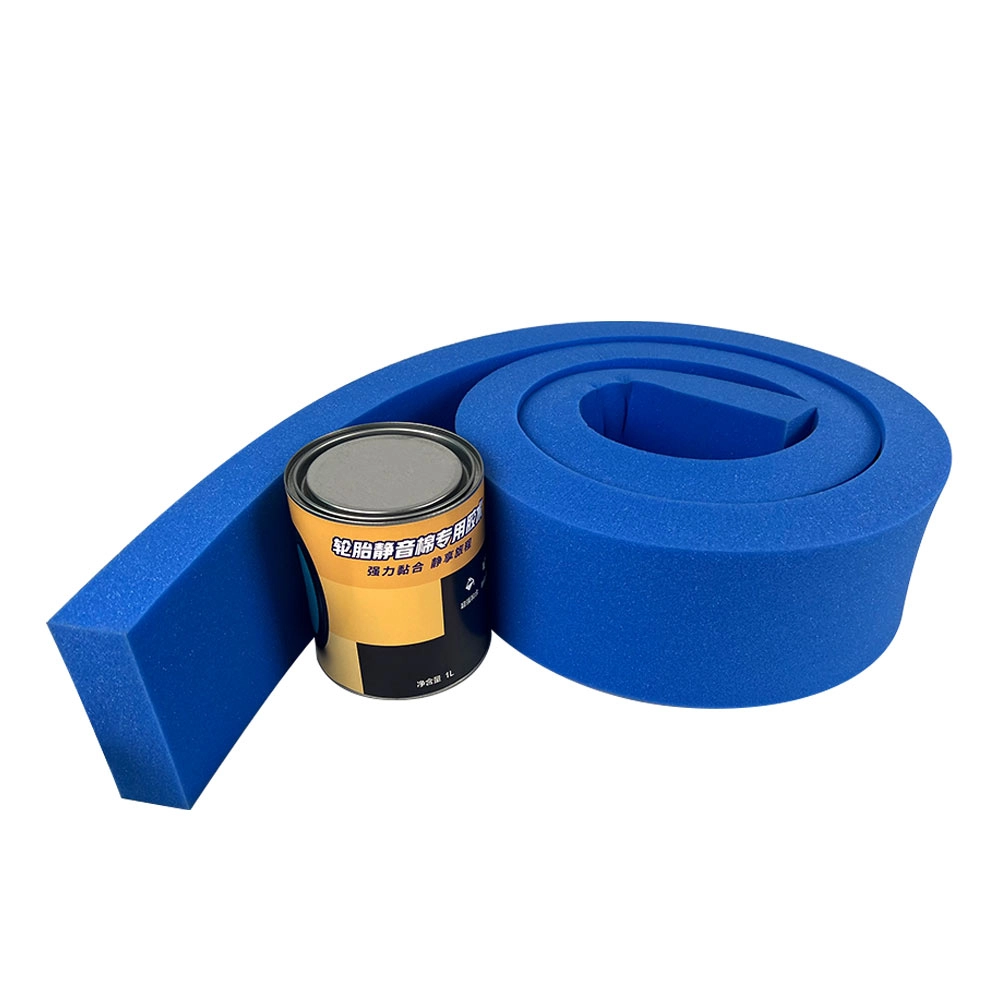
Tire Silent Foam with Special Glue
ASLONG Tire Silent Foam with special glue effectively reduces tire noise. Improve your vehicle's ride comfort. Buy ASLONG Tire Silent Foam for sale now and experience the quiet difference.
Professional support at any time
Contact us for a free quote on our new soundproofing materials!
© 2026 ASLONG All Rights Reserved. Privacy Policy | Terms and Conditions | Sitemap

 It would be pleasure to receive from you.
Whatsapp: +8613242879341
ASLONG Global
ASLONG
Aslong_global