

Importance & Optimization of Soundproofing Materials in Electric Vehicles (EVs)
Discover why soundproofing materials are essential in electric vehicles and learn how advanced NVH optimization techniques improve cabin comfort, reduce noise, and enhance EV performance.
- Importance & Optimization of Soundproofing Materials in Electric Vehicles (EVs)
- 1. Introduction
- 2. Why Soundproofing is Critical in EVs
- 3. Types of Noise in Electric Vehicles
- 4. Key Soundproofing Materials Used in EVs
- 5. Optimization Strategies for EV Soundproofing
- 6. Benefits of Optimized Soundproofing in EVs
- 7. Future Trends in EV Soundproofing Materials
- 8. Conclusion
Importance & Optimization of Soundproofing Materials in Electric Vehicles (EVs)
1. Introduction
Electric vehicles (EVs) are revolutionizing the automotive industry with their eco-friendly performance and near-silent operation. However, the absence of a traditional internal combustion engine introduces new challenges in noise, vibration, and harshness (NVH). Unlike conventional cars, EVs expose previously masked sounds such as road noise, wind noise, and structural vibrations.
This makes soundproofing materials in electric vehicles not just important—but essential for delivering a premium driving experience.
2. Why Soundproofing is Critical in EVs
2.1 Absence of Engine Noise
In traditional vehicles, engine noise naturally masks other unwanted sounds. EVs lack this masking effect, making even minor noises more noticeable to passengers.
2.2 Increased High-Frequency Noise
Electric motors generate high-frequency sounds that can be more irritating than low-frequency engine noise, requiring specialized acoustic solutions.
2.3 Lightweight Vehicle Design Challenges
EV manufacturers prioritize lightweight materials to extend battery range. However, lighter structures often transmit more noise and vibration, increasing the need for efficient soundproofing.
2.4 Enhanced Customer Expectations
EV buyers expect a quiet, smooth, and luxurious cabin environment. Poor noise control can negatively impact brand perception and customer satisfaction.
3. Types of Noise in Electric Vehicles
Understanding noise sources is key to optimizing soundproofing materials:
- Road Noise: Generated from tire and road interaction
- Wind Noise: Caused by airflow around the vehicle body
- Motor Noise: High-frequency electromagnetic sounds
- Structure-Borne Noise: Vibrations transmitted through the chassis
4. Key Soundproofing Materials Used in EVs
4.1 Butyl Rubber Damping Sheets
- Excellent vibration damping properties
- Commonly applied to doors, floors, and trunk panels
- Converts vibration energy into heat
4.2 Acoustic Foam
- Lightweight and highly effective in absorbing airborne noise
- Used in dashboards, headliners, and door panels
4.3 Mass Loaded Vinyl (MLV)
- High-density barrier material
- Blocks sound transmission effectively
- Ideal for floor insulation
4.4 Multi-Layer Composite Materials
- Combination of aluminum foil, butyl rubber, and foam
- Provides both damping and insulation
- Widely used in high-end EVs
5. Optimization Strategies for EV Soundproofing
5.1 Multi-Layer Structural Design
Combining different materials (damping + absorption + barrier) ensures comprehensive noise reduction across frequencies.
5.2 Targeted NVH Engineering
Instead of adding excessive material weight, engineers focus on key noise sources and apply soundproofing precisely where needed.
5.3 Lightweight Material Innovation
Advanced materials such as:
- Nano-fiber acoustic layers
- High-performance polymer composites
These reduce noise without compromising vehicle efficiency.
5.4 Digital Simulation & Testing
Modern EV development uses:
- Acoustic simulation software
- Real-world NVH testing
This ensures optimal placement and performance of soundproofing materials.
6. Benefits of Optimized Soundproofing in EVs
6.1 Enhanced Cabin Comfort
Passengers experience a quieter, more relaxing ride, especially during long trips.
6.2 Improved Perceived Quality
A silent cabin enhances the perception of luxury and build quality.
6.3 Better Audio System Performance
Reduced background noise allows in-car audio systems to deliver clearer sound.
6.4 Competitive Market Advantage
Automakers with superior NVH performance stand out in the increasingly competitive EV market.
7. Future Trends in EV Soundproofing Materials
7.1 Sustainable Materials
Eco-friendly soundproofing solutions made from recycled or bio-based materials are gaining traction.
7.2 Smart Acoustic Materials
Materials that adapt to different driving conditions and noise frequencies are under development.
7.3 Integration with Vehicle Design
Future EVs will integrate soundproofing materials directly into structural components for better efficiency and reduced weight.
8. Conclusion
As electric vehicles continue to evolve, soundproofing materials play a crucial role in defining the overall driving experience. With the absence of engine noise, even minor sounds become significant, making advanced NVH solutions indispensable.
By adopting optimized material combinations, lightweight innovations, and targeted engineering approaches, manufacturers can achieve superior acoustic comfort while maintaining energy efficiency.
For suppliers and OEMs, investing in high-performance EV soundproofing materials is not just an option—it is a strategic necessity for future success in the automotive industry.
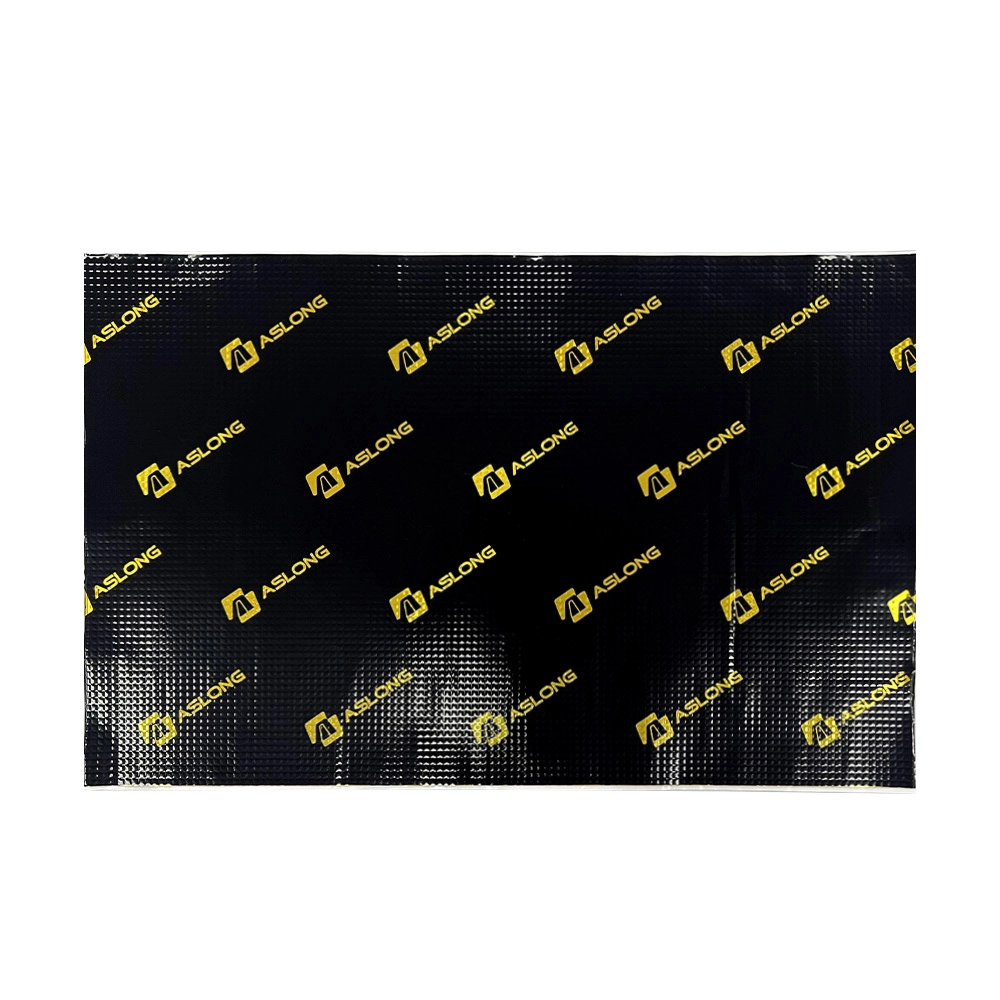
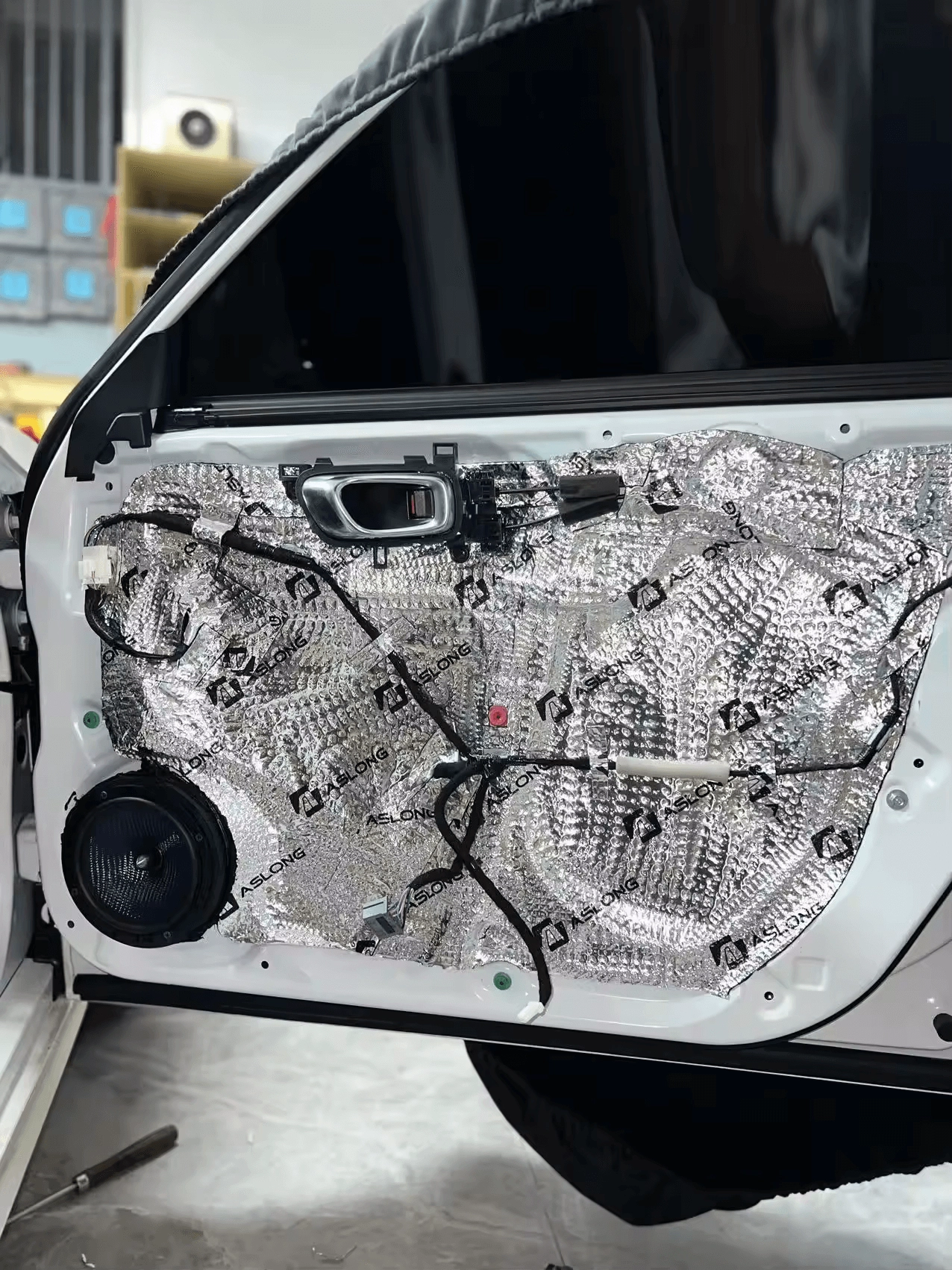
Practical Case Studies: Door, Floor & Roof Soundproofing Solutions for Cars
Where to Apply Sound Deadening Material in a Car for Maximum Effect
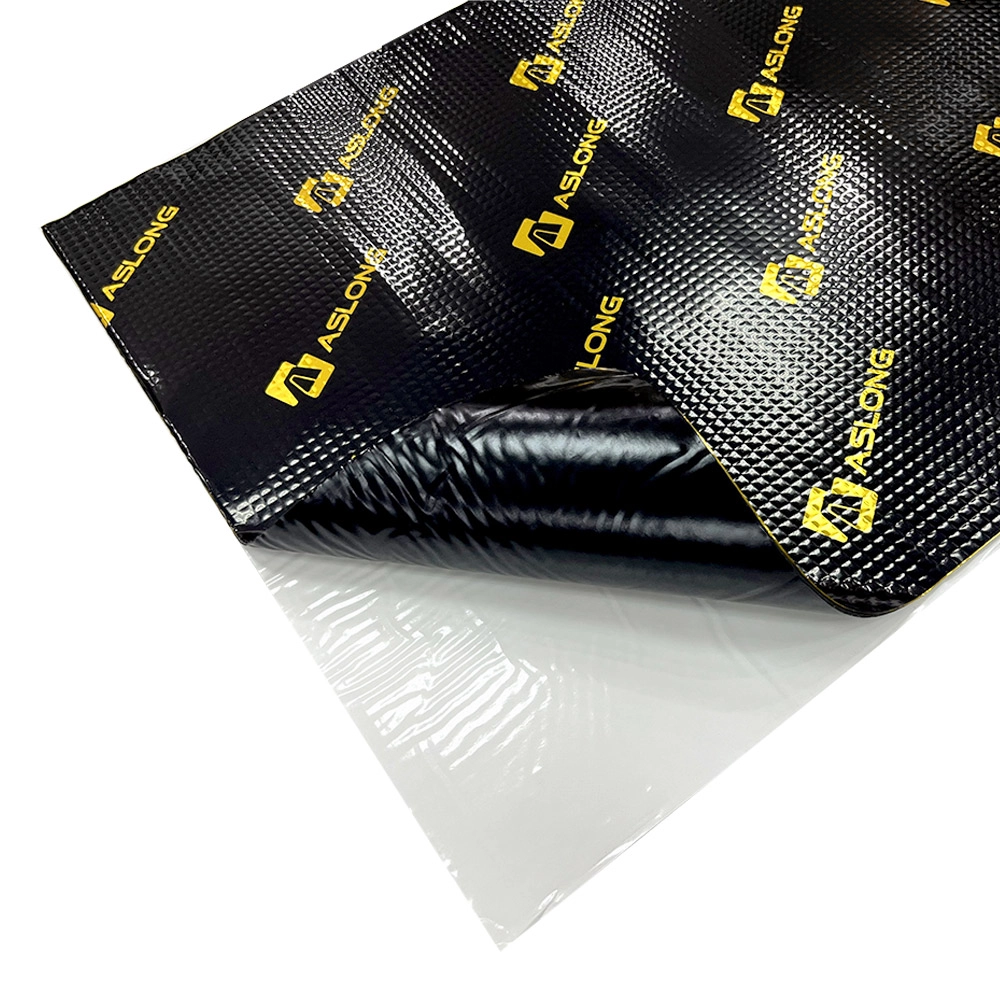
Butyl vs Bitumen Sound Damping: Which Material Is Best for Car Soundproofing?

Global Competitive Landscape of the Automotive Noise & Vibration Materials Industry (2026–2035)

How to Soundproof Car Doors and Reduce Road Noise Effectively
FAQs
Does ASLONG provide after-sales service?
Yes, we provide a full range of after-sales services, including technical support, installation guidance, product maintenance and quality tracking, etc., to ensure that each project goes smoothly and continues to perform at its best.
What industries are the products provided by ASLONG suitable for?
ASLONG's products are suitable for multiple industries, including air conditioning and HVAC, construction and waterproofing, automobiles and transportation, home appliances and electronics, industrial equipment and machinery, etc. We provide customized solutions for each industry to meet different needs.
Do ASLONG's products meet environmental protection standards?
Yes, all ASLONG products comply with ISO14001 environmental management system certification and global environmental protection standards. We use environmentally friendly materials and are committed to providing sustainable solutions to help customers achieve green development goals.
What specific functions can ASLONG's products provide?
Our products cover functions such as insulation, sound insulation, shock absorption, waterproofing and sealing, and are widely used in improving energy efficiency, reducing noise, controlling vibration, protecting equipment, etc., helping customers optimize engineering effects and improve user experience.
How to customize products that meet the needs of my industry?
You only need to contact our sales or technical team, we will conduct an in-depth analysis based on your industry needs and provide tailor-made products and solutions. We guarantee to provide you with efficient and accurate services to meet your personalized requirements.
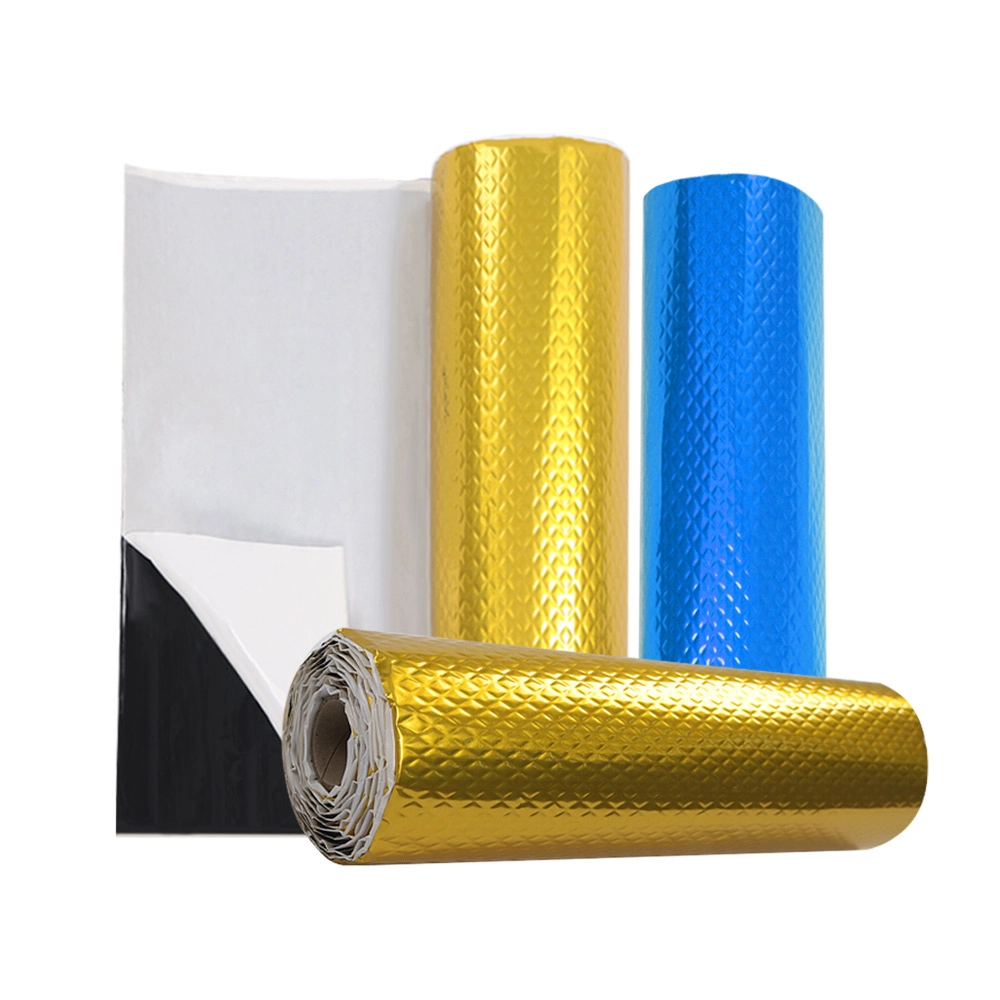
Butyl Rubber Sound Damping Mat
ASLONG Butyl Rubber Sound Damping Mat for sale. Effectively reduces noise and vibrations. High-quality butyl rubber ensures superior performance and durability. Ideal for automotive, industrial, and home applications.
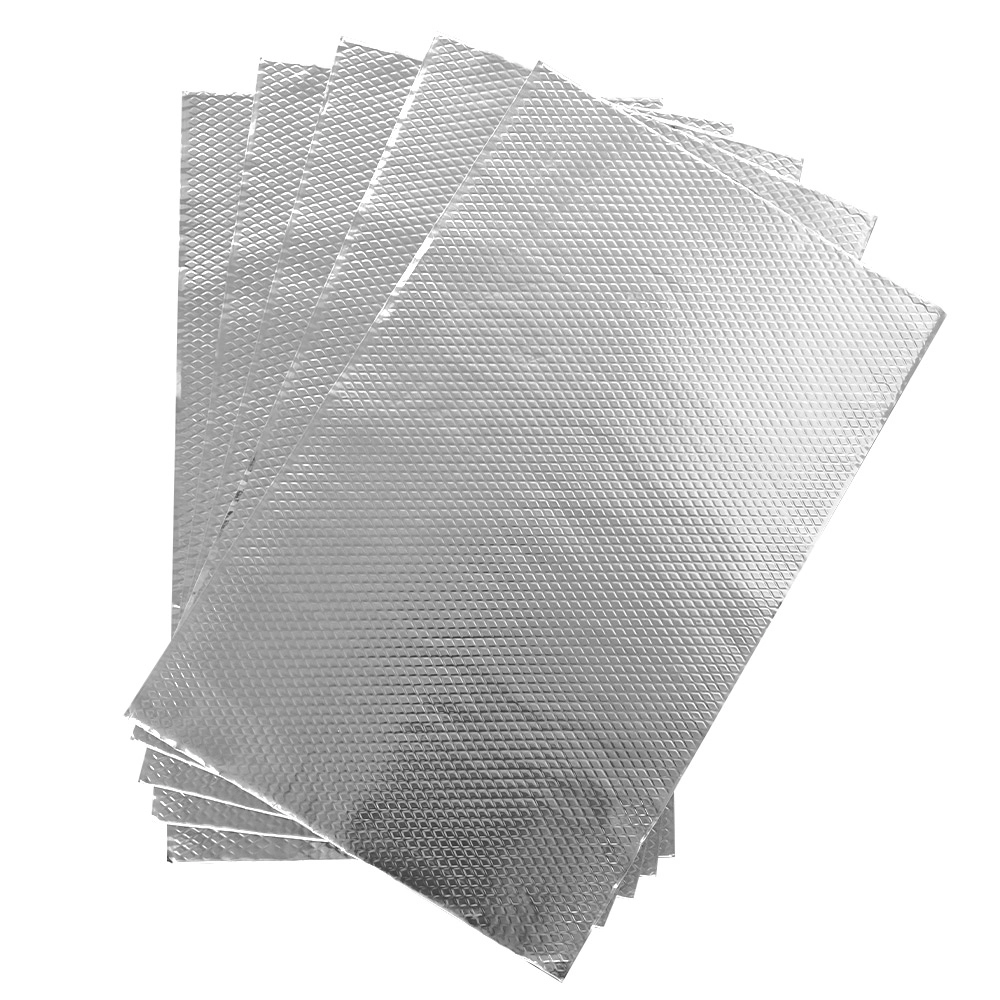
Car sound deadener mat
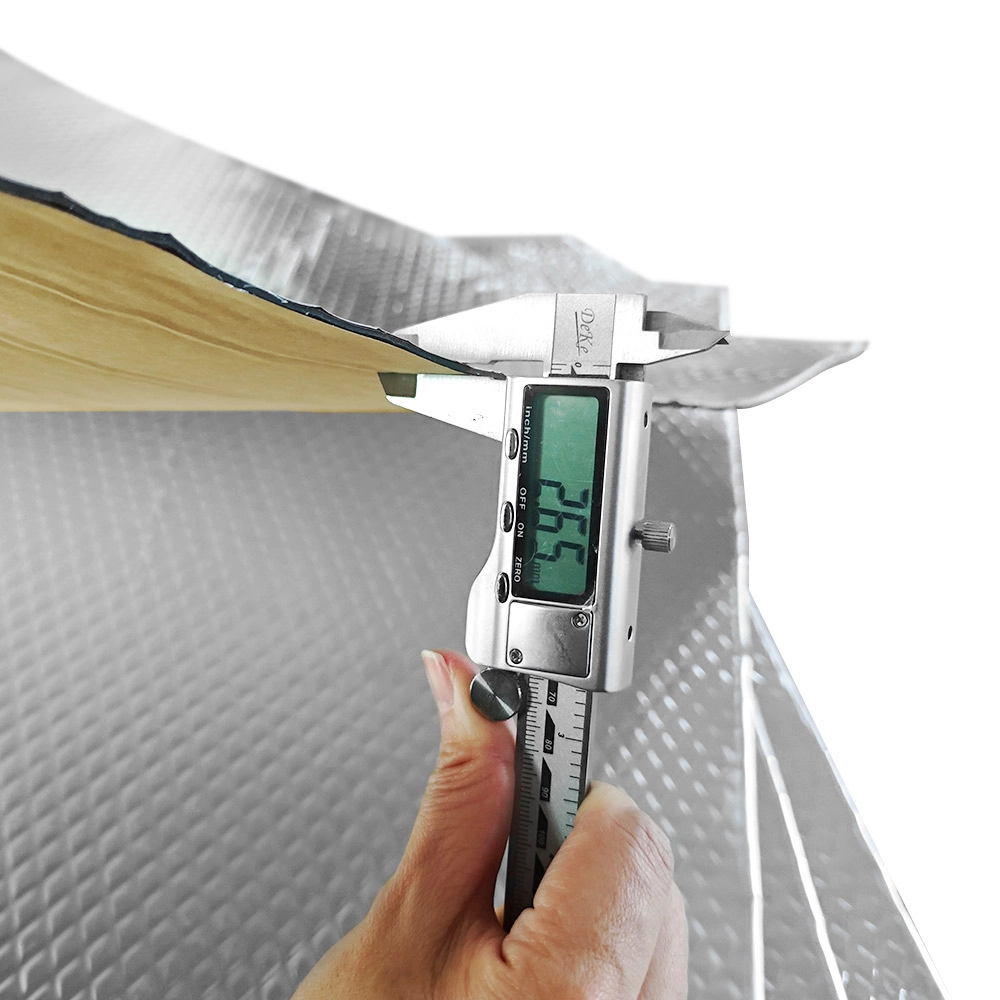
Car Sound Damping Sheet
Discover the ASLONG Car Sound Damping Sheet—High Quality sound damping material designed to reduce road noise and vibration. Improve your driving comfort with this easy-to-install, durable car sound damping sheet for superior sound insulation.
High Performance Butyl Rubber Sound Deadening Mat | Aluminum Foil Car Soundproofing Vibration Damping Sheet
Premium butyl rubber sound deadening mat with aluminum foil layer. Designed for car vibration damping and noise reduction. OEM manufacturer with custom thickness and private label service.
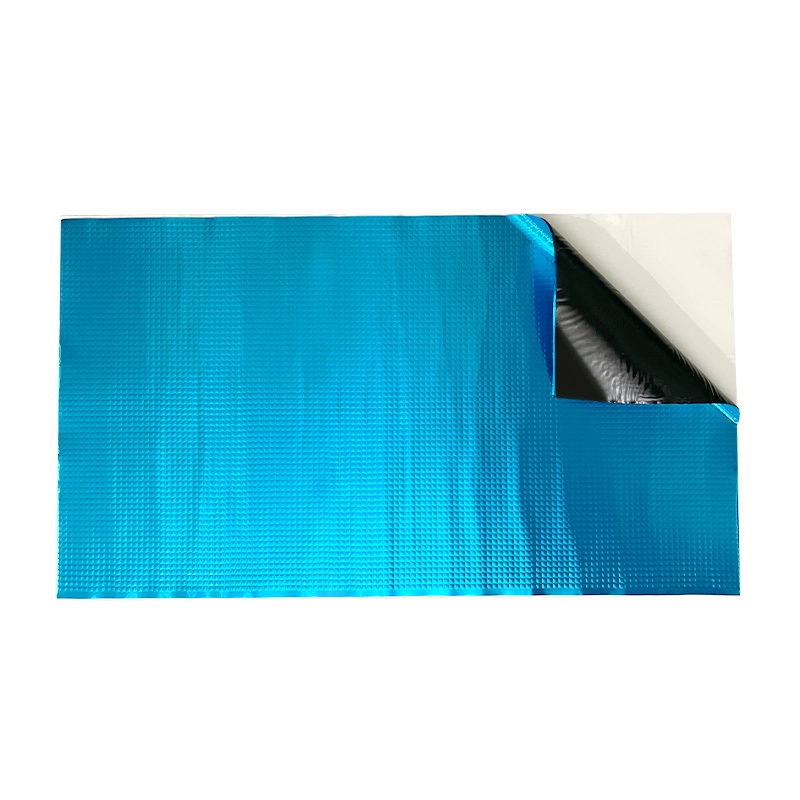
Butyl Rubber Sound Deadening Mat | Car Noise & Heat Insulation Aluminum Foil Pad | Automotive Soundproof & Thermal Barrier Material
Professional support at any time
Contact us for a free quote on our new soundproofing materials!
© 2026 ASLONG All Rights Reserved. Privacy Policy | Terms and Conditions | Sitemap

 It would be pleasure to receive from you.
Whatsapp: +8613242879341
ASLONG Global
ASLONG
Aslong_global