

How to Soundproof Car Doors and Reduce Road Noise Effectively
Among all sources of noise within a vehicle, the doors remain one of the most overlooked—and yet most influential—contributors. Broad, thin, and structurally resonant, car doors often act as conduits for road noise, wind turbulence, and vibration.
To refine the acoustic character of a vehicle is to begin with its weakest points. Soundproofing car doors is not merely an upgrade; it is a transformation. When properly treated, doors shift from passive noise transmitters into controlled, insulated barriers—enhancing both comfort and audio clarity.
This guide explores how to soundproof car doors with precision, using modern materials and proven installation techniques.
Why Car Doors Let in Road Noise
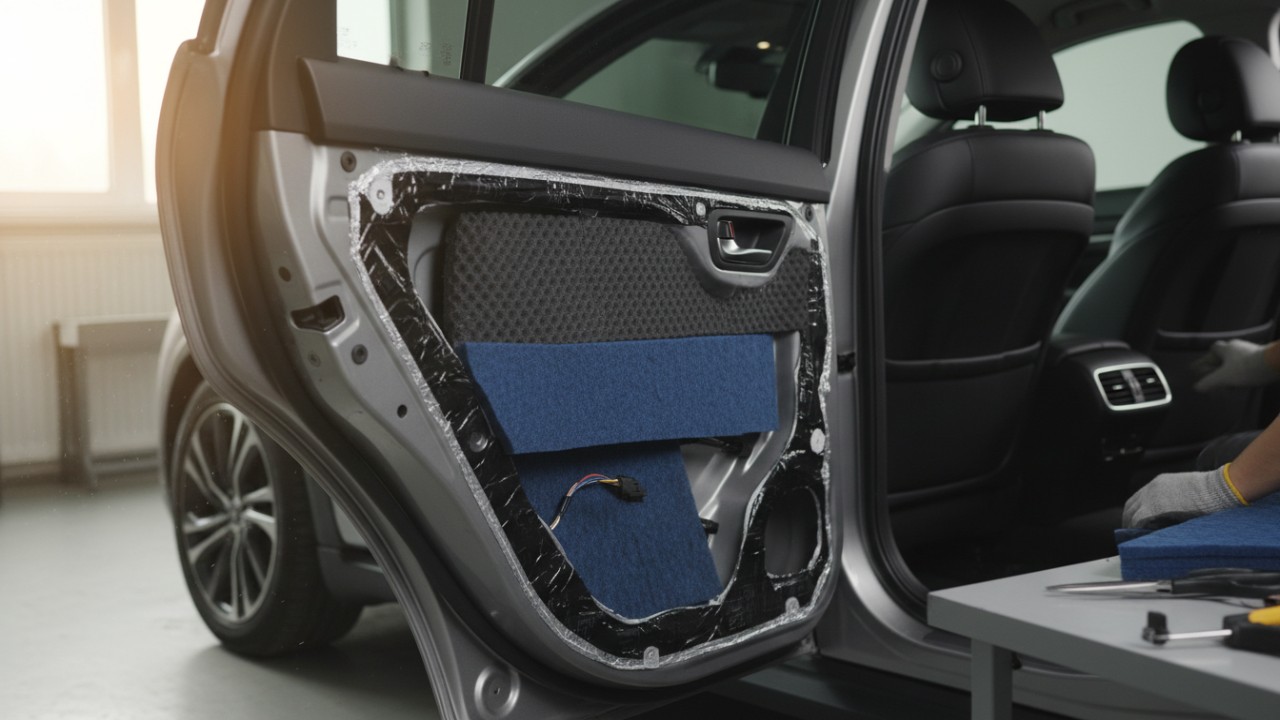
Car doors are inherently vulnerable to noise intrusion due to their design.
Thin Metal Structure
Door panels are typically made from lightweight metal sheets that easily vibrate when exposed to external forces.
Hollow Internal Space
The internal cavity of a door creates an echo chamber, amplifying vibrations and sound waves.
Multiple Openings and Gaps
Factory access holes and wiring channels allow sound to pass through with minimal resistance.
Speaker-Induced Vibration
Audio systems can further excite door panels, causing additional resonance and distortion.
Understanding these weaknesses is the first step toward effective soundproofing.
Best Materials for Soundproofing Car Doors
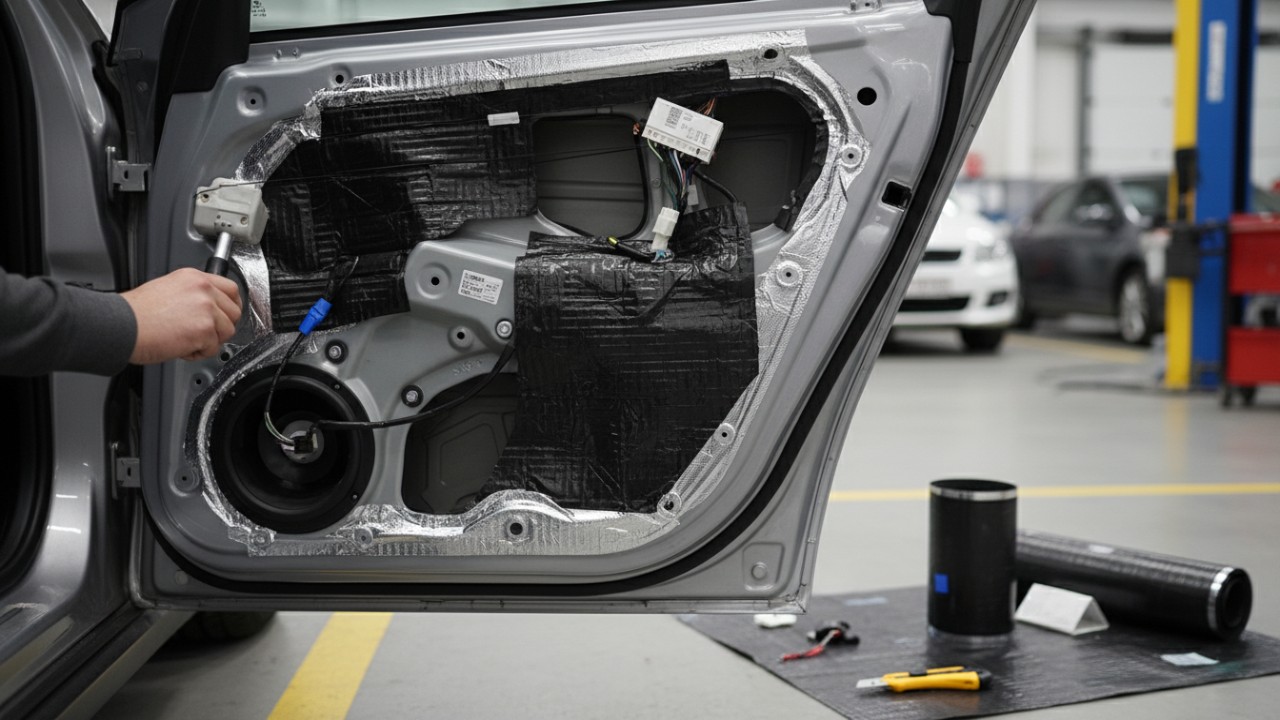
A high-performance result depends on using the right combination of materials.
Butyl Sound Deadening Mats
These are the foundation of door soundproofing. Applied directly to the metal surface, they reduce vibration and eliminate resonance.
Key benefits:
- Excellent damping performance
- Strong adhesion
- Long-term durability
- No odor under heat
Closed-Cell Foam Insulation (NBR or PE)
Foam layers are installed over damping mats to absorb airborne noise and prevent sound reflection within the door cavity.
Aluminum Foil Layer
Some materials include an aluminum surface that enhances heat resistance and structural stability.
A layered approach ensures both vibration control and sound absorption.
Step-by-Step Guide to Soundproof Car Doors
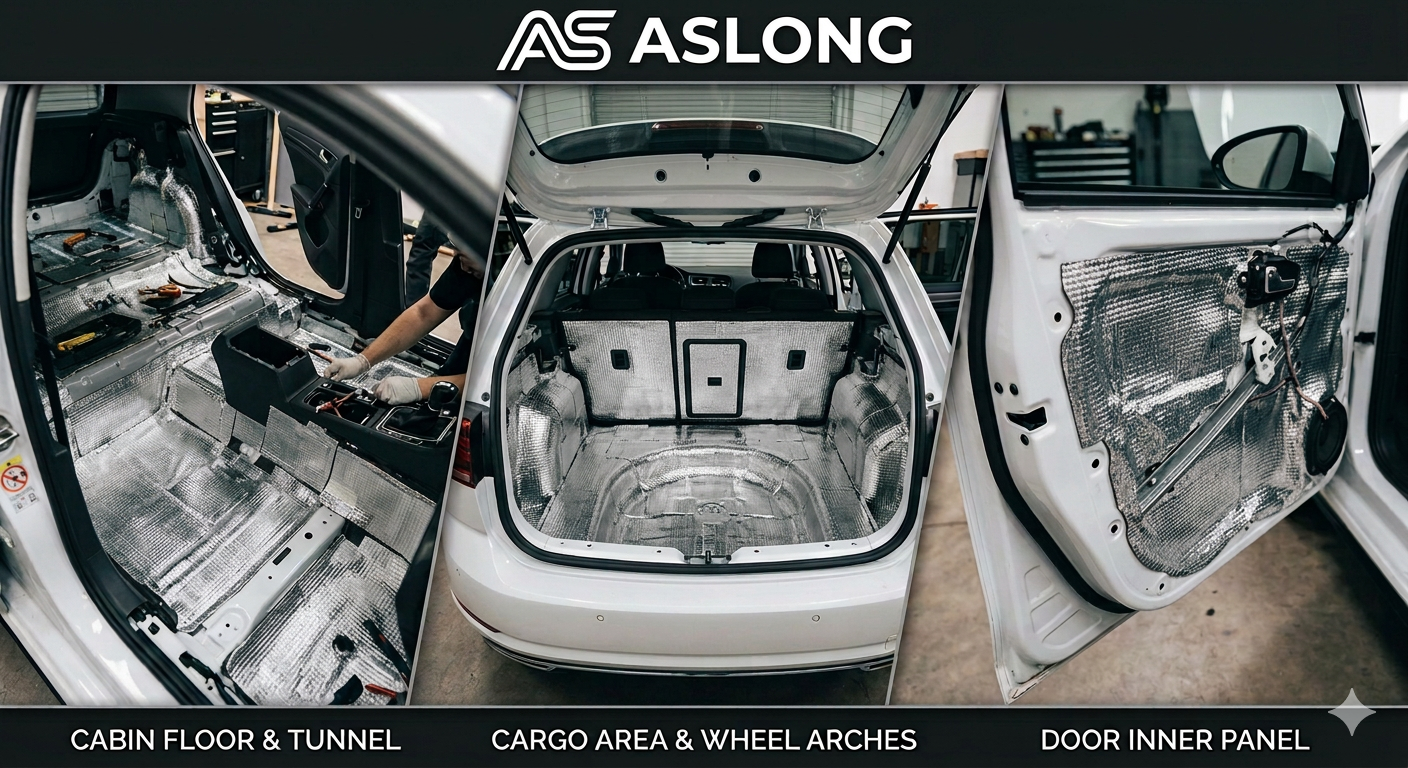
Step 1: Remove the Door Panel
Carefully detach the interior door panel to access the inner metal surface. Disconnect wiring and components as needed.
Step 2: Clean the Surface
Use a degreaser to remove dust, oil, and moisture. A clean surface is essential for proper adhesion.
Step 3: Apply Sound Deadening Mats
Cut the material into manageable pieces and apply it to the outer and inner metal panels. Focus on flat, vibration-prone areas.
Use a roller to press the material firmly, ensuring full contact without air gaps.
Step 4: Seal Large Openings
Cover access holes with sound deadening material to create a more sealed structure. This significantly improves acoustic performance.
Step 5: Add Foam Insulation Layer
Install a foam layer over the damping material. This enhances sound absorption and reduces internal reflections.
Step 6: Reinstall the Door Panel
Carefully reassemble the door, ensuring all components are properly secured.
Precision at each step ensures a result that is both effective and durable.
Installation Tips for Better Results
Focus on Vibration Zones
Target large, flat sections of metal where resonance is most pronounced.
Use Moderate Coverage
Full coverage is not always necessary. Strategic placement can achieve excellent results with less material.
Apply Even Pressure
Consistent pressure during installation ensures optimal bonding and performance.
Combine Materials
Using both damping and absorption layers produces significantly better results than using a single material.
Common Mistakes to Avoid
![7 Costly Mistakes to Avoid When Installing Sound Deadening Material [Expert Tips]](https://static.gooecloud.com/upload/img/GY038097216927/7-costly-mistakes-to-avoid-when-installing-sound-deadening-material-expert-tips.png "7 Costly Mistakes to Avoid When Installing Sound Deadening Material [Expert Tips]")
Skipping Surface Preparation
Poor adhesion leads to reduced performance and material failure.
Using Low-Quality Materials
Inferior materials may degrade, smell, or lose effectiveness over time.
Ignoring Door Sealing
Leaving large openings untreated reduces the overall impact of soundproofing.
Overloading the Door
Excessive material can add unnecessary weight without proportional benefit.
Avoiding these mistakes ensures a professional-grade result.
Expected Results After Soundproofing
When properly installed, soundproofing car doors can deliver noticeable improvements:
- Reduced road and tire noise
- Improved speaker performance and clarity
- Less vibration and rattling
- A more solid and premium door feel
The difference is not only heard—it is felt in every interaction with the vehicle.
FAQ
How much sound deadening is needed for car doors?
Typically, covering 25–50% of the metal surface provides effective vibration control.
Can I soundproof car doors myself?
Yes. With basic tools and proper guidance, it is a suitable DIY project.
Does door soundproofing improve audio quality?
Significantly. Reduced vibration allows speakers to perform with greater clarity and accuracy.
Which material is best for car doors?
Butyl-based sound deadening mats combined with foam insulation offer the best performance.
Conclusion
To soundproof a car door is to redefine its role—from a passive structural element to an active contributor to comfort and acoustic refinement.
Through the careful application of advanced materials and thoughtful installation, noise is controlled, vibration is subdued, and the driving experience is elevated.
In the quiet that follows, one discovers not silence, but balance—a harmony between machine, material, and motion.
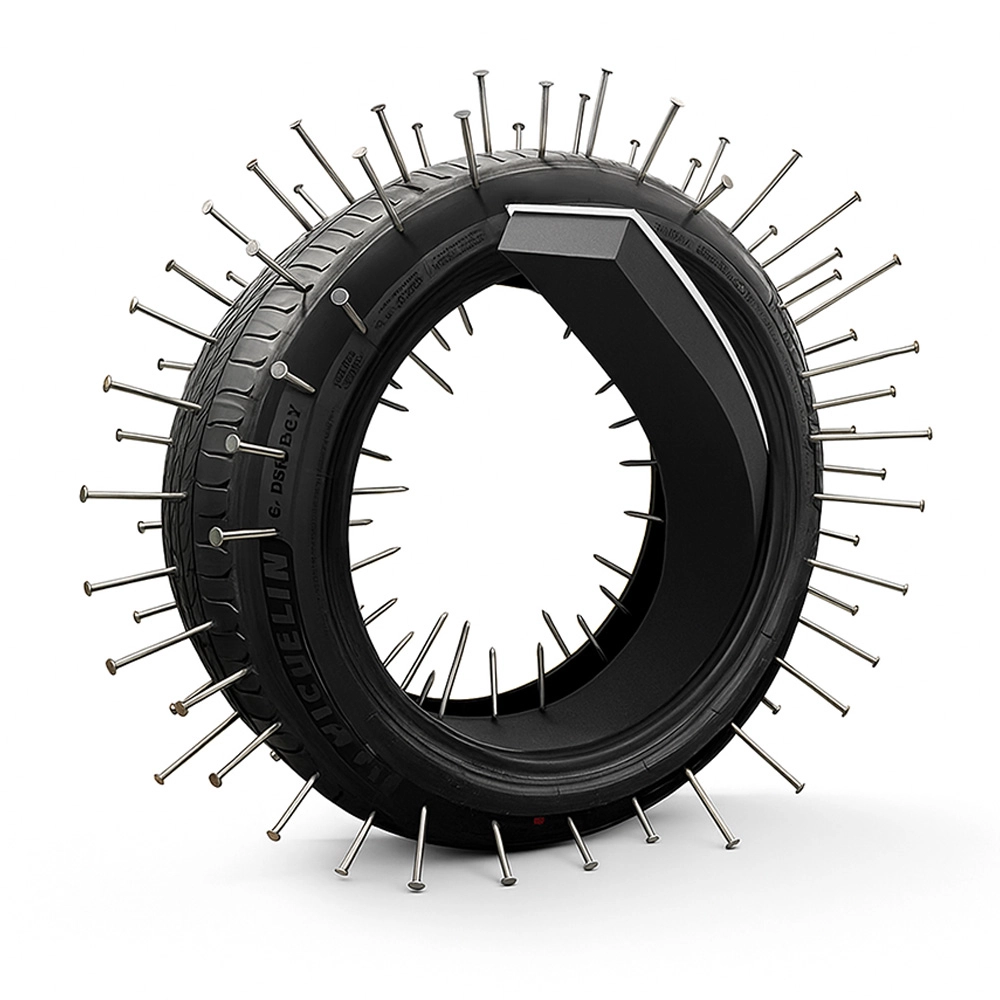
Tire Silent Foam for Cars: Benefits, Working Principle & Installation Guide
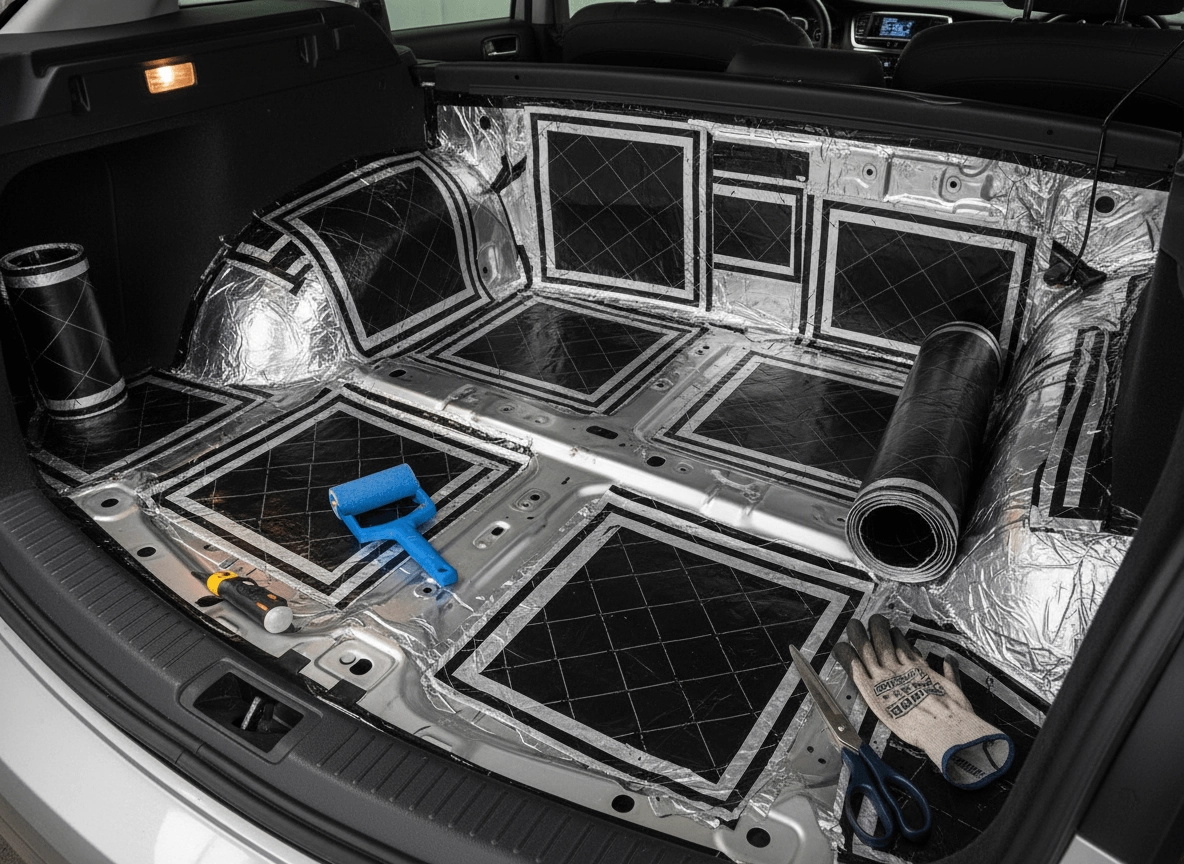
How to Install Car Sound Deadening Mats: Step-by-Step DIY Guide
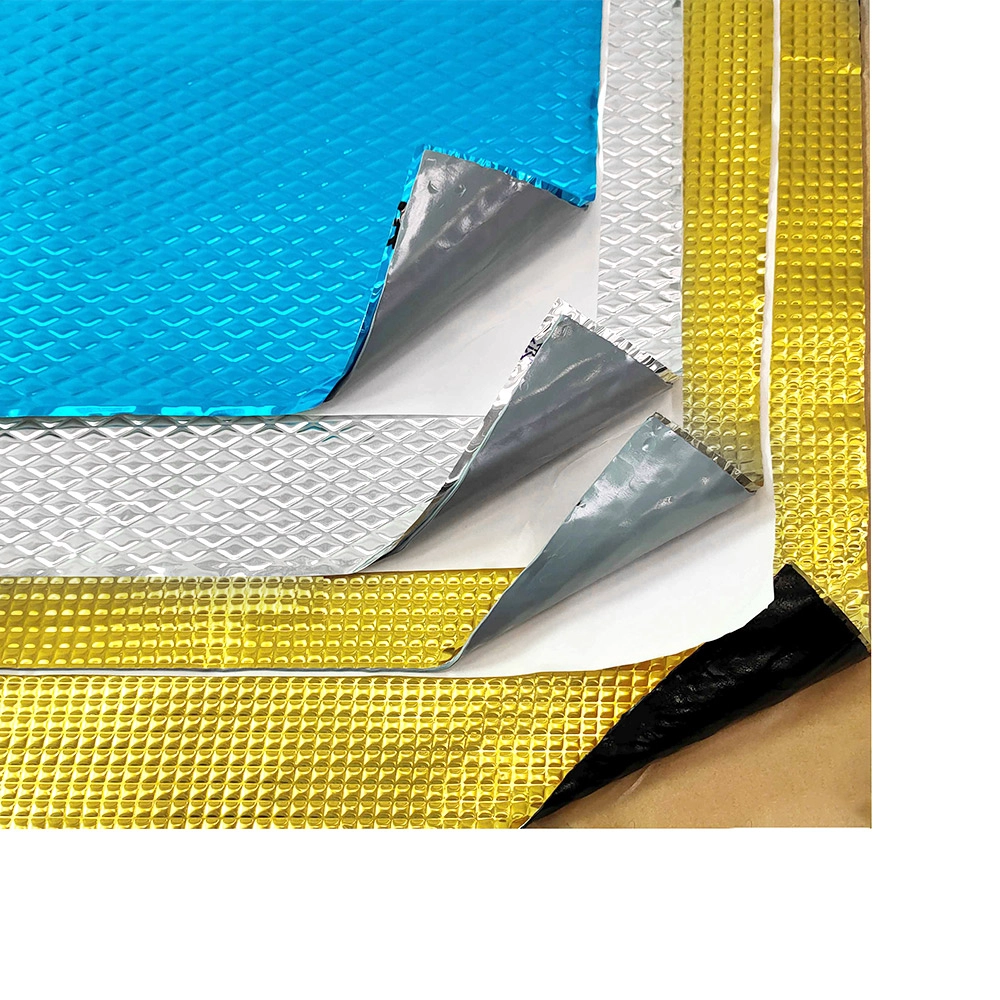
Latest Technological Innovations in Automotive Vibration Damping Materials (2026 Guide)
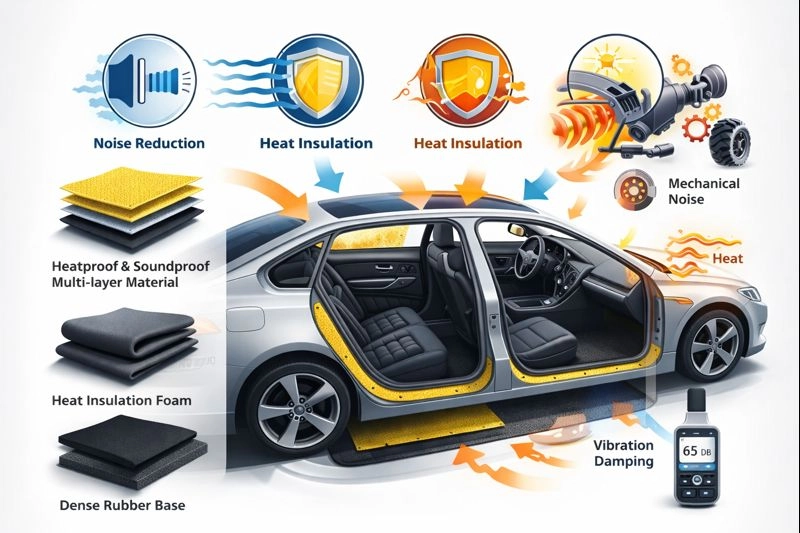
How Soundproofing Materials Improve Your Driving Experience
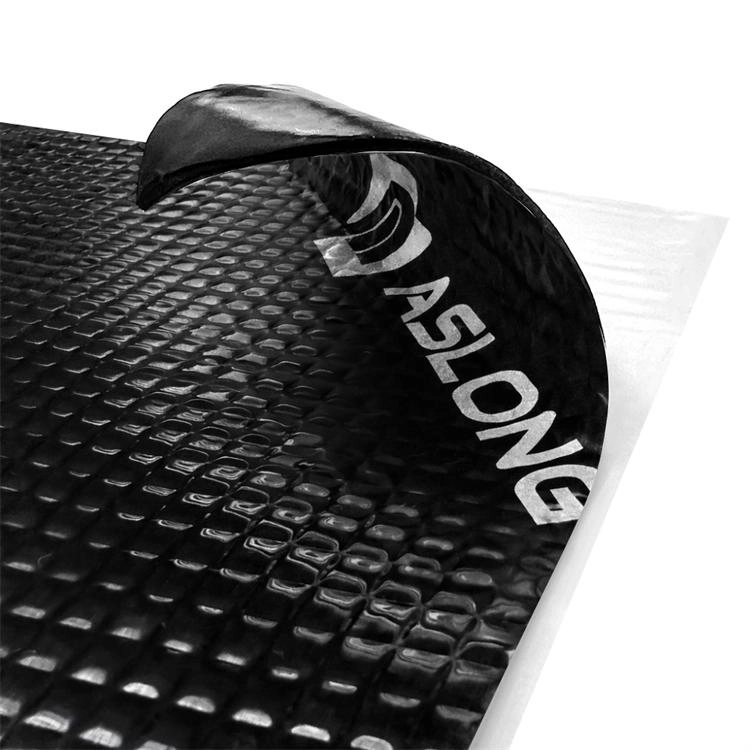
Butyl vs Asphalt Sound Deadening: Which Material Is Better for Cars?
FAQs
What industries are the products provided by ASLONG suitable for?
ASLONG's products are suitable for multiple industries, including air conditioning and HVAC, construction and waterproofing, automobiles and transportation, home appliances and electronics, industrial equipment and machinery, etc. We provide customized solutions for each industry to meet different needs.
What specific functions can ASLONG's products provide?
Our products cover functions such as insulation, sound insulation, shock absorption, waterproofing and sealing, and are widely used in improving energy efficiency, reducing noise, controlling vibration, protecting equipment, etc., helping customers optimize engineering effects and improve user experience.
Do ASLONG's products meet environmental protection standards?
Yes, all ASLONG products comply with ISO14001 environmental management system certification and global environmental protection standards. We use environmentally friendly materials and are committed to providing sustainable solutions to help customers achieve green development goals.
How to customize products that meet the needs of my industry?
You only need to contact our sales or technical team, we will conduct an in-depth analysis based on your industry needs and provide tailor-made products and solutions. We guarantee to provide you with efficient and accurate services to meet your personalized requirements.
Does ASLONG provide after-sales service?
Yes, we provide a full range of after-sales services, including technical support, installation guidance, product maintenance and quality tracking, etc., to ensure that each project goes smoothly and continues to perform at its best.
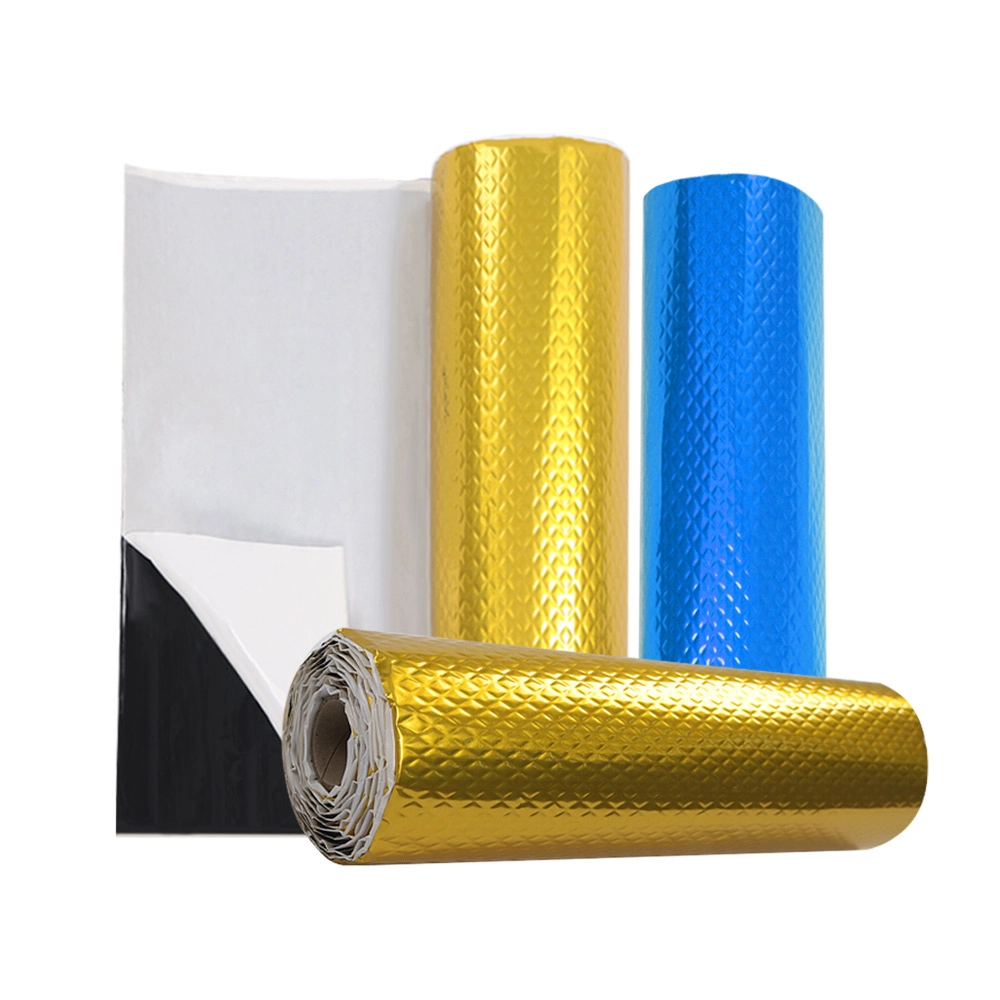
Butyl Rubber Sound Damping Mat
ASLONG Butyl Rubber Sound Damping Mat for sale. Effectively reduces noise and vibrations. High-quality butyl rubber ensures superior performance and durability. Ideal for automotive, industrial, and home applications.
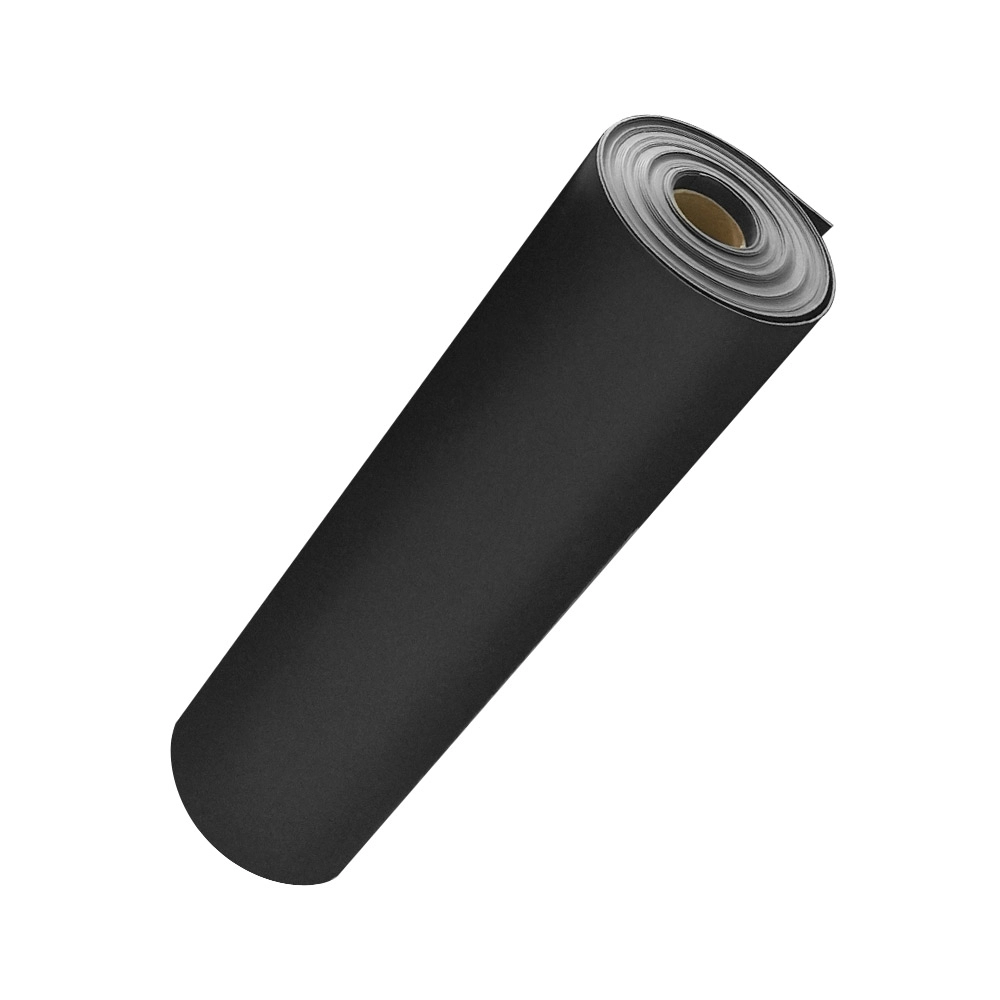
Mass Loaded Vinyl
ASLONG Mass Loaded Vinyl for sale. Reduce noise pollution effectively with our high-quality, mass-loaded vinyl. Ideal for soundproofing walls, floors, and more. Buy now and experience the difference!
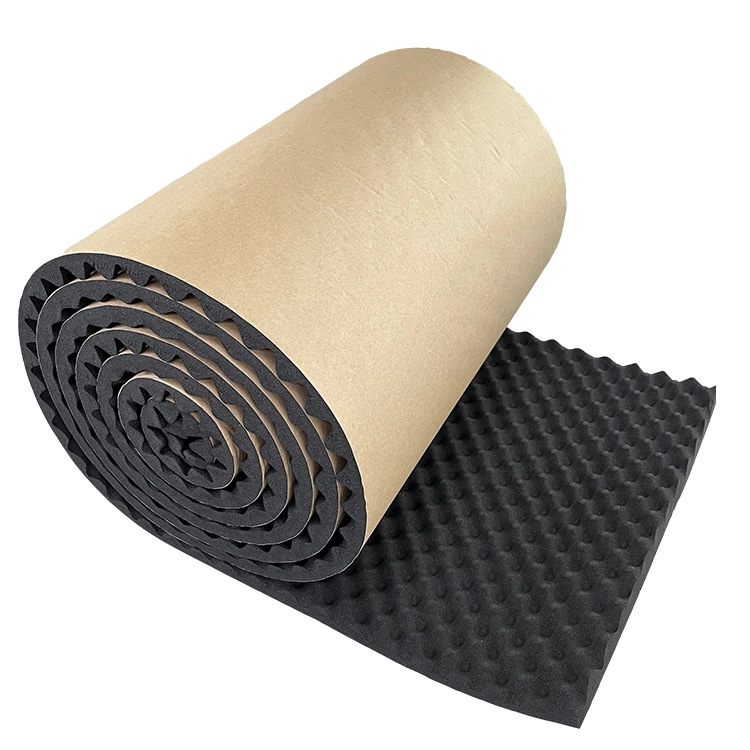
Egg Crate Foam
ASLONG Egg Crate Foam for sale. Lightweight, breathable, and comfortable, our egg crate foam provides superior support and pressure relief. Perfect for mattresses, cushions, cars, construction industry, KTV, factories, etc.
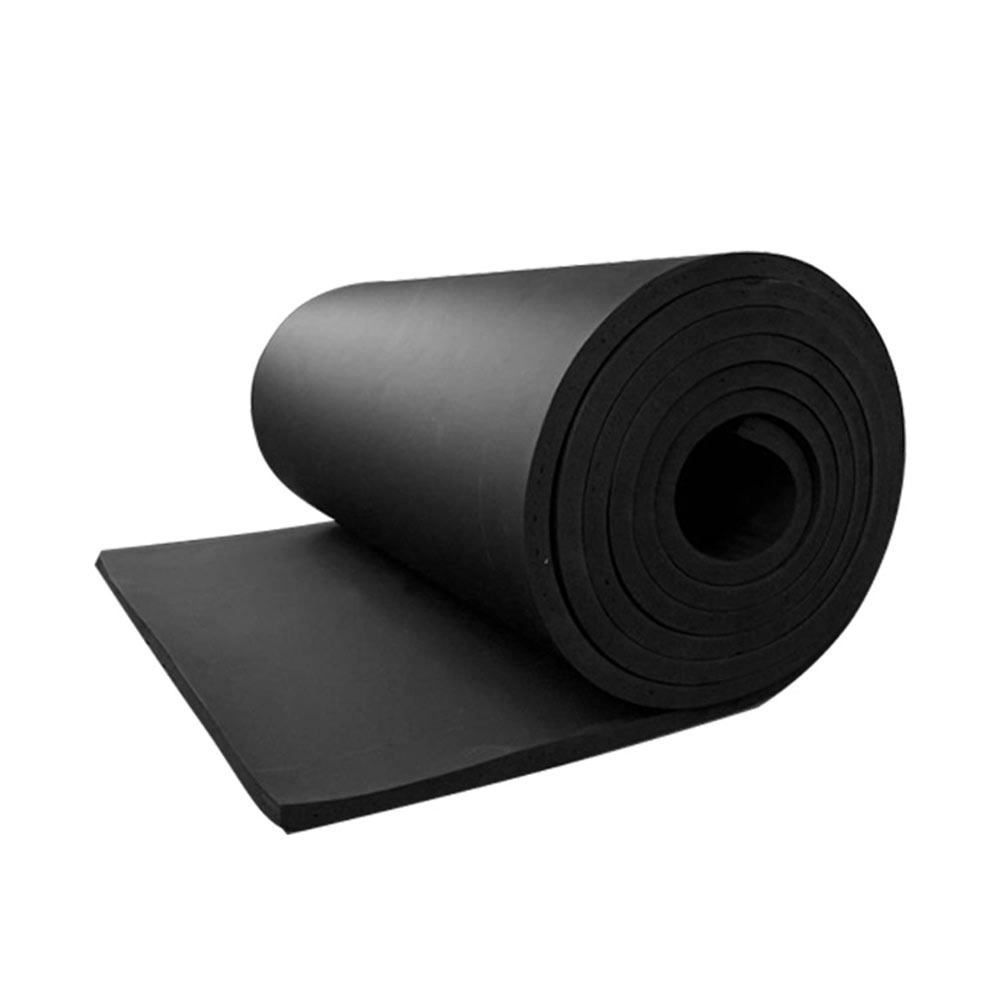
NBR Foam
ASLONG NBR Foam: Wholesale NBR foam solutions for diverse applications. High-quality, durable, and competitively priced. Contact us today for bulk orders.
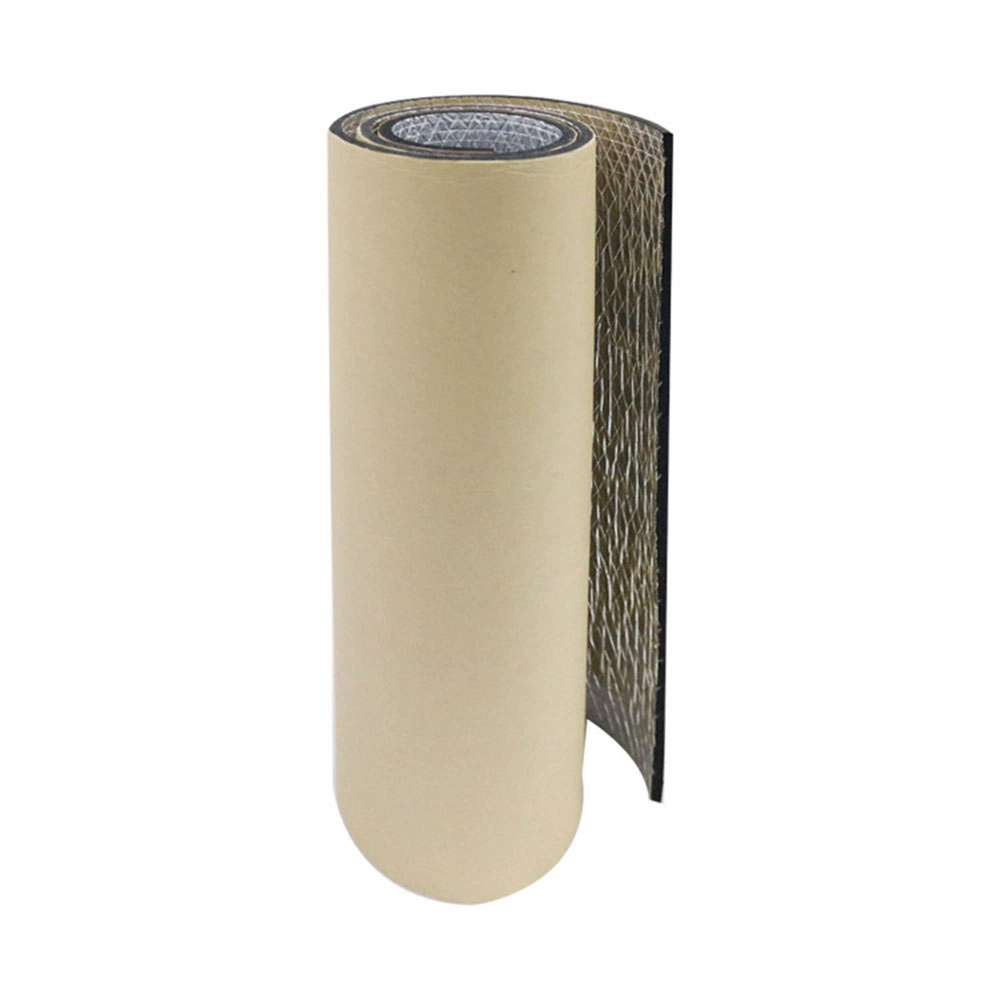
Multi layer Composite NBR foam
ASLONG's multi-layer composite NBR foam is your premium choice for superior cushioning and durability. Ideal for diverse applications, this high-quality NBR foam is available for sale now. Contact us for bulk orders.
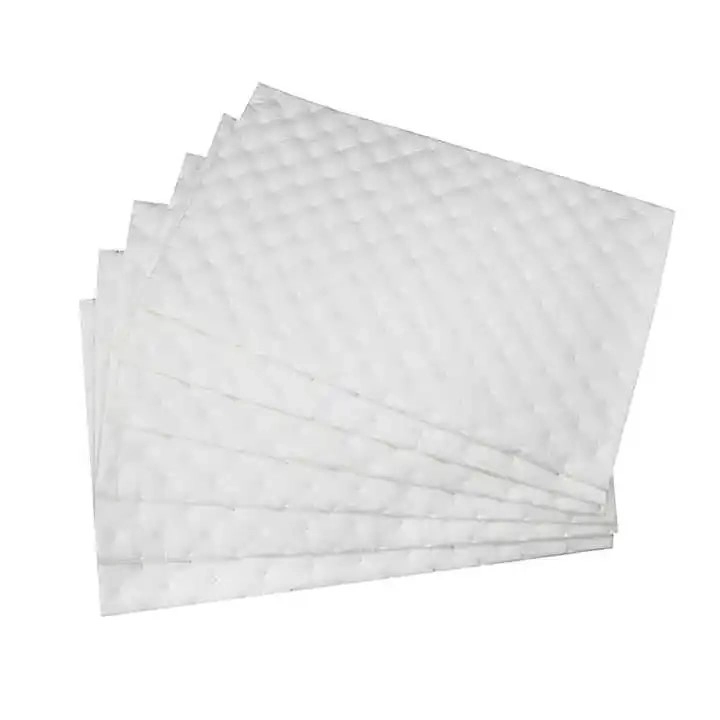
Sound Absorbing White Cotton
Sound-absorbing white cotton Made from PP and PET fibres by melt-blowing, special processes are used to achieve density diversification, sound absorption and noise reduction, thermal insulation, moisture-proof and mold resistance.
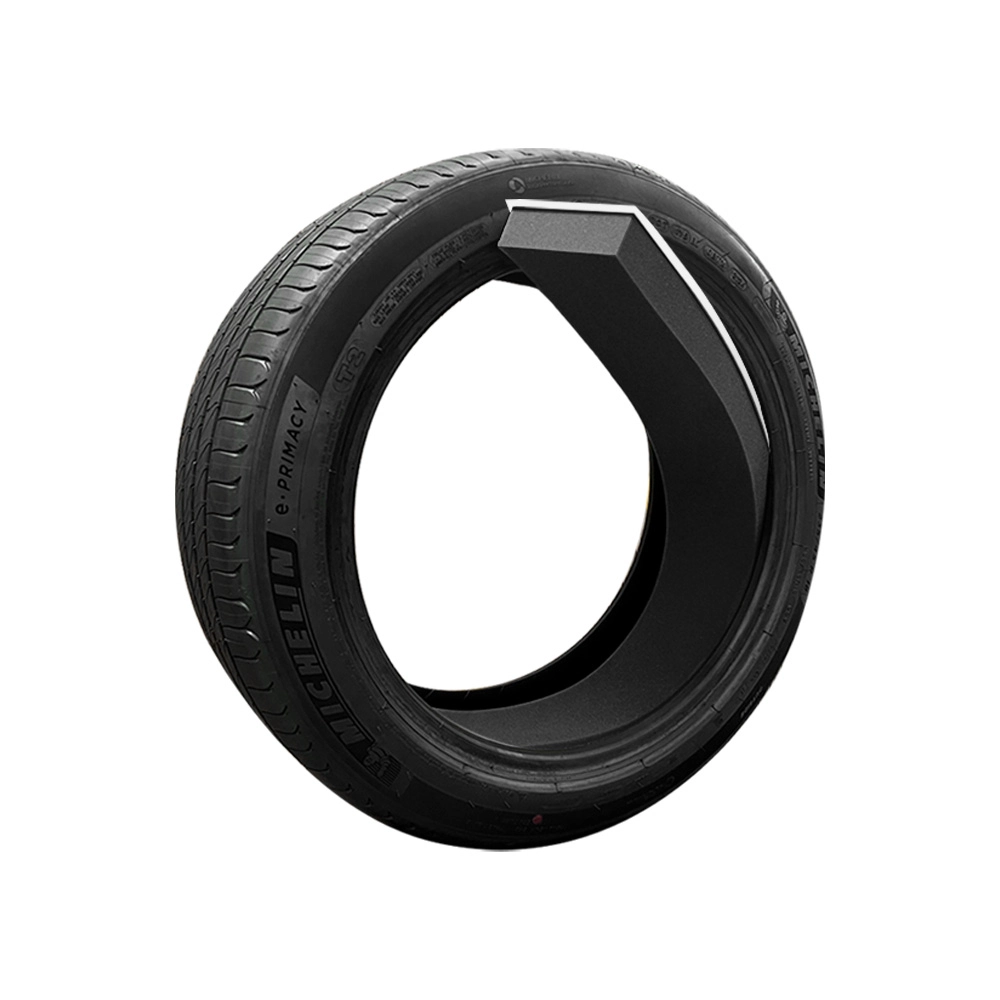
Puncture-Proof Soundproof Tire Foam, Self-Sealing Noise-Reducing Liner for Cars, Anti-Puncture Wheel Protection, Anti-Puncture Noise Reduction
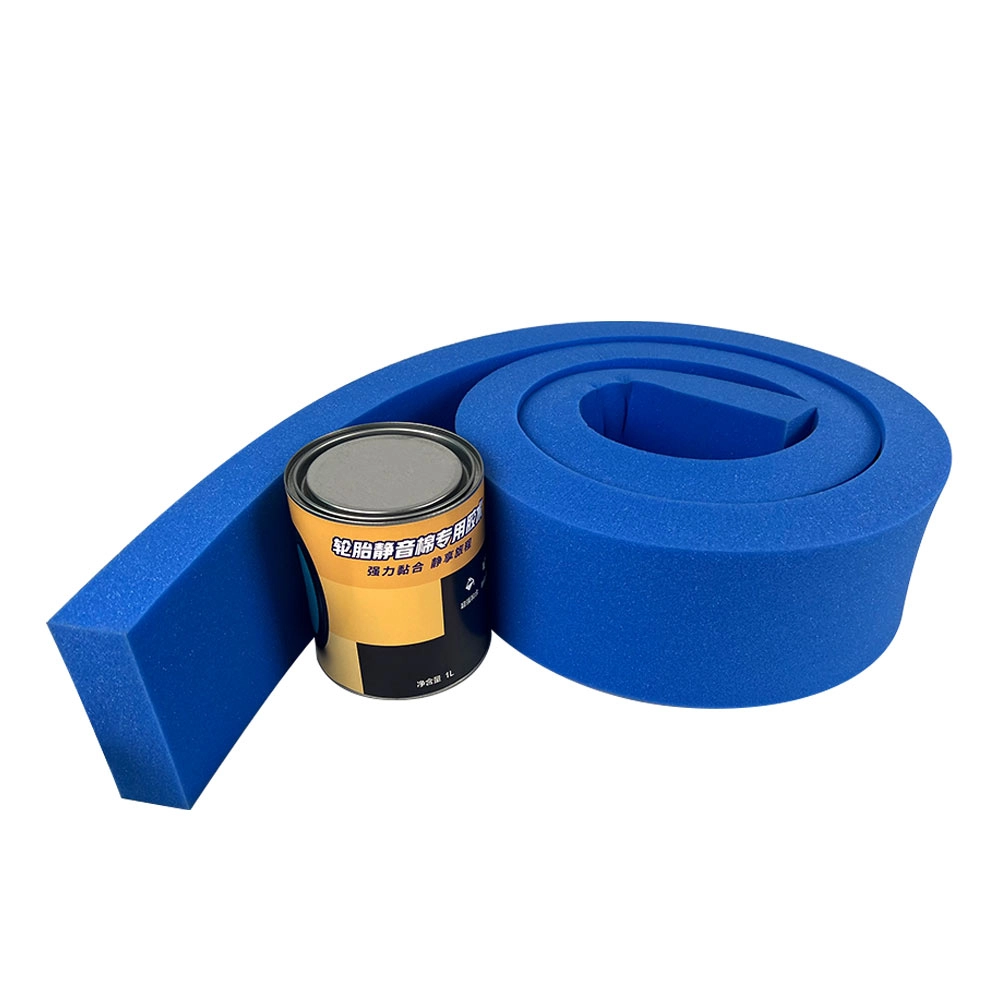
Tire Silent Foam with Special Glue
ASLONG Tire Silent Foam with special glue effectively reduces tire noise. Improve your vehicle's ride comfort. Buy ASLONG Tire Silent Foam for sale now and experience the quiet difference.
Professional support at any time
Contact us for a free quote on our new soundproofing materials!
© 2026 ASLONG All Rights Reserved. Privacy Policy | Terms and Conditions | Sitemap

 It would be pleasure to receive from you.
Whatsapp: +8613242879341
ASLONG Global
ASLONG
Aslong_global