

Professional Studio Solutions From a Sound Insulation Materials Manufacturer (2026 Guide)
- What Are Studio Sound Insulation Materials?
- Key Takeaways: Quick Summary of Professional Studio Soundproofing
- The Physics of Silence: Decoupling, Mass, and Damping Explained
- Top Professional Materials for Complete Studio Isolation
- ASLONG: Industry-Leading Solutions from a Global Manufacturer
- 2026 Studio Construction Trends: Manufacturer-Direct Pricing & Scalability
- Expert Tips & Common Soundproofing Mistakes to Avoid
- Conclusion
- FAQs About Studio sound insulation materials
Building a professional recording environment in 2026 demands more than just sticking foam to the walls. Whether you are constructing a commercial broadcast facility, a podcasting hub, or a high-end music studio, the foundation of pristine audio lies in your Studio sound insulation materials. Unwanted noise—like low-frequency traffic rumble or HVAC vibrations—can easily ruin a perfect take. To achieve absolute acoustic isolation, builders must move beyond basic retail solutions and understand the physics of mass, damping, and decoupling. By leveraging commercial-grade materials directly from specialized manufacturers, you can engineer spaces with world-class Sound Transmission Class (STC) ratings while maintaining strict budget efficiency.
What Are Studio Sound Insulation Materials?
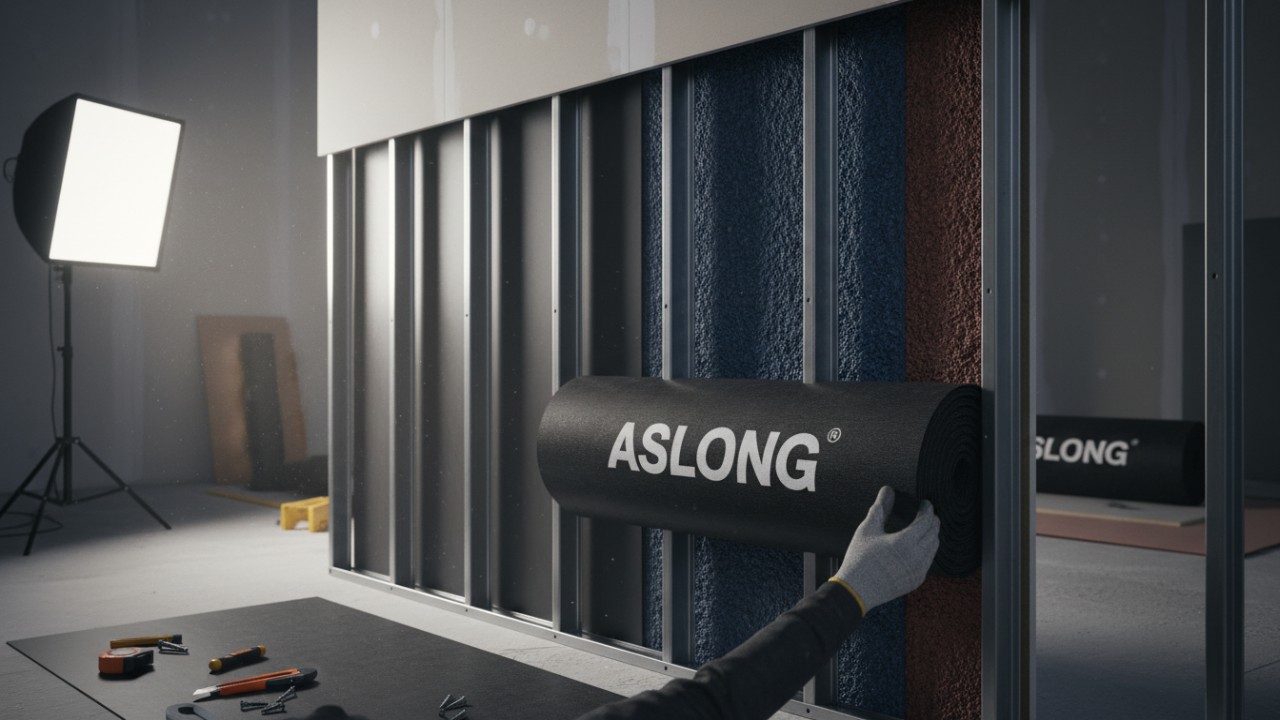
Studio sound insulation materials are specialized, high-density products engineered to block sound transmission and isolate a room from external noise. Unlike lightweight acoustic foam that only absorbs internal echoes, true sound insulation requires heavy mass and structural decoupling to trap acoustic energy.
When evaluating Studio acoustic treatment vs soundproofing, the distinction is critical. Acoustic treatment (like foam or fabric panels) manages how sound behaves inside the room, reducing reverberation. Soundproofing, on the other hand, prevents sound from entering or leaving the space entirely. To achieve this, key materials are deployed inside the wall, floor, and ceiling cavities. These include dense barriers like Mass Loaded Vinyl (MLV), butyl rubber damping mats to kill vibrations, resilient channels for structural separation, and high-density NBR foam. Together, these elements form an impenetrable barrier against both airborne and structure-borne noise.
Key Takeaways: Quick Summary of Professional Studio Soundproofing
The most critical takeaway for professional studio soundproofing is that mass and density are absolute requirements for blocking low-frequency bass and external traffic noise. Sourcing directly from a high-tech manufacturer ensures commercial-grade quality, precise STC ratings, and superior cost-efficiency.
To ensure your 2026 studio build is successful, keep these core principles in mind:
- Mass is Mandatory: Lightweight materials cannot stop heavy sound waves. You must introduce dense barriers to physically block noise transmission.
- The Power of Separation: Air gaps and structural decoupling (often referred to as the room-within-a-room method) prevent vibrational energy transfer through wall studs and floor joists.
- Direct Sourcing: Purchasing Manufacturer direct soundproofing materials eliminates retail markups and guarantees access to authentic, high-performance acoustic products.
- Know the Difference: Always separate your strategy for soundproofing (blocking noise) from acoustic treatment (managing internal reflections).
The Physics of Silence: Decoupling, Mass, and Damping Explained
Achieving absolute silence relies on three core physics principles: decoupling, adding mass, and damping. Decoupling breaks physical connections, mass forcefully stops airborne noise waves, and damping converts kinetic acoustic energy and structural vibrations into trace amounts of heat.
- Decoupling walls and floors: Sound travels exceptionally well through solid structures like wood framing and concrete. Decoupling involves breaking this physical connection between the studio's interior and the exterior building structure. This is typically achieved using floating floors, staggered studs, and resilient clips that suspend the drywall, preventing sound vibrations from passing through the framework.
- Adding Mass: Airborne noise waves carry kinetic energy. To stop them, you must place a heavy, dense object in their path. According to the Mass Law of acoustics, doubling the mass of a partition can increase its Sound Transmission Loss (STL) by approximately 6 decibels. This is why integrating heavy barriers is a non-negotiable step in studio design.
- Damping: Even with mass and decoupling, some low-frequency resonance can occur. Damping involves using specialized viscoelastic compounds or butyl rubber mats to restrict the vibration of the materials themselves. As the structure attempts to vibrate, the damping material converts that kinetic energy into a microscopic amount of heat, effectively killing the resonance.
Top Professional Materials for Complete Studio Isolation
The top materials for complete studio isolation include Mass Loaded Vinyl (MLV) for limp mass, butyl rubber mats for structural damping, and NBR foam for cavity filling. These heavy-duty components work together to block both airborne and impact noise effectively.
When engineering a room for perfect audio capture, professionals rely on a specific stack of materials:
- Mass Loaded Vinyl (MLV) for studios: MLV is the industry standard for adding flexible, limp mass to walls, floors, and ceilings without sacrificing valuable studio square footage. Because it is flexible, it doesn't resonate like rigid drywall, making it exceptionally effective at blocking sound.
- Butyl Rubber Sound Damping Mats: These are essential components for eliminating structural vibrations, low-end rumble, and resonance, particularly in drum rooms or spaces above mechanical equipment. They provide High-density sound damping that stabilizes the entire structural frame.
- Sound Absorbing White Cotton & NBR Foam: These serve as high-performance internal cavity fillers. They outperform standard fiberglass in both safety (non-toxic handling) and acoustic absorption, preventing the wall cavity from acting like a resonant drum.
- Specialty Sealants and Tapes: Utilizing butyl waterproof tapes and tire silent foam helps create airtight seals around critical leak points like doors, windows, and HVAC vents.
Material Performance Comparison
| Material | Primary Function | Ideal Studio Application | Key 2026 Benefit |
|---|---|---|---|
| Mass Loaded Vinyl (MLV) | Adding limp mass | Walls, ceilings, floors | Maximum STC gain per inch of thickness |
| Butyl Rubber Damping Mat | Vibration damping | Drum risers, metal framing | Eliminates low-end structural rumble |
| NBR Foam | Cavity absorption | Inside wall/ceiling gaps | Superior thermal & acoustic mix |
| Sound Absorbing White Cotton | Eco-friendly absorption | Wall cavities, acoustic panels | Non-toxic, sustainable alternative to fiberglass |
ASLONG: Industry-Leading Solutions from a Global Manufacturer
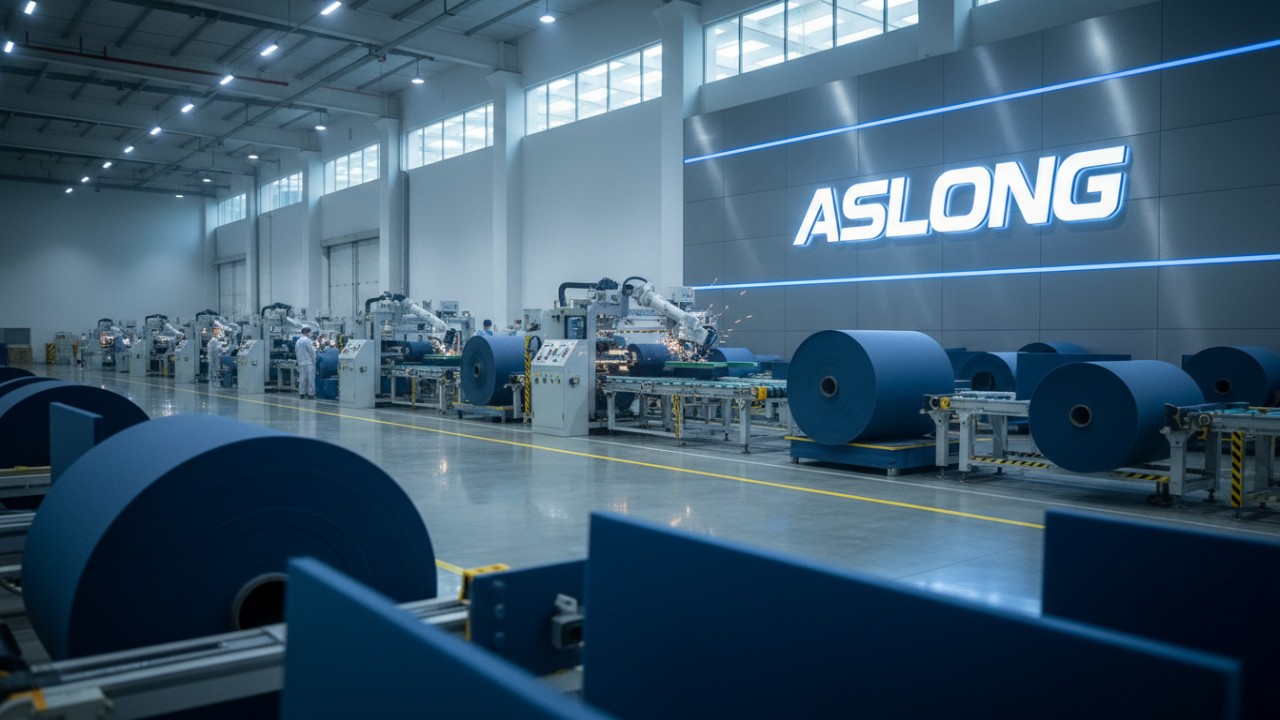
Founded in 2000, ASLONG (Welllink Guangdong New Material Co., Ltd.) is a high-tech enterprise specializing in the R&D, production, and sales of premium acoustic materials. We operate a modern production base of over 10,000 square meters, providing high-performance soundproofing solutions globally.
As a trusted manufacturer, ASLONG provides direct access to studio essentials like MLV, NBR Foam, Sound White Cotton, and Butyl Rubber. Our products have been rigorously tested and exported to Europe, North America, Asia, and Africa, delivering efficient, environmentally friendly, and high-performance solutions for commercial broadcast facilities and professional recording studios.
Because we manage the entire manufacturing process, we understand the exact material science required to hit strict acoustic targets. We are currently recruiting agents worldwide to partner in distributing cutting-edge acoustic construction materials. For businesses looking to scale their operations or supply large builds, we highly recommend reviewing our comprehensive Commercial sound insulation materials manufacturer guide.
2026 Studio Construction Trends: Manufacturer-Direct Pricing & Scalability
The defining studio construction trend of 2026 is bypassing retail markups by purchasing high-volume materials direct from the factory. This approach ensures supply chain efficiency, strict eco-friendly compliance, and immense scalability for large multi-room commercial complexes.
As the demand for high-quality audio content (podcasts, spatial audio, film scoring) continues to rise, the standards for studio construction are becoming stricter. According to acoustic guidelines published by Mecart, professional recording studios now require an STC rating between 50 and 65+ to effectively block external noise and ensure pristine recording conditions. Hitting these numbers using consumer-grade retail kits is prohibitively expensive.
By navigating supply chain efficiencies and purchasing direct from a manufacturer like ASLONG, studio builders can afford the sheer volume of MLV and damping mats required to hit STC 65+. Furthermore, 2026 sustainability standards are pushing the industry away from toxic traditional mineral wools. Eco-friendly alternatives like Sound Absorbing White Cotton are rapidly becoming the standard, offering safer installation for contractors and healthier air quality for studio engineers.
Expert Tips & Common Soundproofing Mistakes to Avoid
The most common soundproofing mistake is relying on cheap acoustic egg-crate foam to block noise, as foam only treats internal reflections. To truly soundproof a room, you must avoid air leaks and combine mass with a fully decoupled framing system.
- Mistake: The Acoustic Foam Myth. Many beginners mistakenly believe that gluing acoustic foam to a wall will "soundproof" it. Foam only absorbs internal sound reflections to reduce echo; it does absolutely nothing to stop sound from escaping or entering the room.
- Mistake: Ignoring the 1% Rule. Sound behaves like water. If there is a hole, it will leak through. Leaving even a 1% air gap under a door, around an HVAC vent, or at an electrical outlet can ruin 90% of the room's isolation capabilities. Airtight sealing with butyl tape is mandatory.
- Expert Tip: For the highest possible Sound Transmission Class (STC) rating, combine ASLONG's Mass Loaded Vinyl with a fully decoupled framing system (like resilient channels) and fill the resulting cavity with Sound Absorbing White Cotton.
Conclusion
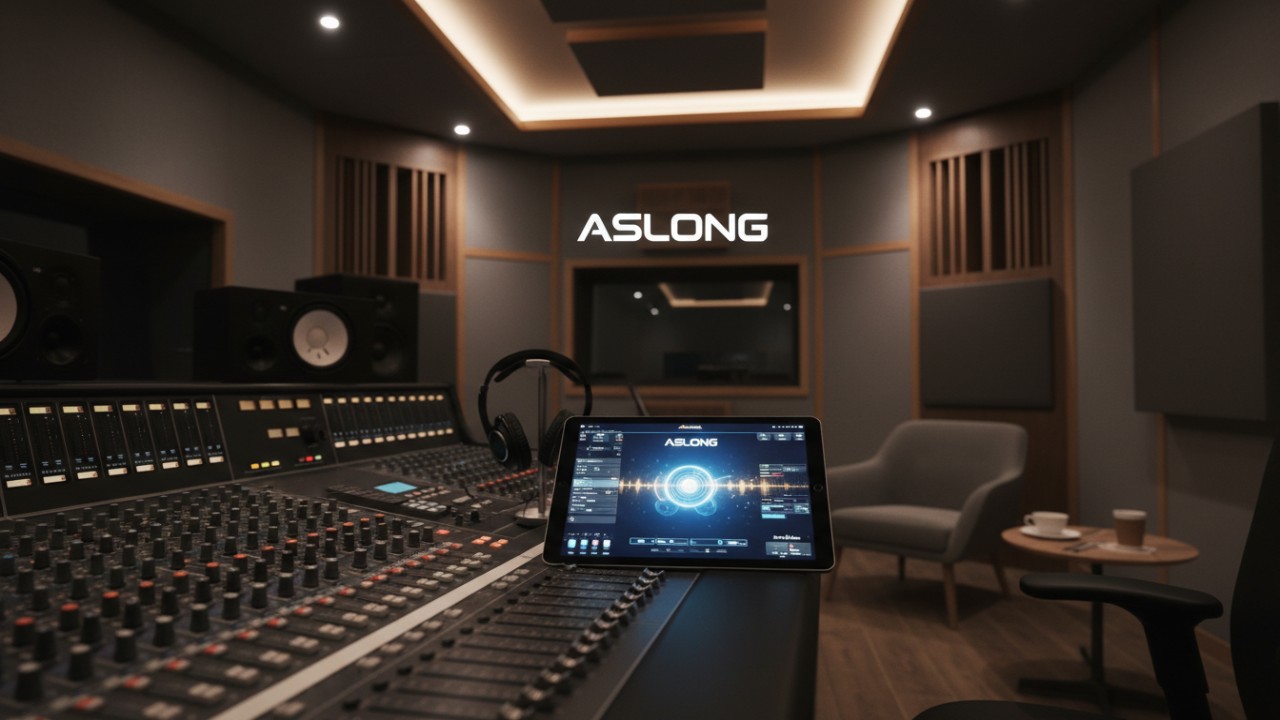
Achieving a truly professional recording environment requires a strict combination of mass, structural decoupling, and high-quality damping materials. Sourcing advanced materials like MLV, NBR foam, and butyl rubber directly from an experienced manufacturer guarantees top-tier performance and project scalability.
Whether you are retrofitting a single mixing room or constructing a massive commercial broadcast facility, understanding the physics of sound transmission is the first step to success. By utilizing heavy, flexible barriers and breaking structural connections, you can create a space immune to the noise of the outside world. Partnering with a global leader like ASLONG ensures you have access to the exact specifications, bulk pricing, and innovative materials required for a flawless 2026 build. Contact us today to optimize your Studio sound insulation materials strategy.
FAQs About Studio sound insulation materials
What is the best material for soundproofing a recording studio?
The best materials combine dense mass and flexibility. Mass Loaded Vinyl (MLV) and Butyl Rubber Sound Damping Mats are top choices for blocking airborne and structural noise. Internal cavity insulation like Sound Absorbing White Cotton is also essential to prevent the walls from resonating.
Does acoustic foam actually soundproof a room?
No, acoustic foam does not soundproof a room. Foam only absorbs internal sound reflections to reduce echo. To block sound from entering or leaving, you need heavy materials like MLV and decoupled drywall.
What is Mass Loaded Vinyl (MLV) used for in studios?
MLV is a dense, flexible barrier used to add limp mass to walls, ceilings, and floors. It blocks sound waves from passing through structures. It is highly favored in studios because it provides massive sound-blocking power without taking up much physical space.
How much does it cost to soundproof a studio professionally?
Costs vary heavily based on room size and isolation needs. Retail consumer kits can be extremely expensive. Purchasing materials directly from a manufacturer like ASLONG drastically reduces costs for commercial studio builds, allowing for better scalability.
What is the difference between sound absorption and sound insulation?
Sound insulation (soundproofing) blocks noise from traveling between rooms using mass and decoupling. Sound absorption reduces reverberation and echo within the same room using soft, porous materials. A professional studio requires both to function properly.
How does Butyl Rubber help with sound damping?
Butyl rubber is a viscoelastic material that excels at shock absorption. When applied to structures, it stops materials from vibrating. It converts kinetic sound energy (vibrations) into trace amounts of low-grade heat, effectively killing low-frequency rumble.
Can I soundproof a room without taking down the drywall?
While it is possible to add layers of MLV and an extra layer of drywall over existing walls, it is less effective. True soundproofing usually requires accessing the wall cavity to add insulation and resilient channels for decoupling. Surface-level treatments offer minimal sound blocking.
Why should I buy sound insulation materials directly from a manufacturer?
Buying direct from a high-tech manufacturer ensures product authenticity and commercial-grade specifications. It eliminates middleman retail markups. Companies like ASLONG offer diverse product ranges, including NBR foam and butyl tape, suitable for large-scale professional builds.
Lightweight vs Heavy Sound Deadening Materials: Which One Should You Choose?
Practical Case Studies: Door, Floor & Roof Soundproofing Solutions for Cars
Soundproofing Materials for Vehicles: A Complete Guide to a Quieter Ride
Venue-Specific Solutions From a New Sound Insulation Materials Manufacturer (2026 Guide)
Fireproof Standards for Boards From Sound Insulation Materials Manufacturers (2026 Guide)
FAQs
What specific functions can ASLONG's products provide?
Our products cover functions such as insulation, sound insulation, shock absorption, waterproofing and sealing, and are widely used in improving energy efficiency, reducing noise, controlling vibration, protecting equipment, etc., helping customers optimize engineering effects and improve user experience.
Do ASLONG's products meet environmental protection standards?
Yes, all ASLONG products comply with ISO14001 environmental management system certification and global environmental protection standards. We use environmentally friendly materials and are committed to providing sustainable solutions to help customers achieve green development goals.
Does ASLONG provide after-sales service?
Yes, we provide a full range of after-sales services, including technical support, installation guidance, product maintenance and quality tracking, etc., to ensure that each project goes smoothly and continues to perform at its best.
How to customize products that meet the needs of my industry?
You only need to contact our sales or technical team, we will conduct an in-depth analysis based on your industry needs and provide tailor-made products and solutions. We guarantee to provide you with efficient and accurate services to meet your personalized requirements.
What industries are the products provided by ASLONG suitable for?
ASLONG's products are suitable for multiple industries, including air conditioning and HVAC, construction and waterproofing, automobiles and transportation, home appliances and electronics, industrial equipment and machinery, etc. We provide customized solutions for each industry to meet different needs.
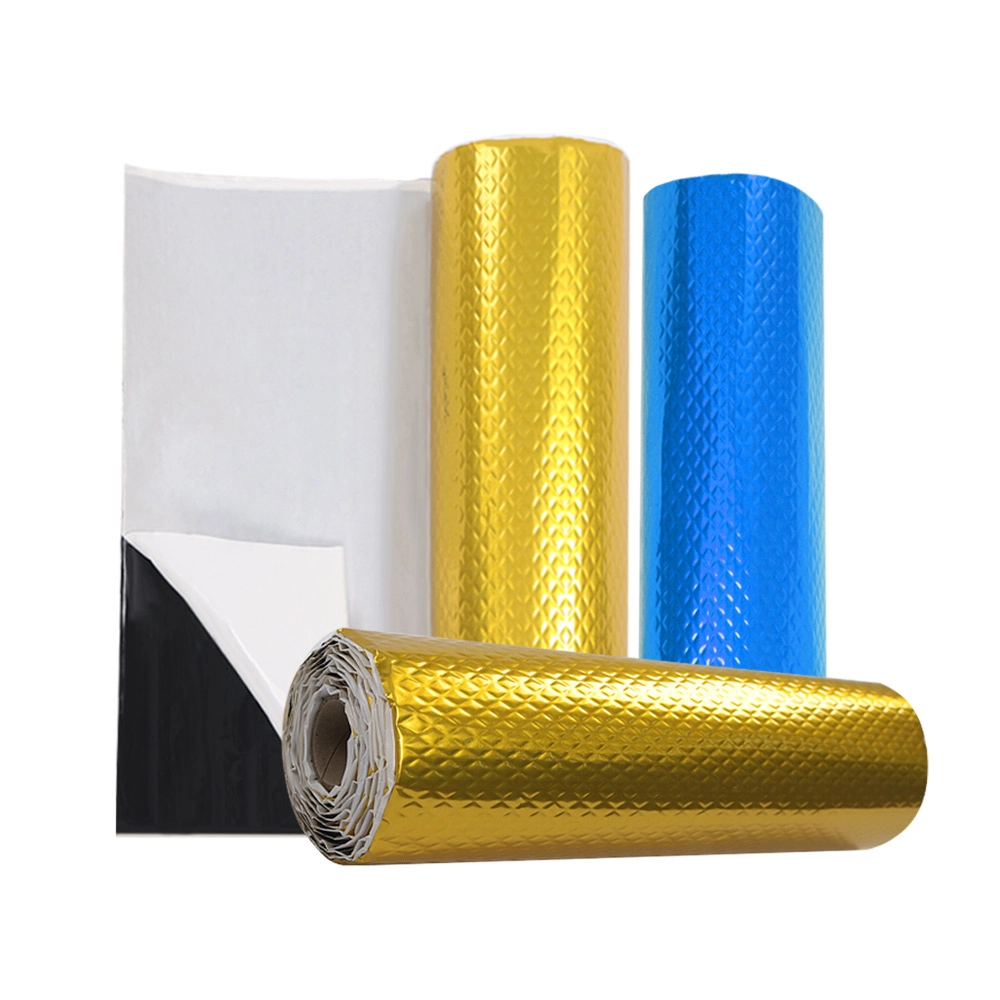
Butyl Rubber Sound Damping Mat
ASLONG Butyl Rubber Sound Damping Mat for sale. Effectively reduces noise and vibrations. High-quality butyl rubber ensures superior performance and durability. Ideal for automotive, industrial, and home applications.
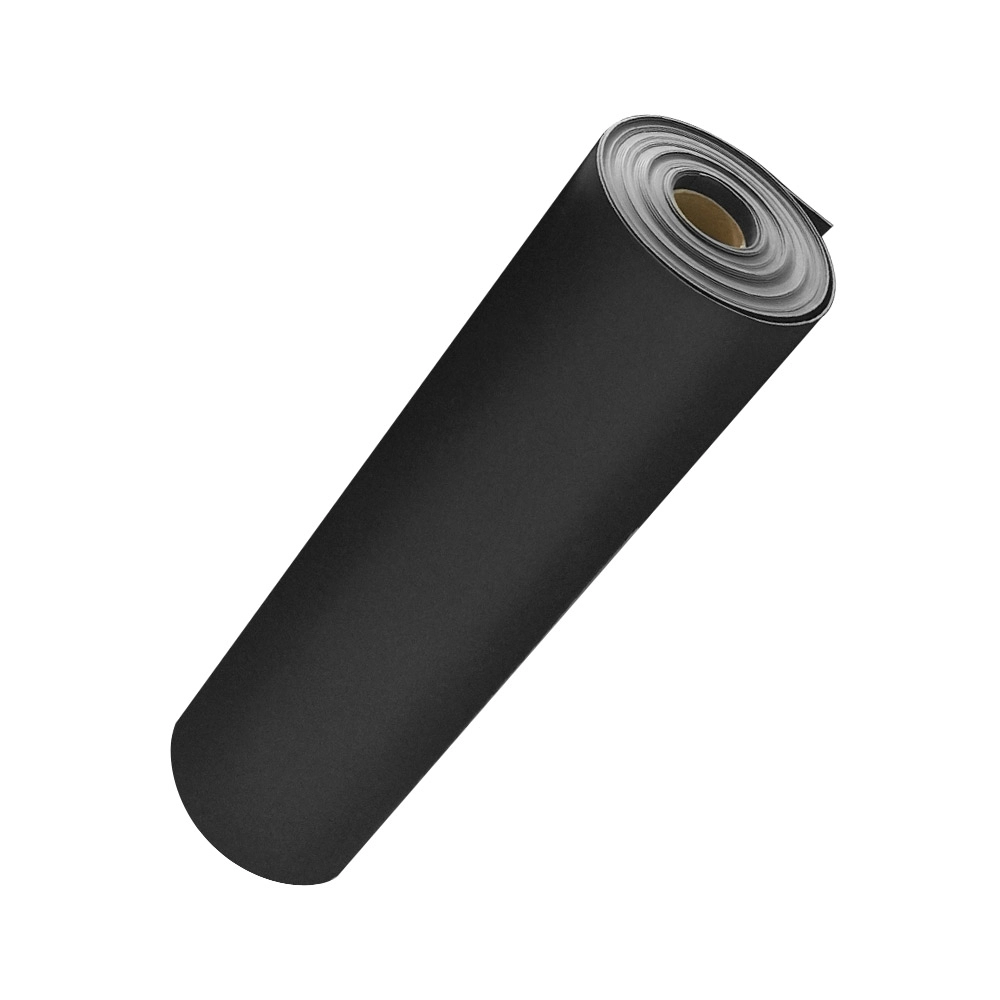
Mass Loaded Vinyl
ASLONG Mass Loaded Vinyl for sale. Reduce noise pollution effectively with our high-quality, mass-loaded vinyl. Ideal for soundproofing walls, floors, and more. Buy now and experience the difference!
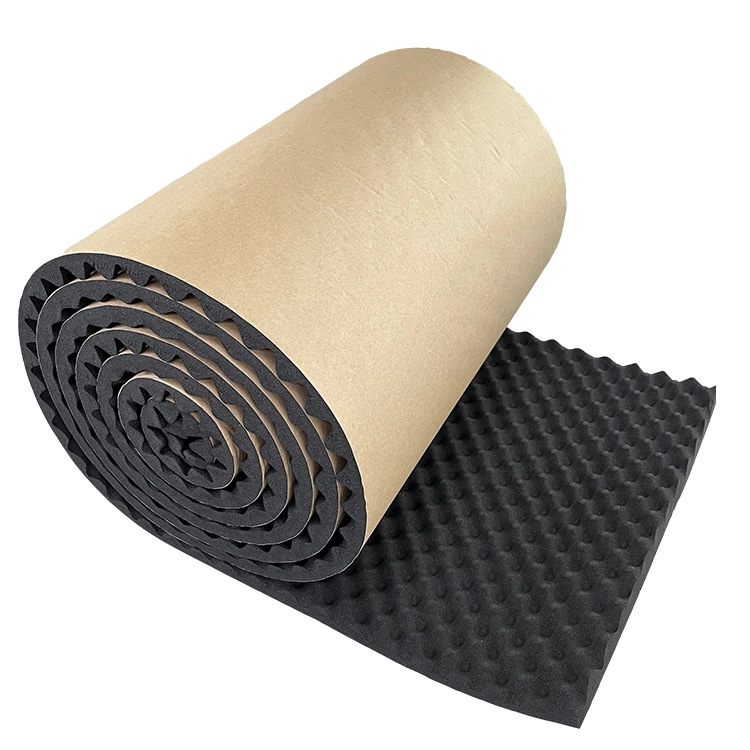
Egg Crate Foam
ASLONG Egg Crate Foam for sale. Lightweight, breathable, and comfortable, our egg crate foam provides superior support and pressure relief. Perfect for mattresses, cushions, cars, construction industry, KTV, factories, etc.
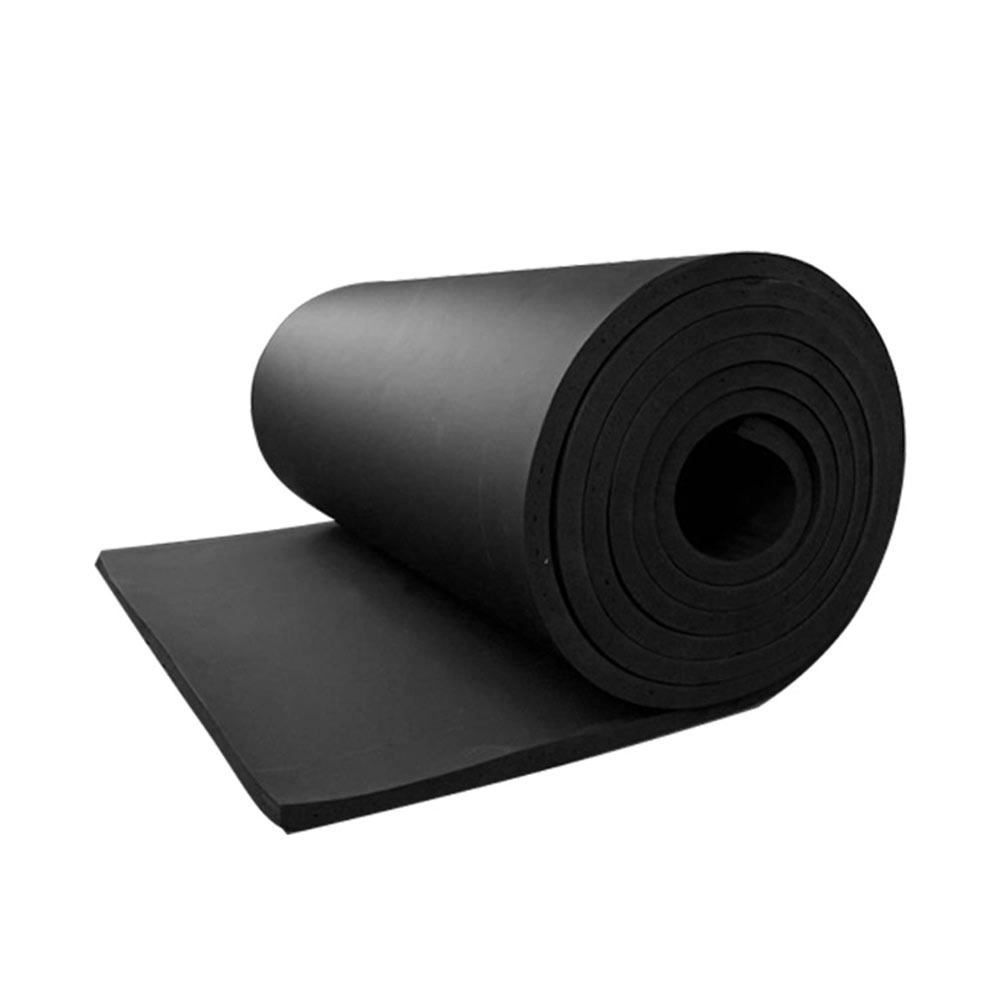
NBR Foam
ASLONG NBR Foam: Wholesale NBR foam solutions for diverse applications. High-quality, durable, and competitively priced. Contact us today for bulk orders.
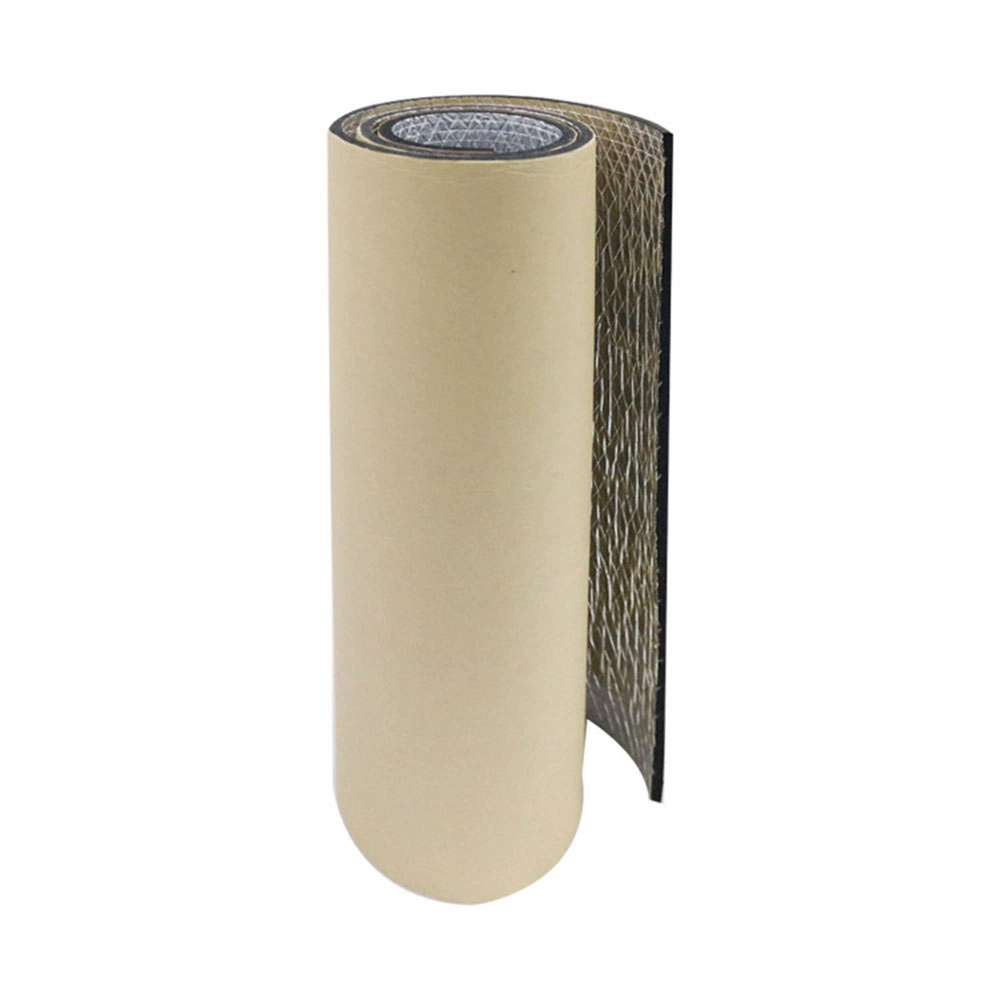
Multi layer Composite NBR foam
ASLONG's multi-layer composite NBR foam is your premium choice for superior cushioning and durability. Ideal for diverse applications, this high-quality NBR foam is available for sale now. Contact us for bulk orders.
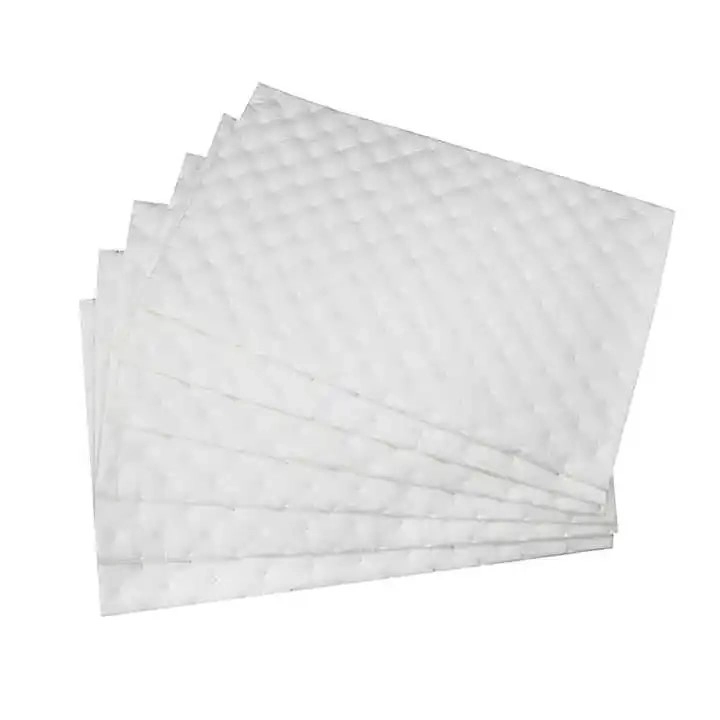
Sound Absorbing White Cotton
Sound-absorbing white cotton Made from PP and PET fibres by melt-blowing, special processes are used to achieve density diversification, sound absorption and noise reduction, thermal insulation, moisture-proof and mold resistance.
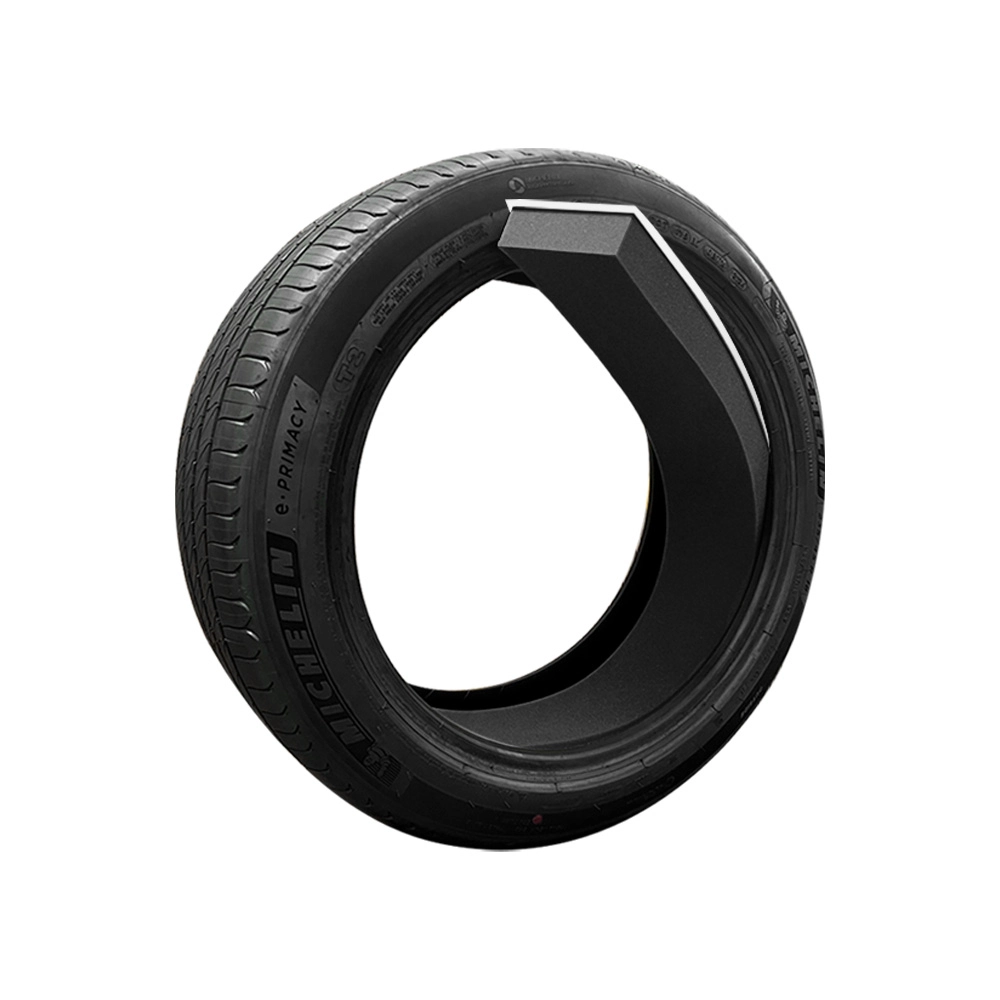
Puncture-Proof Soundproof Tire Foam, Self-Sealing Noise-Reducing Liner for Cars, Anti-Puncture Wheel Protection, Anti-Puncture Noise Reduction
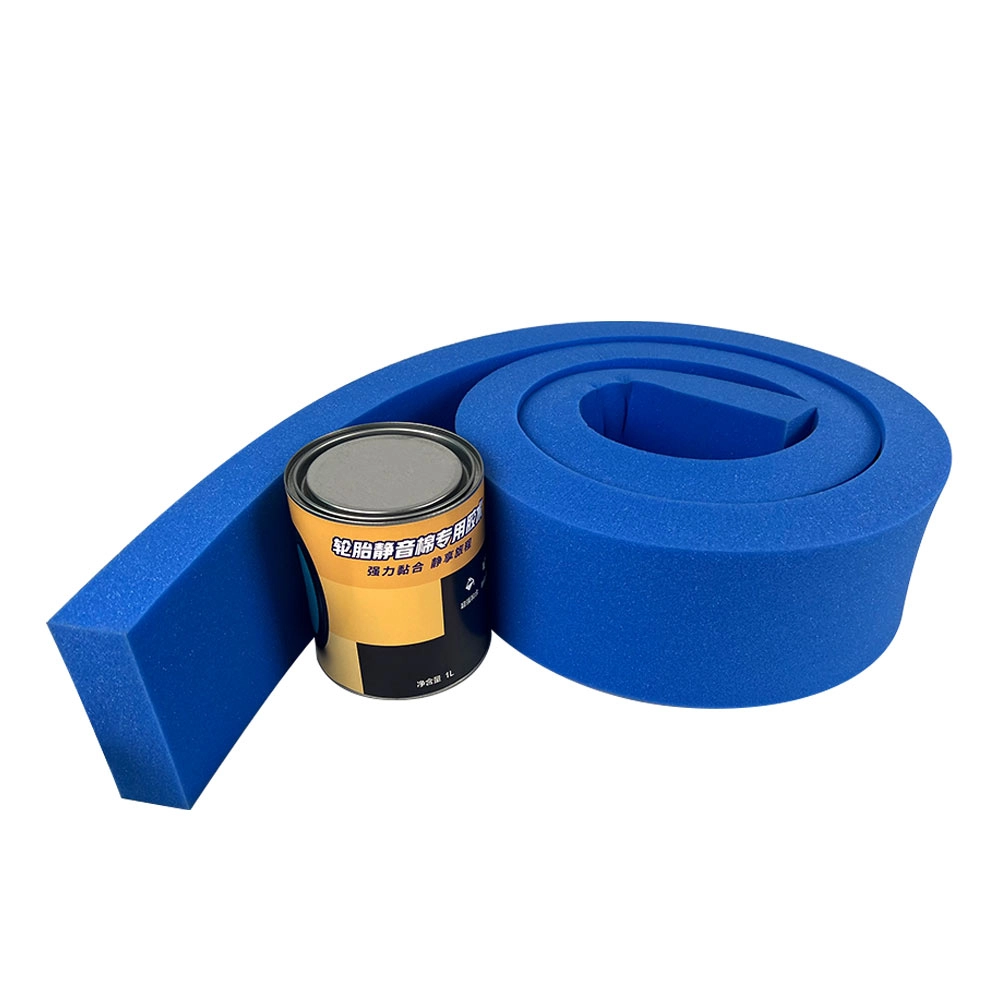
Tire Silent Foam with Special Glue
ASLONG Tire Silent Foam with special glue effectively reduces tire noise. Improve your vehicle's ride comfort. Buy ASLONG Tire Silent Foam for sale now and experience the quiet difference.
Professional support at any time
Contact us for a free quote on our new soundproofing materials!
© 2026 ASLONG All Rights Reserved. Privacy Policy | Terms and Conditions | Sitemap

 It would be pleasure to receive from you.
Whatsapp: +8613242879341
ASLONG Global
ASLONG
Aslong_global