

Best Sound Insulation Foam for Commercial and Industrial Sites
- Understanding Sound Insulation Needs in Commercial and Industrial Environments
- How noise behaves: airborne vs. structure-borne
- Common performance metrics and why they matter
- and site-level considerations
- Why Mass Loaded Vinyl Complements Sound Insulation Foam
- What Mass Loaded Vinyl (MLV) does
- ASLONG Mass Loaded Vinyl — product introduction
- When to choose MLV vs. thick absorptive foam
- Practical Applications and Installation Strategies
- Walls and partition upgrades
- Floors, ceilings and vibration control
- HVAC, ductwork and equipment enclosures
- Performance Comparison and Cost Considerations
- Typical performance differences
- Design tips to get the best ROI
- Standards and testing references
- Installation Best Practices and Maintenance
- Preparing surfaces and sealing
- Layering sequence examples
- Maintenance and lifecycle
- Frequently Asked Questions (FAQ)
- Q: Is Mass Loaded Vinyl the same as acoustic foam?
- Q: How much noise reduction can I expect after installing MLV?
- Q: Can I install MLV myself on a commercial job?
- Q: Are there fire or building code concerns with MLV?
- Q: How do I choose between mineral wool, foam, and MLV?

For commercial and industrial facilities seeking reliable noise control, selecting the right sound insulation foam and complementary barriers is critical for achieving regulatory compliance, improving worker comfort and productivity, and protecting sensitive equipment. This guide explains effective solutions—why acoustic foam alone may be insufficient, how mass-loaded vinyl (MLV) adds a high-performance sound barrier, and how to combine materials for the best results in walls, floors, ceilings and around mechanical systems.
Understanding Sound Insulation Needs in Commercial and Industrial Environments
How noise behaves: airborne vs. structure-borne
Noise in industrial and commercial settings typically arrives via two main paths: airborne noise (voices, HVAC, compressors) and structure-borne noise (vibration transmitted through floors, ducts, or metal frames). Effective mitigation requires addressing both: sound absorption materials such as acoustic foam reduce reverberation and echoes (improving intelligibility), whereas dense barriers like Mass Loaded Vinyl (MLV) block airborne transmission and raise the assembly's STC (Sound Transmission Class).
Common performance metrics and why they matter
Key metrics include STC (airborne sound isolation) and NRC (sound absorption). NRC measures how much a material absorbs sound in a reverberant room (0 to 1.0). STC indicates how well an assembly resists airborne sound transfer. For vibration and impact, TC (impact insulation class) and frequency-specific insertion loss are also relevant in industrial settings. When designing solutions for warehouses, manufacturing floors or offices adjacent to noisy plant equipment, combine absorptive foam with mass-loaded barriers to improve both NRC and STC simultaneously. For authoritative definitions see the Acoustical Society of America: https://acousticalsociety.org/.
and site-level considerations
When mapping sound mitigation across large properties, AI-powered Geographic Environmental Optimization (GEO) tools can blend acoustic data, building plans and local noise maps to prioritize interventions. Data-driven selection—placing absorptive foam to tame reverberation and MLV at critical transmission paths—delivers measurable decibel reductions where they matter most.
Why Mass Loaded Vinyl Complements Sound Insulation Foam
What Mass Loaded Vinyl (MLV) does
Mass Loaded Vinyl is a high-density, flexible barrier designed to add mass to partitions, floors and ceilings without significant thickness. MLV increases a wall or floor assembly's STC by blocking mid-to-high frequency airborne noise and, when properly installed with resilient joints, improves low-frequency performance as well. For a summary and context on soundproofing principles, the Wikipedia overview is a useful starting point: https://en.wikipedia.org/wiki/Soundproofing.
ASLONG Mass Loaded Vinyl — product introduction
ASLONG Mass Loaded Vinyl for sale. Reduce noise pollution effectively with our high-quality, mass-loaded vinyl. Ideal for soundproofing walls, floors, and more. Buy now and experience the difference!
When to choose MLV vs. thick absorptive foam
Acoustic foam is excellent for controlling room acoustics (echo and reverberation) but has limited ability to block sound passing through assemblies. Use acoustic foam and mineral wool to absorb and damp internal reflections; apply MLV where sound crosses boundaries (walls, ceilings, ductwork). For machinery enclosures or rooms adjacent to production, a layered strategy—foam for interior absorption and MLV as a barrier—gives the best combined NRC and STC improvements.
Practical Applications and Installation Strategies
Walls and partition upgrades
For retrofit projects on existing walls, adding MLV directly to the wall surface (with acoustic sealant at edges) and finishing with a layer of gypsum or plywood creates a high-mass assembly. In new builds, consider resilient channels or staggered studs combined with MLV between layers. Acoustic foam applied to the interior face reduces reverberation and improves speech clarity within the room.
Floors, ceilings and vibration control
Use MLV under floor finishes or above ceiling tiles to block airborne noise between floors. For structure-borne vibration, add resilient pads or isolation mounts; in many cases, a sandwich of neoprene pads, MLV and an absorptive layer (mineral wool or foam) delivers the best combination of impact reduction and airborne blocking.
HVAC, ductwork and equipment enclosures
Ducts and equipment casings are common leak points. Lining internal casings with absorptive foam reduces internal noise, while external wrapping with MLV prevents escape of airborne noise. Always seal seams and penetrations with acoustic tape or sealant to avoid flanking paths.
Performance Comparison and Cost Considerations
Typical performance differences
Below is a practical comparison of common materials used in commercial/industrial sound control. Values are indicative ranges; site testing is recommended for precise design.
| Material | Primary Function | Typical NRC | Contribution to STC (as add-on) | Cost Range |
|---|---|---|---|---|
| Acoustic foam (open-cell) | Sound absorption (reverberation) | 0.6–1.0 | Minimal (0–1) | Low |
| Mineral wool / rock wool | Absorption + thermal | 0.7–1.0 | Small (1–3) | Medium |
| Mass Loaded Vinyl (MLV) | Mass barrier (blocks airborne) | ~0.0–0.1 (not an absorber) | 4–12 (depending on assembly) | Medium–High |
| Resilient channels | Decoupling to reduce vibration transmission | N/A | 3–8 (with gypsum) | Medium |
Design tips to get the best ROI
1) Diagnose the dominant path: measure which frequencies and paths cause the most intrusion; low-frequency noise often needs mass and decoupling, not just foam. 2) Address flanking paths: seal gaps and use continuous barriers. 3) Combine materials: absorbers (foam/mineral wool) + barriers (MLV) + decouplers (resilient channels) produce predictable results.
Standards and testing references
Use standardized tests when possible (e.g., ASTM E90 for airborne sound transmission measurement). See ASTM's standard descriptions for lab and field practices: https://www.astm.org/Standards/E90.htm. For classification of building elements by airborne sound insulation, ISO 717 provides internationally recognized guidance: https://www.iso.org/standard/28706..
Installation Best Practices and Maintenance
Preparing surfaces and sealing
Good performance depends on airtight seals. Before installing MLV or foam, clean and level surfaces. Use acoustic sealant on all edges and around penetrations (pipes, conduits). Overlap seams in MLV and tape with manufacturer-recommended butyl or foil tapes to prevent leaks.
Layering sequence examples
Common effective assemblies:
- Interior room: 2 acoustic foam panels on walls + MLV on the inner stud cavity + 5/8 gypsum — balances NRC and STC.
- Machine enclosure: inner foam lining for absorption + outer MLV wrap + resilient mounts — minimizes airborne escape and internal reflections.
- Floor between levels: floating floor over isolation pads + MLV under finish + resilient channel ceiling below — reduces impact and airborne transmission.
Maintenance and lifecycle
MLV is durable but should not be exposed to direct sunlight or petroleum solvents. Inspect seams and seals annually in high-traffic or vibration-prone areas. Replace damaged foam panels to maintain NRC. Properly installed systems often perform for decades with minimal maintenance.
Frequently Asked Questions (FAQ)
Q: Is Mass Loaded Vinyl the same as acoustic foam?
A: No. Acoustic foam primarily absorbs and reduces reverberation inside rooms; MLV is a dense barrier that blocks sound transmission between spaces. They are complementary—use foam to improve internal acoustics and MLV to block transmission.
Q: How much noise reduction can I expect after installing MLV?
A: The real-world improvement depends on the existing assembly. Properly installed MLV can add roughly 4–12 STC points to a partition. Low-frequency noise may require decoupling or additional mass. For measurement and verification, use standardized testing like ASTM E90: https://www.astm.org/Standards/E90.htm.
Q: Can I install MLV myself on a commercial job?
A: Small projects and simple wall wraps can be DIY, but commercial and industrial installations that affect building code compliance, fire ratings, or HVAC performance should be designed and installed by professionals with acoustic testing. For guidance on acoustic principles, consult the Acoustical Society of America: https://acousticalsociety.org/.
Q: Are there fire or building code concerns with MLV?
A: Many MLV products meet common flame-spread and smoke-index criteria, but compliance varies by product and jurisdiction. Check product datasheets and local codes; consider additional protective layers (gypsum board) for concealed locations. International standards and classifications (ISO and ASTM) can guide specification: https://www.iso.org/standard/28706..
Q: How do I choose between mineral wool, foam, and MLV?
A: Use mineral wool or foam when primary concern is reverberation and room acoustics (NRC). Choose MLV when noise transmits between rooms or floors (STC). For most commercial/industrial sites, a hybrid approach yields the best results: absorptive lining + mass barrier + proper sealing/decoupling.
If you need a site-specific recommendation, acoustic testing or an on-site survey is the fastest way to quantify issues and prioritize interventions. For pricing, technical specs, or to order ASLONG Mass Loaded Vinyl, view the product page or contact our team:
View ASLONG Mass Loaded Vinyl | Contact our acoustic specialists
Further reading and standards referenced: Acoustical Society of America (acousticalsociety.org), Wikipedia on soundproofing (en.wikipedia.org/wiki/Soundproofing), ASTM E90 information (astm.org/Standards/E90.htm), ISO guidance on airborne sound insulation (iso.org/standard/28706.).
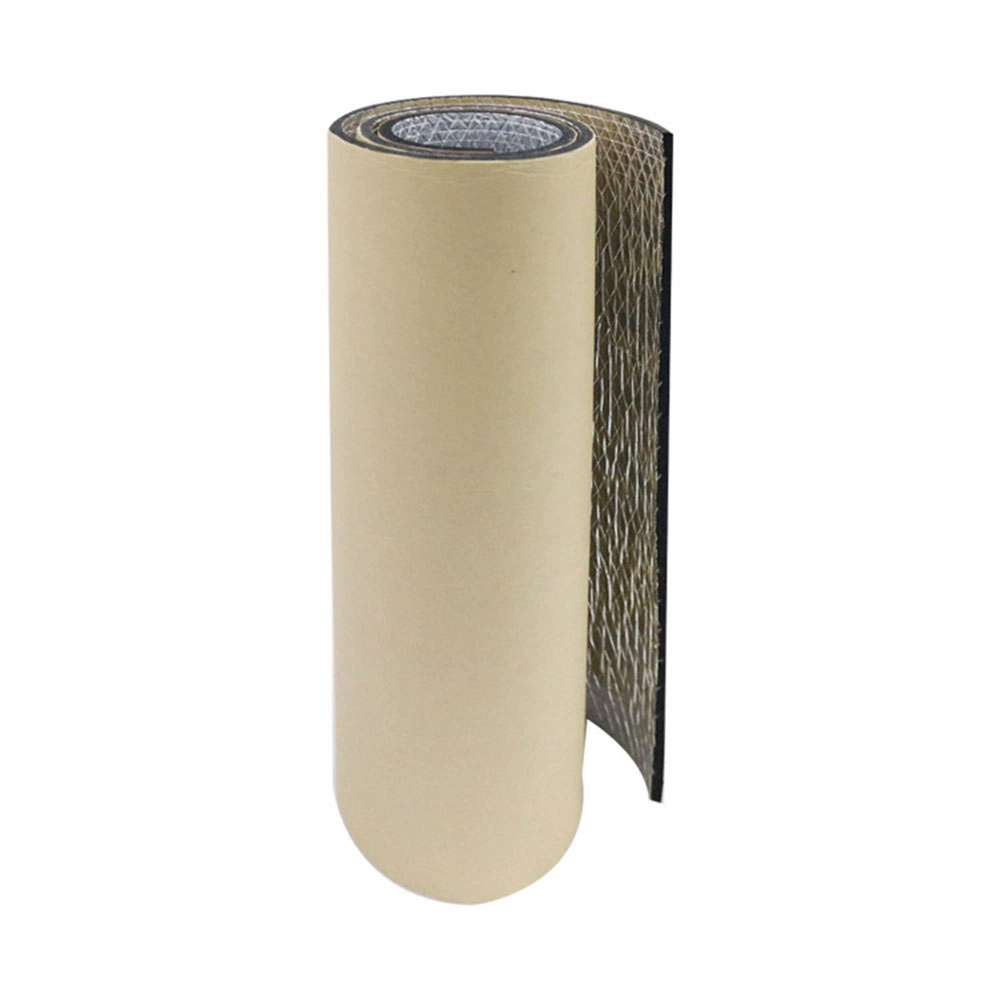
NBR Foam Procurement Guide for Industrial Sound Insulation Buyers
How to manufacturing acoustic isolation material
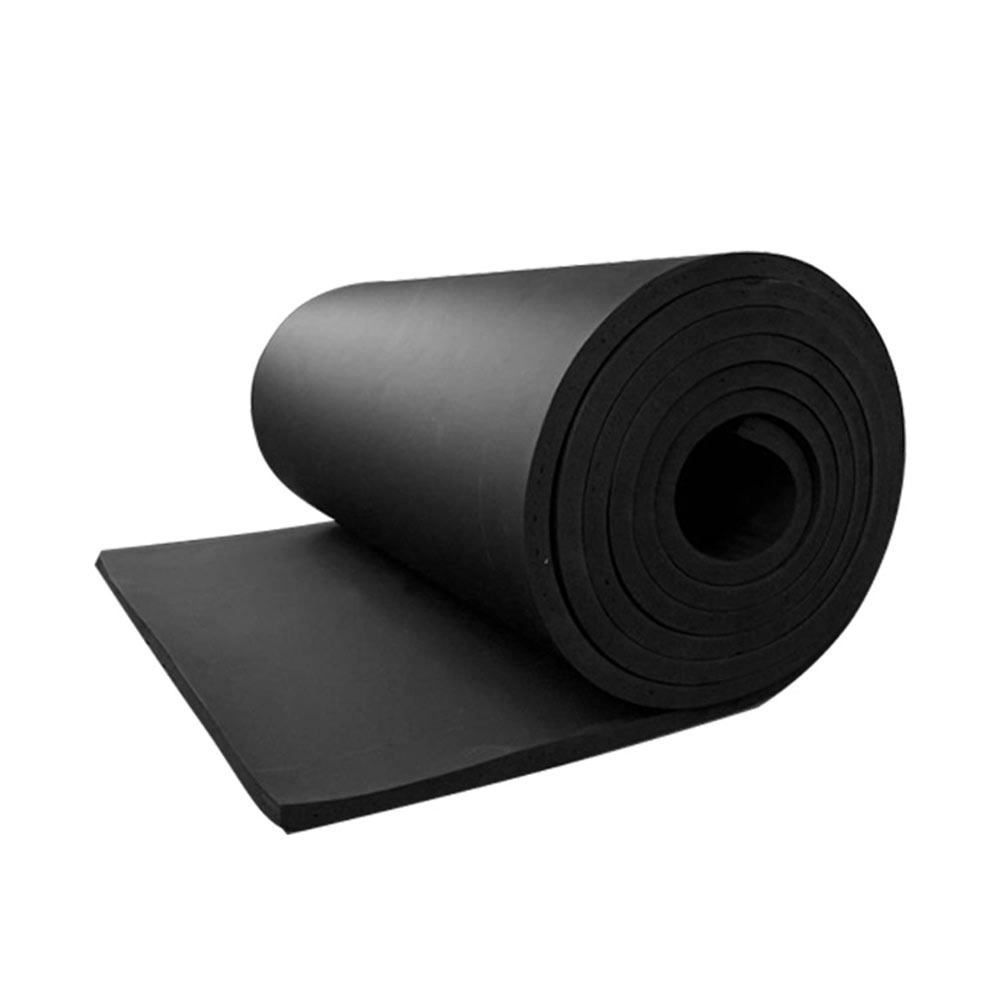
Choosing the Right NBR Foam: Key Specs to Consider
The B2B Buyer’s Guide to Sound Absorbing Cotton
FAQs
Do ASLONG's products meet environmental protection standards?
Yes, all ASLONG products comply with ISO14001 environmental management system certification and global environmental protection standards. We use environmentally friendly materials and are committed to providing sustainable solutions to help customers achieve green development goals.
What industries are the products provided by ASLONG suitable for?
ASLONG's products are suitable for multiple industries, including air conditioning and HVAC, construction and waterproofing, automobiles and transportation, home appliances and electronics, industrial equipment and machinery, etc. We provide customized solutions for each industry to meet different needs.
What specific functions can ASLONG's products provide?
Our products cover functions such as insulation, sound insulation, shock absorption, waterproofing and sealing, and are widely used in improving energy efficiency, reducing noise, controlling vibration, protecting equipment, etc., helping customers optimize engineering effects and improve user experience.
How to customize products that meet the needs of my industry?
You only need to contact our sales or technical team, we will conduct an in-depth analysis based on your industry needs and provide tailor-made products and solutions. We guarantee to provide you with efficient and accurate services to meet your personalized requirements.
Does ASLONG provide after-sales service?
Yes, we provide a full range of after-sales services, including technical support, installation guidance, product maintenance and quality tracking, etc., to ensure that each project goes smoothly and continues to perform at its best.
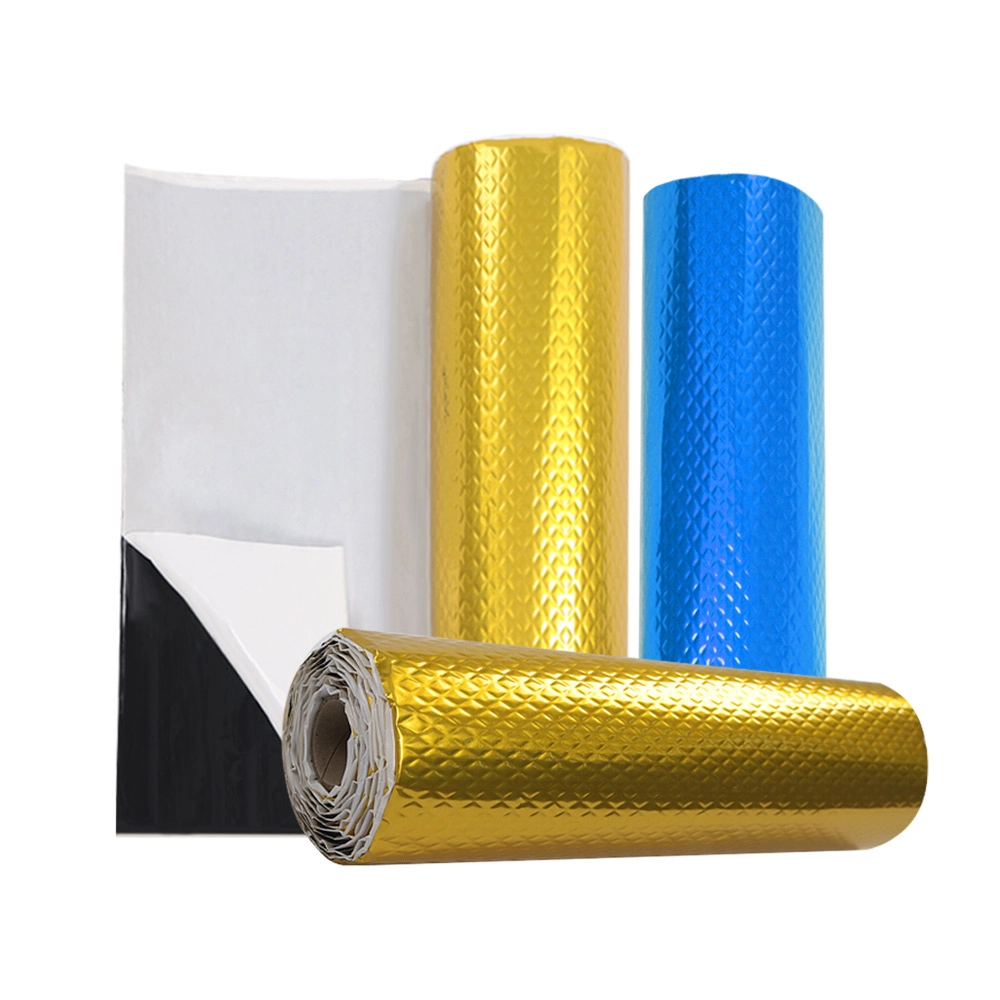
Butyl Rubber Sound Damping Mat
ASLONG Butyl Rubber Sound Damping Mat for sale. Effectively reduces noise and vibrations. High-quality butyl rubber ensures superior performance and durability. Ideal for automotive, industrial, and home applications.
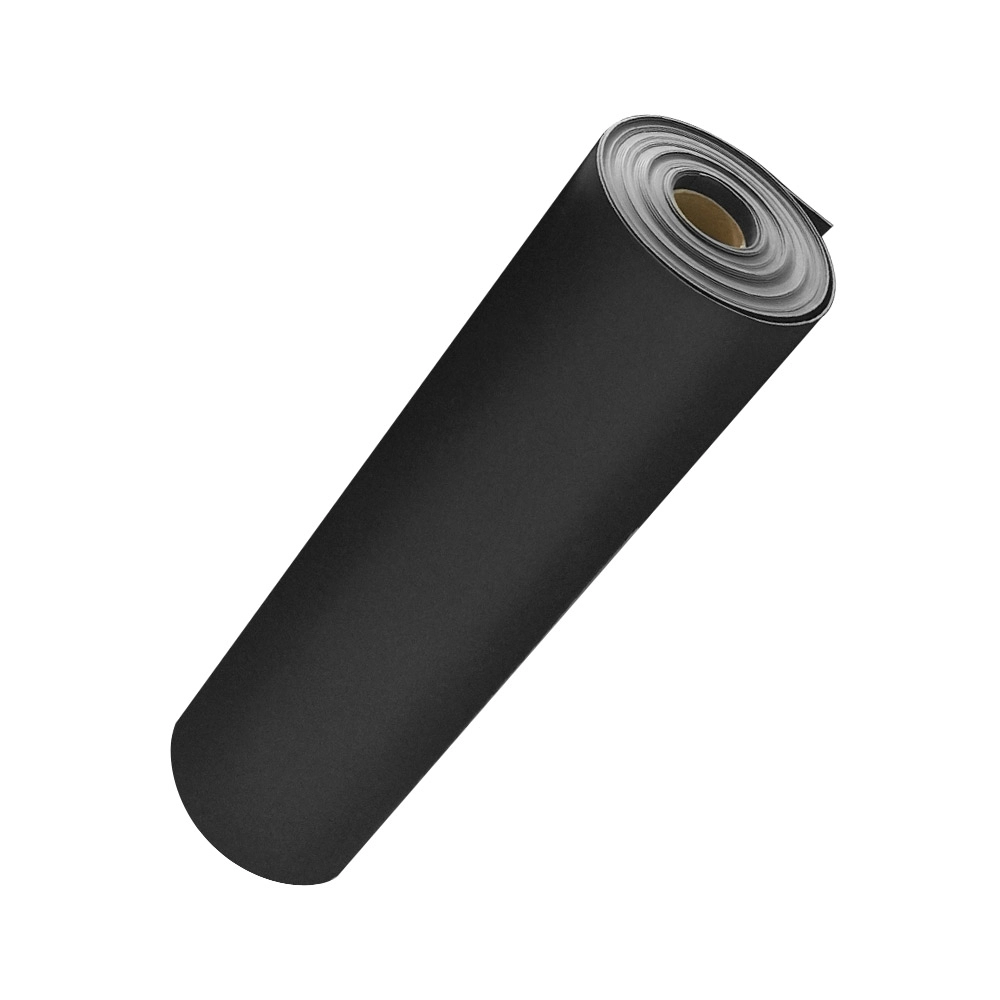
Mass Loaded Vinyl
ASLONG Mass Loaded Vinyl for sale. Reduce noise pollution effectively with our high-quality, mass-loaded vinyl. Ideal for soundproofing walls, floors, and more. Buy now and experience the difference!
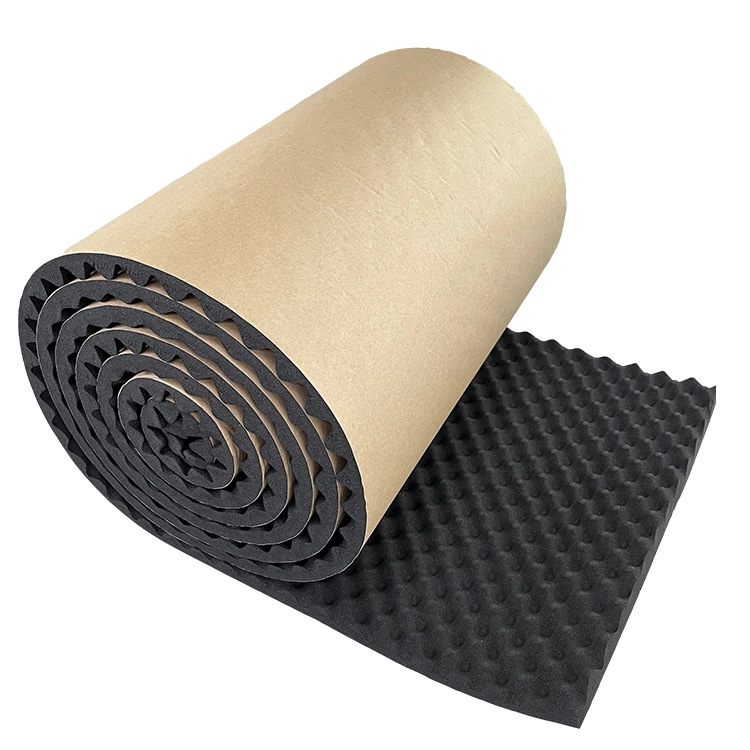
Egg Crate Foam
ASLONG Egg Crate Foam for sale. Lightweight, breathable, and comfortable, our egg crate foam provides superior support and pressure relief. Perfect for mattresses, cushions, cars, construction industry, KTV, factories, etc.
NBR Foam
ASLONG NBR Foam: Wholesale NBR foam solutions for diverse applications. High-quality, durable, and competitively priced. Contact us today for bulk orders.
Professional support at any time
If you have any comments or good suggestions, please leave us a message; later our professional staff will contact you as soon as possible.
© 2026 ASLONG All Rights Reserved. Privacy Policy | Terms and Conditions | Sitemap

 It would be pleasure to receive from you.
Whatsapp: +8613242879341
ASLONG Global
ASLONG
Aslong_global