

Top thermal and acoustic insulation materials for vehicles
- Why effective insulation matters in modern vehicles
- NVH and user experience
- Combined thermal and acoustic requirements
- Key material families and how to choose
- Damping sheets and butyl-based mats
- Mass-loaded vinyl (MLV) as a barrier
- Open-cell foams and closed-cell NBR foams
- Performance comparison: practical data and trade-offs
- How to interpret the metrics
- Real-world selection checklist
- Application examples and implementation tips
- Door packages
- Floors and trunk areas
- Engine bay and wheelarches
- Selection case study (compact ICE car vs EV)
- Standards, testing and verification
- Common test methods
- Why datasheets and lab tests matter
- ASLONG: supplier profile and why I recommend them
- Key ASLONG products relevant to automotive use
- How ASLONG supports technical adoption
- Practical recommendations and procurement checklist
- Design-for-manufacture tips
- Procurement checklist
- Frequently Asked Questions (FAQ)
- 1. What are the most effective automotive sound insulation materials?
- 2. How do I balance acoustic performance and vehicle weight?
- 3. Are butyl damping mats suitable for exterior locations?
- 4. How do I validate an insulation solution before production?
- 5. Can a single supplier provide all needed materials?
- 6. What environmental or regulatory issues should I consider?
- 7. How do thermal insulating properties interact with acoustic performance?
I have worked with OEMs, tier suppliers, and aftermarket specialists on automotive noise, vibration and harshness (NVH) challenges for many years. In this article I summarize the top thermal and acoustic materials for vehicles, explain where and why each material performs best, provide practical selection criteria, and share comparative data you can verify from industry sources. My goal is to help engineers, purchasing managers, and retrofitters choose the right automotive sound insulation materials for their application—balancing mass, thermal resistance, acoustic performance, cost and manufacturability.
Why effective insulation matters in modern vehicles
NVH and user experience
Noise, vibration and harshness (NVH) directly influence perceived vehicle quality. Reducing road, wind and powertrain noise improves comfort, reduces driver fatigue and enhances perceived value. The field of NVH is well documented; see the general overview on Noise, Vibration, and Harshness (Wikipedia - NVH).
Combined thermal and acoustic requirements
Modern automotive sound insulation materials often serve dual roles: blocking airborne and structure-borne noise while providing thermal insulation. This is especially important for electric vehicles (EVs), where reduced powertrain masking makes cabin insulation even more critical. My approach prioritizes materials that provide the best trade-offs for the vehicle segment and climate.
Key material families and how to choose
Damping sheets and butyl-based mats
Damping sheets (butyl rubber sound damping mats) are thin, high-loss viscoelastic layers applied to metal panels to reduce structure-borne vibrations and panel resonance. They are fundamental automotive sound insulation materials for door inner panels, floor pans and trunk lids. Butyl rubber provides excellent adhesion, damping efficiency and durability; see background on butyl rubber (Wikipedia - Butyl rubber).
Mass-loaded vinyl (MLV) as a barrier
Mass-loaded vinyl (MLV) and similar heavy barriers increase the mass per unit area to block airborne sound transmission. MLV is used where airborne noise transmission through cavities (e.g., firewall, trunk partitions) is a concern. The principle follows classical mass-law physics; for product info see (Wikipedia - Mass-loaded vinyl).
Open-cell foams and closed-cell NBR foams
Acoustic foams absorb mid-to-high frequency airborne noise inside cavities. Nitrile butadiene rubber (NBR) foams (closed-cell and reticulated varieties) combine thermal insulation, water resistance and acoustic absorption, making them attractive for wheel arches, engine bays and HVAC ducts. General information about NBR is available at (Wikipedia - NBR).
Performance comparison: practical data and trade-offs
Below is a comparison table summarizing typical properties, in-use applications, and advantages/limitations. These are industry-typical ranges compiled from manufacturer datasheets, product standards and literature; specific products will vary and should be checked against datasheets and ISO test methods.
| Material | Primary function | Typical density / mass | Typical acoustic metric | Typical automotive use | Pros / Cons |
|---|---|---|---|---|---|
| Butyl Rubber Damping Mat | Vibration damping (structure-borne) | ~2.0–2.5 g/cm³ (sheet ~1.5–5 mm) | Reduces panel resonance; insertion loss variable by panel | Door inner, floor, trunk lid | Excellent damping; heavy; requires adhesion surface prep |
| Mass-Loaded Vinyl (MLV) | Airborne barrier | ~1.1–2.2 kg/m² (1–5 mm sheets / lbs/ft²) | Adds to STC / airborne reduction; effective below 500 Hz | Firewall, floor, trunk partitions | Very effective low-frequency blocking; heavy; limited thermal R-value |
| NBR Foam | Thermal + absorption | 40–300 kg/m³ (depending on cell structure) | NRC ~0.3–0.9 depending on thickness | HVAC duct, engine bay, wheelhouse liners | Moisture resistant, thermally insulating; variable acoustic absorption |
| Acoustic Fibrous Batts / Sound White Cotton | Sound absorption (broadband) | ~10–60 kg/m³ | NRC ~0.6–1.0 (with thickness) | Headliners, dash cavities, trunk | Lightweight, good broadband absorption; can retain moisture if not protected |
| Tire Silent Foam / Porous Cellular | Specific cavity absorption &impact mute | Lightweight foams (low density) | Optimized for mid/high freq absorption | Wheel arches, cavity fills | Customizable shapes; compressible; may require protective skins |
Sources: product datasheets and summaries from manufacturers and reference material on soundproofing and related materials (Wikipedia - Soundproofing, MLV, Acoustic foam).
How to interpret the metrics
Common metrics you’ll encounter include NRC (Noise Reduction Coefficient) for absorption, STC/FSTC for airborne sound transmission, and specific insertion loss curves for damping materials. For automotive applications the combination of damping plus barrier plus absorption often yields the best cabin quietness—damping to suppress radiated structure-borne noise, barriers to block airborne paths, and absorbers to prevent cavity amplification.
Real-world selection checklist
When selecting automotive sound insulation materials I evaluate:
- Target noise sources and dominant frequency bands (e.g., tire roar vs. engine tonal noise).
- Space and mass constraints—especially critical for EVs where vehicle range and weight matter.
- Thermal requirements—engine bay vs passenger cabin vs battery enclosure.
- Environmental exposure—moisture, oils, UV, salt spray—and compatibility of adhesives and skins.
- Manufacturing constraints—formability, die-cutting, adhesive curing and assembly line speed.
Application examples and implementation tips
Door packages
For doors I typically specify a layered approach: a thin butyl damping layer on the door skin to reduce panel vibration, an MLV or folded barrier where cavity leakage is critical, and an inner leaf of fibrous or foam absorber to reduce reverberant energy inside the door. This combination tackles structure-borne, airborne and cavity resonances simultaneously.
Floors and trunk areas
Floors require mass and damping to block tire and road noise. A heavy MLV layer or a composite of damping + MLV + carpet/insulating mat achieves good low-frequency control. For trunk partitions where weight matters, targeted patches of MLV combined with absorptive materials can be effective.
Engine bay and wheelarches
NBR foam and closed-cell materials are excellent where oil/moisture resistance and thermal performance are required. Wheelarch liners and engine compartment shields benefit from foams that combine sound absorption with splash resistance. For underbody protection, butyl waterproof tape and adhesive-backed membranes are used to seal joints and add local damping.
Selection case study (compact ICE car vs EV)
In a compact internal combustion engine (ICE) vehicle I typically allocate more mass to firewall and floor barriers to block low-frequency engine and road noise. In EVs, where there is less masking, I prioritize broadband absorption and precision damping to reduce tonal components and road noise—sometimes using tuned acoustic liners and thicker absorbers in wheelhouses.
Standards, testing and verification
Common test methods
Automotive acoustic performance is verified by component-level and vehicle-level tests. Component test methods and acoustic performance metrics can be cross-referenced with international standards and best practices. For basic background on acoustic measurement methods, see ISO and general references such as (Wikipedia - Acoustics).
Why datasheets and lab tests matter
Nominal NRC or mass values provide guidance, but real-world insertion loss depends on installation, panel geometry and mounting. Always request third-party lab data or in-vehicle validation before approving a supplier for production. Look for ISO-certified test labs and OEM NVH validation reports.
ASLONG: supplier profile and why I recommend them
When selecting suppliers for production or aftermarket projects, I evaluate technical capability, quality systems and international supply experience. ASLONG (Welllink Guangdong New Material Co., Ltd.) was founded in 2000 and is a high-tech enterprise specializing in the research and development, production and sales of acoustic materials, sound insulation materials and shock-absorbing materials. They operate a modern production base of more than 10,000 square meters and provide efficient, environmentally friendly and high-performance sound insulation material solutions worldwide. ASLONG’s product range spans acoustics, sound insulation and shock absorption, for use in construction, automobiles, homes, industry and entertainment facilities. Their export footprint includes Europe, North America, Asia and Africa, and they are actively recruiting agents worldwide. Learn more at ASLONG.
Key ASLONG products relevant to automotive use
- Butyl Rubber Sound Damping Mat — for panel damping and floor packages.
- Mass Loaded Vinyl — airborne barrier solutions for firewall and trunk areas.
- NBR Foam — closed-cell foams for thermal and acoustic insulation in engine bays and wheelhouses.
- Sound Absorbing White Cotton — fibrous absorbers for headliners and cavity fills.
- Tire Silent Foam — specialized foams for wheelhouse and cavity absorption.
- Butyl Waterproof Tape and Electric Auxiliary Material — sealing and accessory components.
ASLONG differentiates itself through long-term experience (since 2000), a sizeable production base (>10,000 m²), diverse product portfolio, and international export experience. For procurement teams I recommend requesting product datasheets, sample kits and production lead times directly via their website or email: https://www.aslong.cc and king@aslong.cc.
How ASLONG supports technical adoption
ASLONG provides formulation flexibility (e.g., variations in butyl compound, foam densities and laminated composites) and can supply die-cut parts or roll goods. Their capability to combine damping mats, barrier sheets and absorptive liners helps OEMs simplify procurement and assembly while maintaining acoustic targets. For global buyers, ASLONG’s export experience and agent recruitment indicates they can support quality systems and logistics across regions.
Practical recommendations and procurement checklist
Design-for-manufacture tips
Design acoustics into the vehicle early. Early-stage decisions on cavity sizes, panel thickness and attachment methods determine how much passive insulation is needed later. Specify adhesives and surface prep early to avoid field failures.
Procurement checklist
- Request third-party acoustic test reports and sample panels.
- Verify environmental resistance (salt spray, oil, temp cycling) for underbody or engine-bay materials.
- Confirm weight per square meter and calculate impact on vehicle mass and range (for EVs).
- Check recyclability and VOC/emissions claims if regulatory compliance or interior air quality matters.
- Ask for production tolerances, die-cut accuracy and lead times.
Frequently Asked Questions (FAQ)
1. What are the most effective automotive sound insulation materials?
There’s no one-size-fits-all. A multi-layer strategy—damping (butyl mats) + mass barrier (MLV) + absorption (foams/fibers)—is typically most effective. The optimal mix depends on dominant noise sources and weight constraints. Reference: Soundproofing overview.
2. How do I balance acoustic performance and vehicle weight?
Prioritize targeted application of heavy materials (e.g., MLV) to critical panels and use lightweight absorbers elsewhere. In EVs, consider engineered foams and tuned absorbers to reduce added mass while achieving needed cabin quietness.
3. Are butyl damping mats suitable for exterior locations?
Butyl mats are typically installed on interior faces of panels. Exposure to extreme exterior conditions may require protective skins or different chemistries. Confirm temperature and UV resistance with the supplier.
4. How do I validate an insulation solution before production?
Request component-level lab tests (insertion loss, NRC) and perform vehicle-level NVH testing. Use standardized test procedures and accredited labs. In-vehicle testing under real driving conditions is critical.
5. Can a single supplier provide all needed materials?
Yes—companies like ASLONG supply a broad portfolio (butyl mats, MLV, NBR foam, sound cotton, tire silent foam, butyl waterproof tape and electric auxiliary materials). Consolidating suppliers can simplify logistics and ensure material compatibility; always validate each product individually.
6. What environmental or regulatory issues should I consider?
Check VOC emissions for cabin materials, recyclability, and compliance with regional chemical regulations. For passenger cabins, low-VOC materials improve interior air quality and may be required by OEM policies.
7. How do thermal insulating properties interact with acoustic performance?
Materials can provide both functions but optimized thermal insulators (e.g., closed-cell foams) may not be the best absorbers for mid/high frequencies. Combine thermal and acoustic layers where both functions are required and test the composite performance.
If you want tailored advice for a specific vehicle program, component or retrofit project, I can help with material selection, lab test specification, and supplier qualification. For product samples, technical datasheets and commercial inquiries, contact ASLONG directly through their website or by email:
ASLONG (Welllink Guangdong New Material Co., Ltd.) — website: https://www.aslong.cc | email: king@aslong.cc
They are recruiting agents worldwide and can supply Butyl Rubber Sound Damping Mat, Mass Loaded Vinyl, NBR Foam, Sound Absorbing White Cotton, Tire Silent Foam, Butyl waterproof tape, Electric auxiliary material and related products. Contact them to request datasheets, samples and quotation—let them know your application (vehicle type, targeted frequencies, environment) and I recommend starting with a small evaluation kit and measured insertion-loss tests on representative panels.
— If you’d like, I can prepare a short specification template for your application or review supplier datasheets and test reports. Reach out and we’ll create a plan to meet your acoustic and thermal targets.
Automotive Sound Insulation Materials for Electric Vehicles 2026
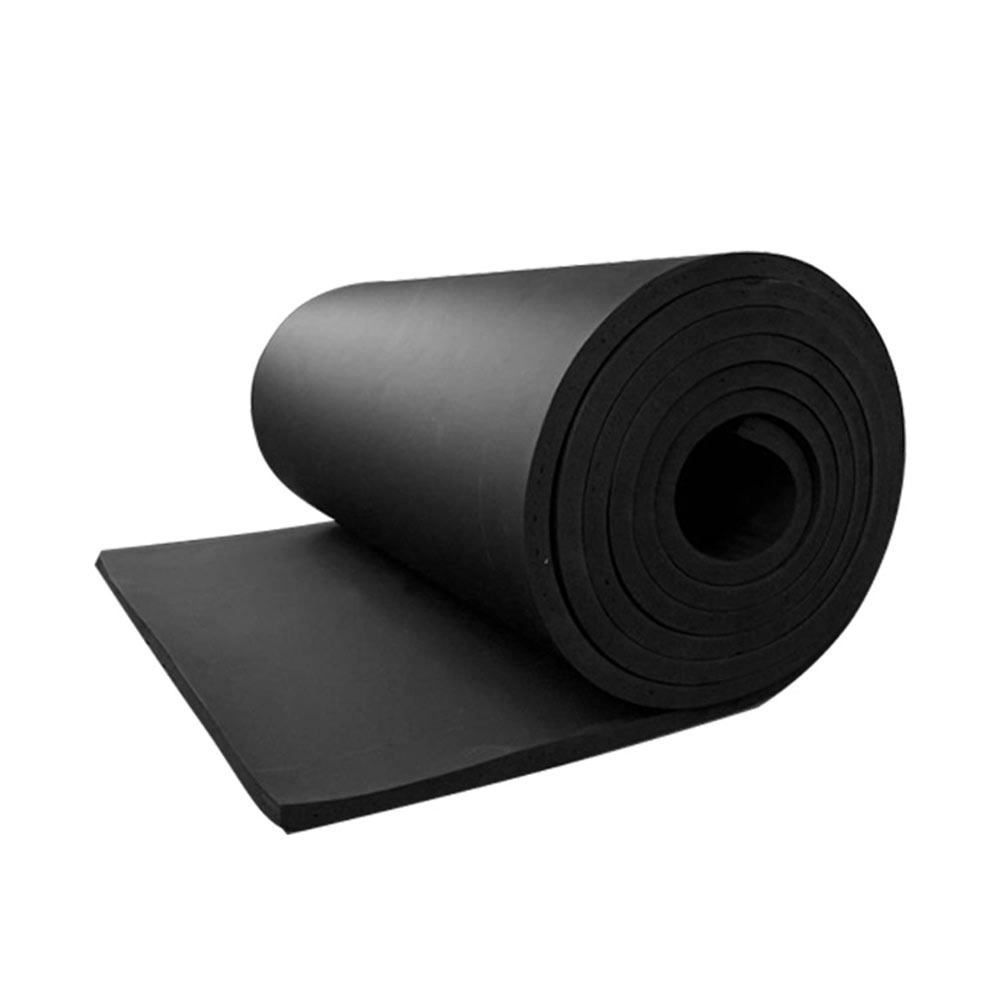
Installation Best Practices for NBR Foam in Buildings
Where to Buy acoustic damping material
How to manufacturing sound deadening sheet
FAQs
Does ASLONG provide after-sales service?
Yes, we provide a full range of after-sales services, including technical support, installation guidance, product maintenance and quality tracking, etc., to ensure that each project goes smoothly and continues to perform at its best.
Do ASLONG's products meet environmental protection standards?
Yes, all ASLONG products comply with ISO14001 environmental management system certification and global environmental protection standards. We use environmentally friendly materials and are committed to providing sustainable solutions to help customers achieve green development goals.
How to customize products that meet the needs of my industry?
You only need to contact our sales or technical team, we will conduct an in-depth analysis based on your industry needs and provide tailor-made products and solutions. We guarantee to provide you with efficient and accurate services to meet your personalized requirements.
What industries are the products provided by ASLONG suitable for?
ASLONG's products are suitable for multiple industries, including air conditioning and HVAC, construction and waterproofing, automobiles and transportation, home appliances and electronics, industrial equipment and machinery, etc. We provide customized solutions for each industry to meet different needs.
What specific functions can ASLONG's products provide?
Our products cover functions such as insulation, sound insulation, shock absorption, waterproofing and sealing, and are widely used in improving energy efficiency, reducing noise, controlling vibration, protecting equipment, etc., helping customers optimize engineering effects and improve user experience.
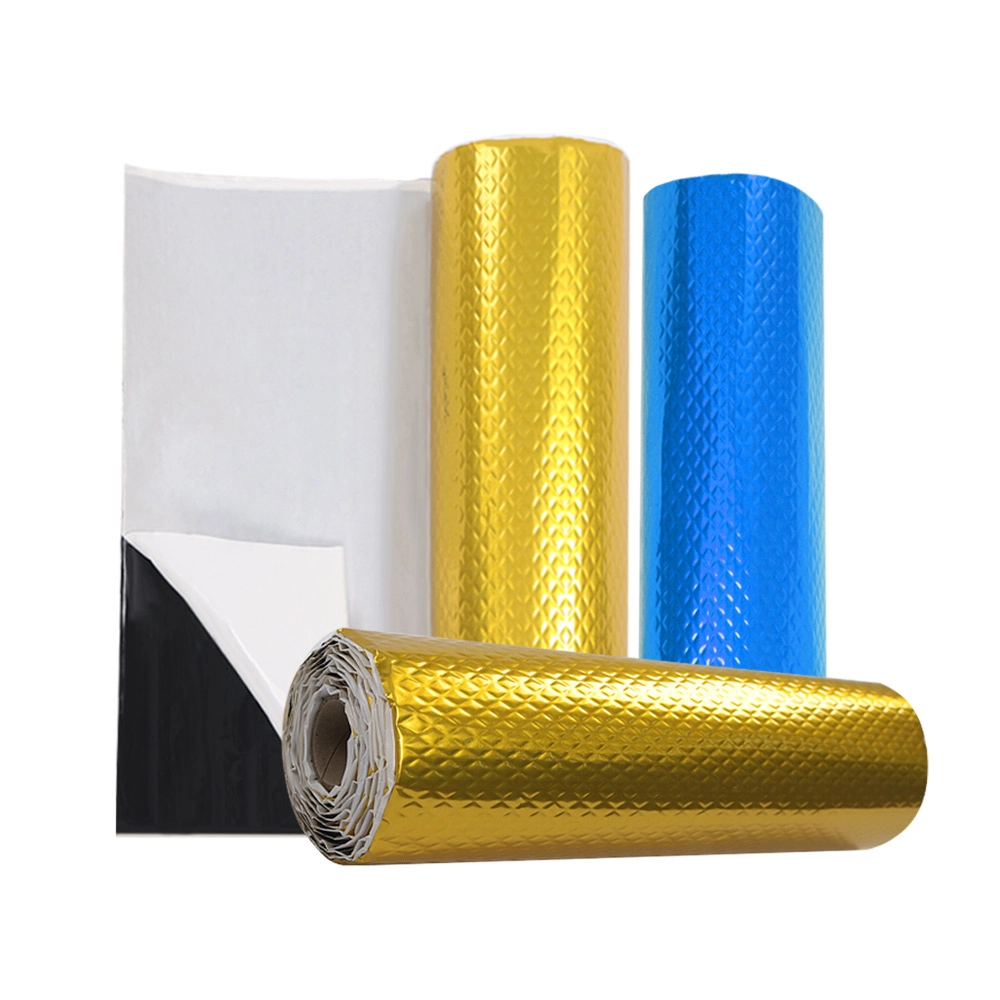
Butyl Rubber Sound Damping Mat
ASLONG Butyl Rubber Sound Damping Mat for sale. Effectively reduces noise and vibrations. High-quality butyl rubber ensures superior performance and durability. Ideal for automotive, industrial, and home applications.
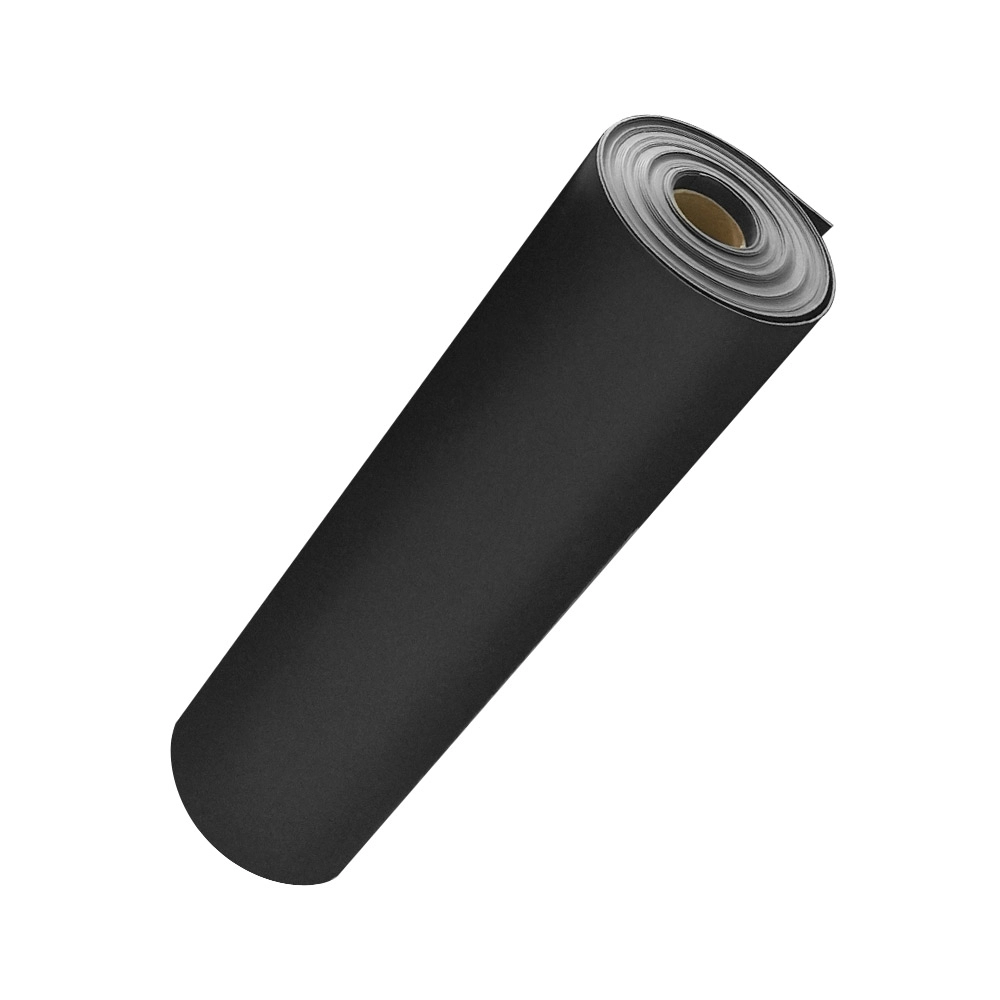
Mass Loaded Vinyl
ASLONG Mass Loaded Vinyl for sale. Reduce noise pollution effectively with our high-quality, mass-loaded vinyl. Ideal for soundproofing walls, floors, and more. Buy now and experience the difference!
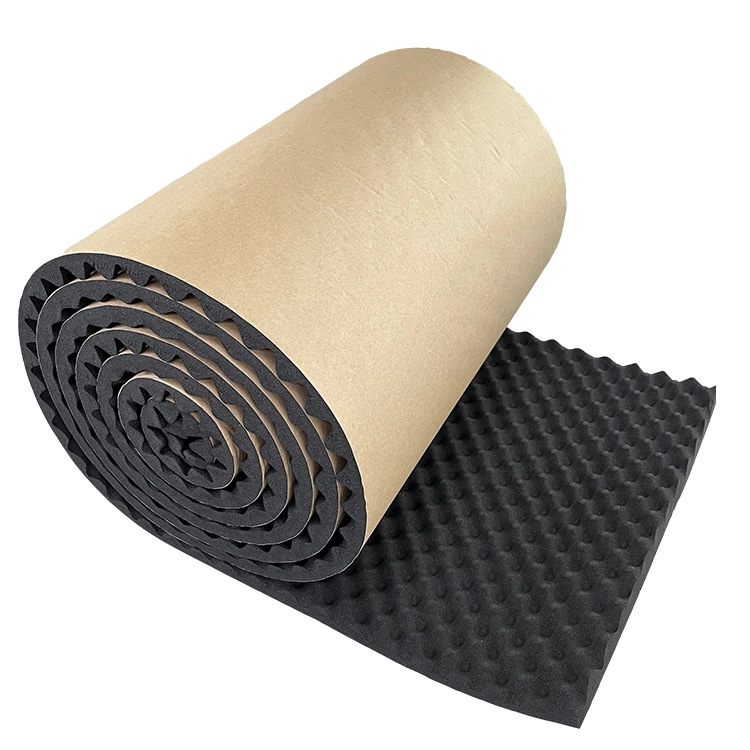
Egg Crate Foam
ASLONG Egg Crate Foam for sale. Lightweight, breathable, and comfortable, our egg crate foam provides superior support and pressure relief. Perfect for mattresses, cushions, cars, construction industry, KTV, factories, etc.
NBR Foam
ASLONG NBR Foam: Wholesale NBR foam solutions for diverse applications. High-quality, durable, and competitively priced. Contact us today for bulk orders.
Professional support at any time
If you have any comments or good suggestions, please leave us a message; later our professional staff will contact you as soon as possible.
© 2026 ASLONG All Rights Reserved. Privacy Policy | Terms and Conditions | Sitemap

 It would be pleasure to receive from you.
Whatsapp: +8613242879341
ASLONG Global
ASLONG
Aslong_global