

How Does Butyl Sound Deadening Mat Thickness Affect Noise and Vibration Reduction?
Learn how 1.5mm, 2mm, 2.5mm, and 3mm butyl sound deadening mats affect automotive noise and vibration reduction. Compare thickness, weight, applications, and installation tips.
- How Does Butyl Sound Deadening Mat Thickness Affect Noise and Vibration Reduction?
- 1. How Does a Butyl Sound Deadening Mat Work?
- 2. How Does Butyl Sound Deadening Mat Thickness Affect Performance?
- 3. Does a Thicker Butyl Mat Always Provide Better Noise Reduction?
- 4. Which Butyl Mat Thickness Is Suitable for Different Car Parts?
- 5. Butyl Sound Deadening Mat vs. Sound Absorbing Foam
- 6. How to Choose the Right Thickness for Your Automotive Project
- 7. Conclusion: Choose Butyl Mat Thickness Based on Performance Requirements
- FAQ
How Does Butyl Sound Deadening Mat Thickness Affect Noise and Vibration Reduction?
When choosing automotive sound deadening materials, thickness is one of the most important factors to consider. But does a thicker butyl sound deadening mat always provide better noise reduction? What is the difference between 1.5mm, 2mm, 3mm, and 4mm butyl mats? And which thickness is suitable for car doors, floors, roofs, and trunk panels?
Butyl sound deadening mats are widely used in automotive noise, vibration, and harshness (NVH) control. They are designed to reduce unwanted vibrations in metal body panels, helping create a quieter and more comfortable driving environment.
However, selecting the right thickness is not simply about choosing the thickest material available. The damping performance also depends on the butyl rubber formulation, material density, aluminum foil structure, installation quality, and the characteristics of the vehicle panel.
In this article, we will explain how different thicknesses of butyl sound deadening mats affect vibration damping, noise reduction, weight, and installation performance.
1. How Does a Butyl Sound Deadening Mat Work?
A butyl sound deadening mat is commonly made from a viscoelastic butyl rubber compound combined with an aluminum foil facing and a self-adhesive layer.
It is primarily designed to reduce structural vibration rather than directly absorb airborne sound.
When a vehicle is moving, road surfaces, engine operation, and audio systems can cause metal body panels to vibrate. These vibrations may produce unwanted resonance, buzzing, rattling, and low-frequency noise.
A butyl sound deadening mat works by:
-
Adding mass to the metal panel.
-
Restricting panel movement through its damping structure.
-
Converting part of the vibrational energy into heat.
-
Reducing unwanted resonance and panel ringing.
The aluminum foil facing also contributes to the performance of the damping structure by providing additional stiffness.
The effectiveness of a butyl damping mat depends on the interaction between the butyl compound, facing material, and metal panel. Therefore, thickness alone cannot fully determine the final acoustic performance.
2. How Does Butyl Sound Deadening Mat Thickness Affect Performance?
In general, increasing the thickness of a butyl sound deadening mat increases its material mass and can improve vibration damping. However, the improvement is not always proportional to the increase in thickness.
A thicker mat also adds more weight, occupies more installation space, and may be more difficult to apply to complex surfaces.
The following table provides a practical comparison of common thickness options.
|
Butyl thickness |
Main characteristics |
Typical applications |
|---|---|---|
|
1.5mm |
Lightweight, flexible, easy to install |
Door panels, roof panels, lightweight metal surfaces |
|
2.0mm |
Balanced damping performance and weight |
Car doors, trunk lids, general automotive applications |
|
2.5mm |
Increased material mass and damping potential |
Floors, trunk floors, larger metal panels |
|
3.0mm |
Higher mass and stronger damping potential |
Vehicle floors, wheel arches, high-vibration areas |
|
4.0mm and above |
Heavy-duty damping, greater weight and space requirements |
Specialized automotive and industrial applications |
Note: This is a general application guide, not a guaranteed performance ranking. Actual results depend on material formulation, surface mass, panel properties, temperature, and installation conditions.
2.1 1.5mm Butyl Sound Deadening Mat: Lightweight and Flexible
A 1.5mm butyl sound deadening mat is suitable for applications where weight control and flexibility are important.
Its relatively thin structure makes it easier to install on curved surfaces and in areas with limited space.
Key advantages:
-
Lower added weight compared with thicker materials.
-
Easier installation on complex or curved surfaces.
-
Suitable for lightweight panels and general vibration control.
-
Helps reduce minor panel resonance and rattling.
A 1.5mm mat may be suitable for car doors, roof panels, and trunk lids where excessive weight is undesirable.
However, for panels with strong resonance or demanding low-frequency vibration problems, a thicker or more carefully engineered damping structure may be required.
2.2 2.0mm Butyl Sound Deadening Mat: A Practical Balance
A 2.0mm butyl sound deadening mat is a common option for automotive sound insulation.
It offers a practical balance between material mass, flexibility, installation convenience, and vibration damping.
Compared with a thinner mat of the same formulation and structure, a 2.0mm mat provides more material to constrain panel vibration.
Typical applications include:
-
Automotive door panels.
-
Trunk lids and trunk side panels.
-
General body panel vibration control.
-
Car audio installations.
-
Automotive aftermarket sound deadening projects.
For many standard passenger vehicles, 2.0mm butyl mats can be considered when balancing vibration control and additional vehicle weight.
Nevertheless, the final performance should be evaluated based on the specific panel and material properties rather than thickness alone.
2.3 2.5mm Butyl Sound Deadening Mat: Increased Damping Potential
A 2.5mm butyl sound deadening mat provides more material mass than a 2.0mm mat of the same density.
This can be beneficial when treating larger metal panels that experience noticeable vibration.
Potential applications include:
-
Vehicle floors.
-
Trunk floors.
-
Larger door panels.
-
Areas with stronger panel resonance.
The additional thickness may improve damping, but the actual benefit depends on the mechanical properties of the butyl compound and its interaction with the metal panel.
It is also important to consider installation space, particularly inside doors and around vehicle trim components.
2.4 3.0mm Butyl Sound Deadening Mat: For More Demanding Applications
A 3.0mm butyl sound deadening mat provides greater material mass and may offer improved damping performance in applications with stronger vibration.
It is often considered for:
-
Vehicle floors and trunk floors.
-
Larger metal panels.
-
Areas with pronounced panel resonance.
-
Specialized automotive audio applications.
However, thicker material is not automatically the best choice for every vehicle.
If the panel is relatively thin or the installation space is limited, a thinner butyl mat with suitable damping properties may provide a more practical solution.
A 3.0mm product should also be evaluated for flexibility, adhesion, and ease of installation, especially on curved or irregular surfaces.
2.5 4.0mm and Thicker Butyl Mats: When Is Extra Thickness Necessary?
Butyl mats with a thickness of 4.0mm or more are generally intended for applications where additional material mass and damping are required.
Potential uses include specialized automotive projects, heavy-duty panels, and industrial vibration-control applications.
However, there are several factors to consider before selecting a very thick mat:
-
Increased material weight.
-
Higher material cost.
-
Reduced flexibility in some formulations.
-
Greater difficulty fitting the material into narrow spaces.
-
Potential interference with trim, clips, wiring, or other components.
For most automotive applications, the additional thickness should be justified by actual performance requirements.
A thicker mat may provide diminishing returns if the panel is already adequately damped or if the dominant noise is transmitted through another path.
3. Does a Thicker Butyl Mat Always Provide Better Noise Reduction?
The short answer is no.
Increasing the thickness of a butyl sound deadening mat can improve vibration damping, but the relationship is not linear.
For example, doubling the thickness does not necessarily double the vibration reduction or reduce the cabin noise by twice as much.
Several factors influence the actual performance.
3.1 Butyl Rubber Formulation
The viscoelastic properties of the butyl compound are important for vibration damping.
Different formulations can have different mechanical loss factors, flexibility, and temperature-dependent behavior.
A well-designed thinner mat may provide better damping than a thicker product with less suitable material properties.
3.2 Material Density and Surface Weight
Thickness is only one part of the equation.
Two butyl mats with the same thickness may have different weights because their densities and constructions are different.
For vibration damping, the amount of material added to the panel and the damping properties of the compound both matter.
For this reason, comparing surface weight in kg/m² can provide useful information alongside thickness.
3.3 Aluminum Foil Thickness and Structure
Many automotive butyl sound deadening mats use aluminum foil as a facing material.
The foil contributes to the stiffness of the damping structure and can influence how the composite behaves when bonded to a metal panel.
Therefore, two products with the same butyl thickness may perform differently if their aluminum foil thicknesses or overall structures are different.
3.4 Installation Coverage and Bonding
Installation quality is another important factor.
The mat must be firmly bonded to the metal surface to function as intended.
Poor surface preparation, air gaps, incomplete bonding, or unsuitable installation conditions can reduce the effectiveness of the damping system.
Applying additional material does not necessarily compensate for poor installation.
3.5 Vehicle Panel Design
Different vehicle panels have different thicknesses, shapes, stiffness, and vibration characteristics.
A door panel, roof panel, and floor panel may respond differently to the same damping material.
The best thickness should therefore be selected according to the specific panel and its vibration behavior.
Research on automotive damping systems also shows that the damping performance depends on the combined properties of the damping compound and its facing structure, rather than on thickness alone.
4. Which Butyl Mat Thickness Is Suitable for Different Car Parts?
Different parts of a vehicle have different sound insulation requirements.
The following recommendations can be used as a starting point when selecting automotive butyl sound deadening mats.
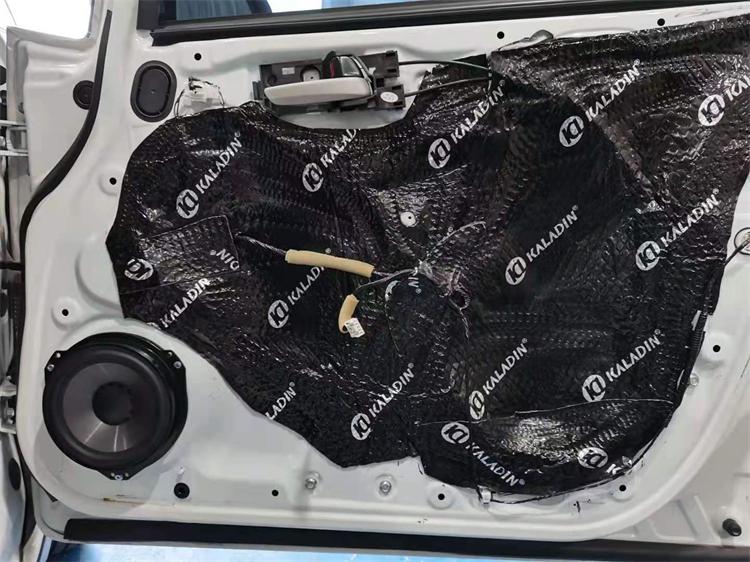
Car Doors
Suggested starting range: 1.5–2.5mm
Door panels often require a balance between vibration damping, flexibility, and weight. Thinner mats are easier to apply around curved surfaces and internal structures.

Car Floor and Trunk Floor
Suggested starting range: 2.0–3.0mm
Larger metal panels may benefit from additional material mass and damping. Installation space, total vehicle weight, and the existing acoustic package should also be considered.

Car Roof
Suggested starting range: 1.5–2.5mm
Lightweight materials are often considered for roof applications because additional weight should be controlled. A suitable damping layer can help reduce roof panel resonance.
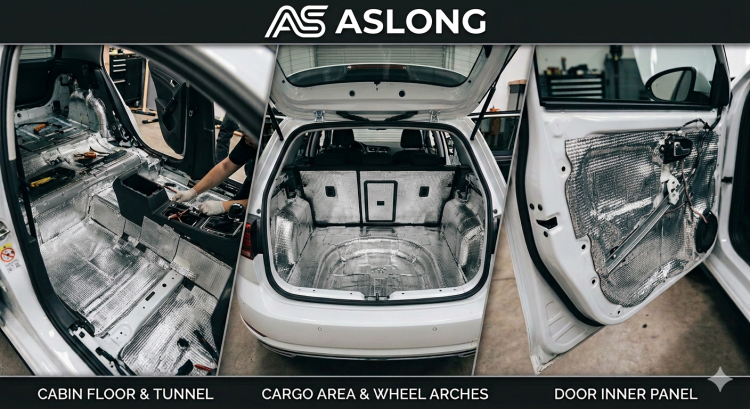
Wheel Arches and Rear Quarter Panels
Suggested starting range: 2.0–3.0mm
These areas may experience road-induced vibration and panel resonance. The suitable thickness depends on the panel design, available space, and the required damping performance.
These ranges are general starting points for product selection, not universal specifications. Actual thickness requirements should be confirmed through application testing.
5. Butyl Sound Deadening Mat vs. Sound Absorbing Foam
One common misunderstanding is that a thicker butyl mat will eliminate all types of vehicle noise.
In fact, butyl damping mats and sound-absorbing foam perform different functions.
|
Material |
Main function |
Typical application |
|---|---|---|
|
Butyl sound deadening mat |
Reduces metal panel vibration and resonance |
Doors, floors, trunk panels |
|
Closed-cell foam |
Provides cushioning, decoupling, and thermal insulation |
Between panels, under trim |
|
Open-cell acoustic foam |
Absorbs airborne sound |
Suitable interior acoustic applications |
|
Mass-loaded vinyl (MLV) |
Adds mass to help reduce airborne sound transmission |
Floors, firewall systems, acoustic barriers |
A butyl mat is primarily a vibration damping material. It is not designed to replace every other component in a vehicle sound insulation system.
For improved overall acoustic performance, butyl mats can be combined with suitable foam or mass-loaded vinyl, depending on the noise source and installation requirements.
For example, a vehicle floor system may use a butyl damping layer to control metal panel resonance, followed by a suitable acoustic insulation layer to address additional noise transmission.
The correct material combination depends on the vehicle structure and the type of noise that needs to be controlled.
6. How to Choose the Right Thickness for Your Automotive Project
Before selecting a butyl sound deadening mat, consider the following factors.
1. Identify the Main Noise Problem
Determine whether the main problem is metal panel vibration, rattling, airborne road noise, or a combination of different noise sources.
Butyl damping mats are most relevant when panel vibration and resonance are part of the problem.
2. Consider the Installation Location
A door panel may require a flexible, lightweight material, while a large floor panel may accommodate a thicker product.
The available installation space should always be checked.
3. Compare Surface Weight
Compare the weight per square meter of different products rather than looking at thickness alone.
This helps estimate the additional weight that will be added to the vehicle.
4. Check the Material Properties
Important technical parameters include:
-
Butyl rubber formulation.
-
Material density.
-
Mechanical loss factor.
-
Aluminum foil thickness.
-
Adhesion performance.
-
Temperature resistance.
-
Flexibility and conformability.
These properties can help determine whether a product is suitable for a particular application.
5. Evaluate the Complete Acoustic System
Consider whether the project also requires foam, thermal insulation, or airborne sound barriers.
A multi-layer system may address different noise transmission mechanisms more effectively than relying on a thicker butyl mat alone.
6. Test Before Large-Scale Application
For automotive manufacturers, distributors, and professional installers, sample testing is recommended before selecting a final specification.
A controlled comparison using the same panel, installation coverage, and test conditions can help identify the most suitable thickness for the intended application.
7. Conclusion: Choose Butyl Mat Thickness Based on Performance Requirements
Different thicknesses of butyl sound deadening mats offer different combinations of vibration damping, material weight, flexibility, and installation convenience.
A thinner mat may be suitable for lightweight panels and applications with limited space. A thicker mat may provide additional damping potential for larger or more vibration-prone panels.
However, the most suitable thickness is not necessarily the thickest one.
The final result depends on the butyl formulation, surface weight, aluminum foil structure, panel characteristics, and installation quality.
For automotive sound insulation projects, selecting the right material structure and thickness according to the actual application is essential for achieving effective and practical noise and vibration control.
If you are looking for automotive butyl sound deadening mats for different applications, contact a professional manufacturer to discuss the required thickness, material structure, surface weight, and customization options.
FAQ
Q1: Does a thicker butyl sound deadening mat reduce more noise?
A thicker mat can provide more material mass and may improve vibration damping. However, performance does not increase proportionally with thickness. The butyl formulation, material structure, panel characteristics, and installation quality also affect the result.
Q2: What is the difference between 2mm and 3mm butyl sound deadening mats?
A 3mm mat generally has more material mass than a 2mm mat made from the same compound. It may provide additional vibration damping, but it also adds more weight and requires more installation space. The actual improvement depends on the application and product specifications.
Q3: Is 1.5mm butyl sound deadening mat suitable for car doors?
Yes. A 1.5mm mat may be suitable for car doors where flexibility, lower weight, and limited installation space are important. The final selection should depend on the door panel's vibration characteristics and the required damping performance.

Mass Loaded Vinyl for Buildings: Soundproofing Guide
Composite Sound Insulation Materials: Multilayer Acoustic Solutions for Noise Control
Where to Install Car Soundproofing Materials for Maximum Noise Reduction
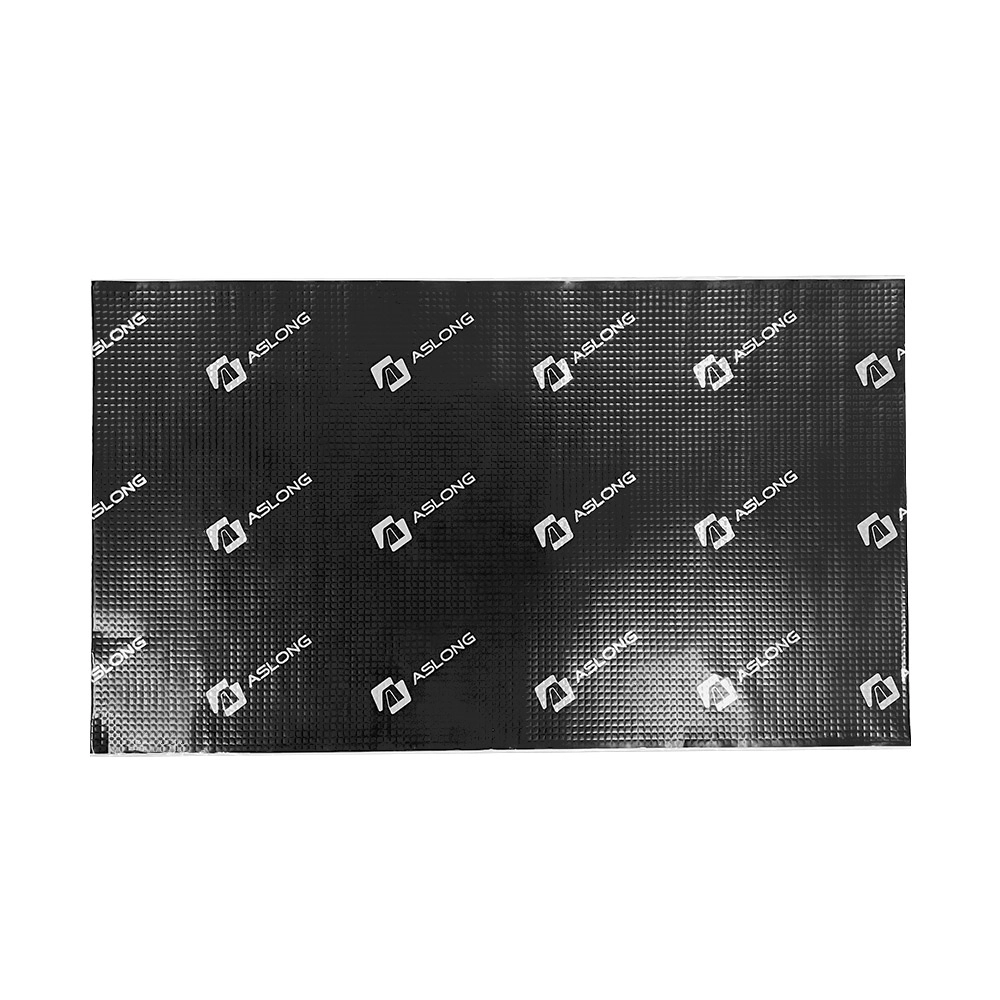
How Car Soundproofing Materials Reduce Road, Tire and Engine Noise

Automotive NVH: What It Is and How Soundproofing Materials Help
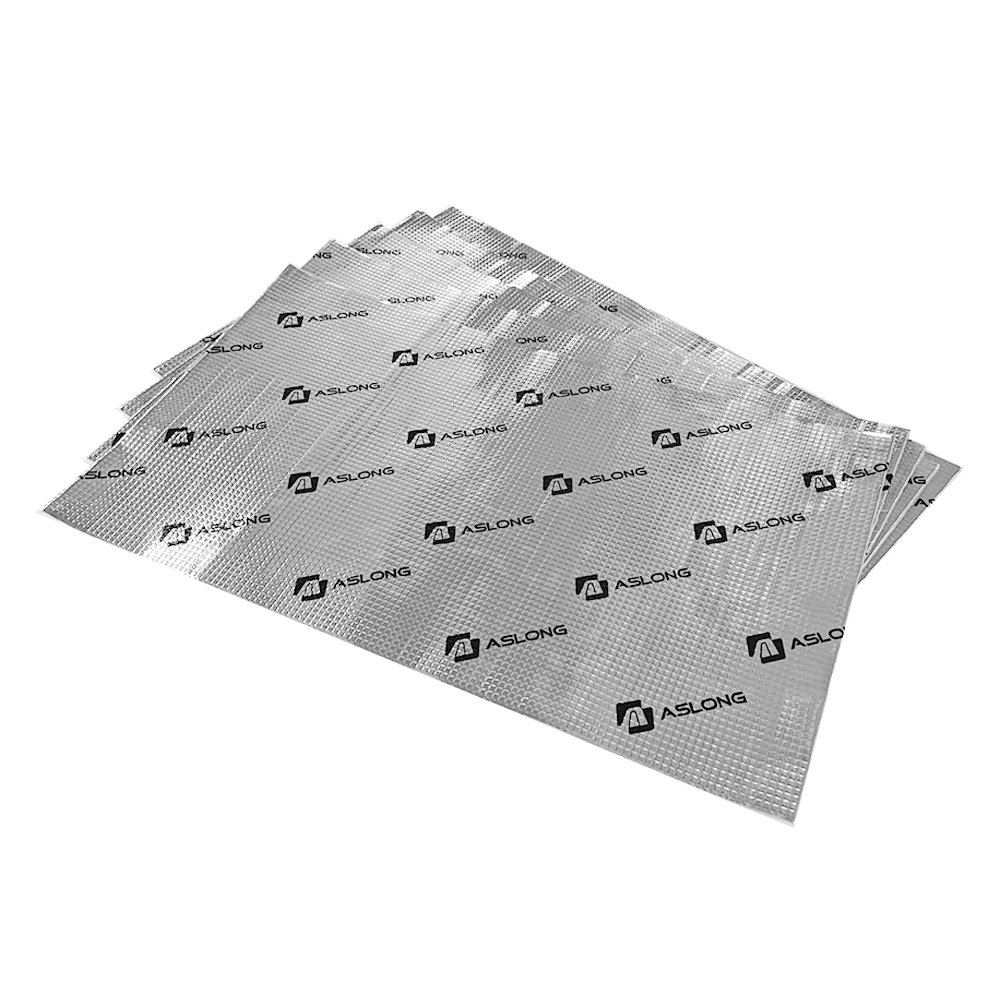
Butyl Rubber sound deadening mat manufacturer for Vehicles/EV cars
ASLONG Self Adhesive Automotive Sound Deadening and Heat Insulation Mat is designed to help reduce unwanted road noise, vibration and heat transfer inside vehicles.
Featuring an embossed aluminum foil surface and a self-adhesive backing, the material can be applied to various automotive areas such as doors, floors, roofs, trunks, wheel arches and other interior panels.
The flexible construction makes it easy to cut and install according to different vehicle shapes. It is suitable for automotive aftermarket applications as well as OEM projects.
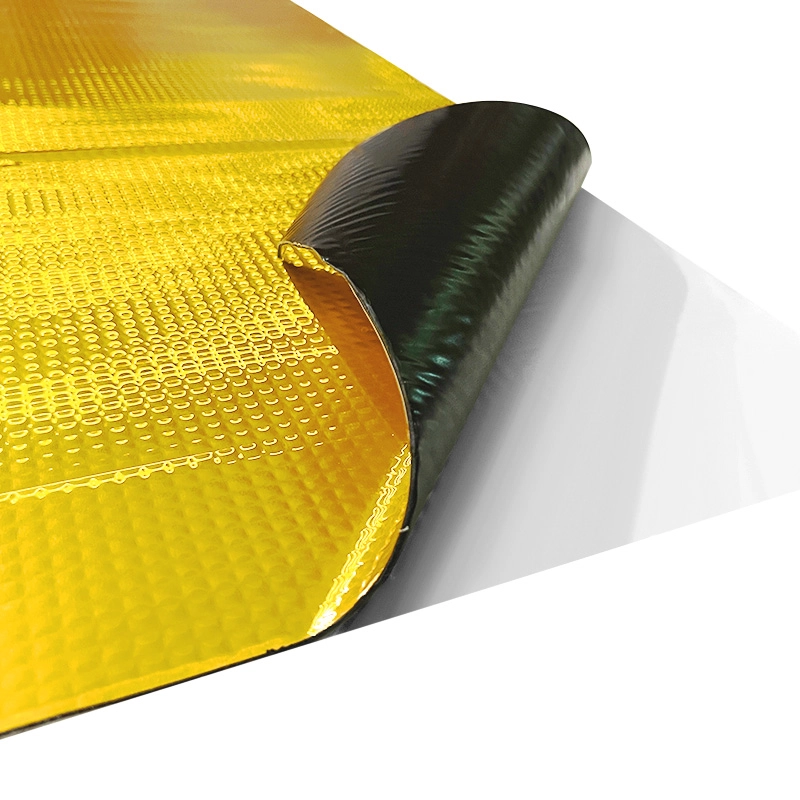
Premium Butyl Sound Deadening Mat – Automotive Noise & Heat Insulation with Aluminum Foil Layer
High-performance butyl rubber sound deadening mat designed to reduce road noise and heat inside vehicles. Backed with reflective aluminum foil, it provides superior thermal insulation, excellent vibration damping, and long-lasting adhesion. Ideal for cars, trucks, vans, and industrial applications.
Professional support at any time
Contact us for a free quote on our new soundproofing materials!
© 2026 ASLONG All Rights Reserved. Privacy Policy | Terms and Conditions | Sitemap

 It would be pleasure to receive from you.
Whatsapp: +8613242879341
ASLONG Global
ASLONG
Aslong_global