

Automotive Sound Deadening Mat for Car Noise Reduction and Heat Insulation
Learn how automotive sound deadening mats reduce car noise, panel vibration and heat transfer. Discover butyl mats, foam insulation, MLV and the best areas for installation.
- Automotive Sound Deadening Mat for Car Noise Reduction and Heat Insulation: A Complete Guide
- What Is an Automotive Sound Deadening Mat?
- How Does Car Sound Deadening Work?
- Why Use Butyl Sound Deadening Mats?
- Sound Deadening Mat vs. Acoustic Foam
- Can Sound Deadening Material Also Provide Heat Insulation?
- Best Places to Install Car Sound Deadening Mats
- 1. Car Doors
- 2. Car Floor
- 3. Firewall
- 4. Roof
- 5. Trunk and Rear Cargo Area
- Conclusion
- FAQ
Automotive Sound Deadening Mat for Car Noise Reduction and Heat Insulation: A Complete Guide
Driving should be comfortable, quiet and relaxing, but unwanted noise and heat can make even a well-designed vehicle feel uncomfortable.
Road and tire noise can enter through the floor and wheel wells. Engine and exhaust noise can travel through the firewall and floor. Wind noise can become noticeable around doors and roof panels. At the same time, heat from the engine, transmission, exhaust system and road surface can transfer through the vehicle's metal structure.
One effective way to improve vehicle comfort is to use an automotive sound deadening mat together with appropriate acoustic and thermal insulation materials.
However, not all automotive insulation materials perform the same function.
Some materials are designed primarily to control panel vibration. Others help absorb or decouple sound, while heavier barrier materials such as Mass Loaded Vinyl (MLV) are designed to block airborne noise.
Understanding these differences is important when designing a complete car sound deadening and heat insulation system.
What Is an Automotive Sound Deadening Mat?
An automotive sound deadening mat is a material designed to reduce vibration and unwanted noise generated by vehicle body panels.
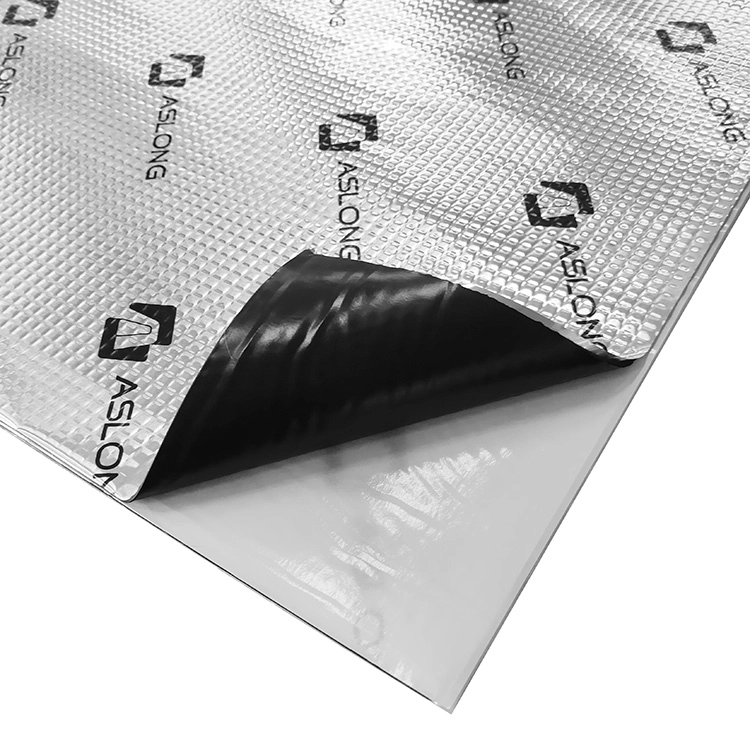
A common construction consists of a viscoelastic butyl rubber layer combined with an aluminum foil or other facing material. The mat is installed directly onto metal surfaces such as doors, floors, roofs, trunks and other body panels.
When a vehicle travels over rough roads, the metal panels can vibrate. These vibrations may create a drumming, buzzing or resonating sound inside the cabin.
A properly installed sound deadening mat helps reduce this panel vibration.
Butyl-based constrained-layer damping materials are commonly used because the viscoelastic layer can dissipate vibrational energy when the metal panel moves.
This is why butyl sound deadening mats are widely used in automotive NVH applications.
How Does Car Sound Deadening Work?
Car noise does not come from a single source, and it does not travel through the vehicle in only one way.
A vehicle can experience several different types of unwanted sound:
1. Structure-Borne Noise
Structure-borne noise is transmitted through the vehicle's physical structure.
For example:
- Tire vibration
- Road impact
- Engine vibration
- Exhaust vibration
- Body panel resonance
- Suspension-related vibration
Thin metal panels can resonate when exposed to these vibrations.
A sound deadening mat helps reduce the vibration of these panels before it becomes a larger noise problem.
2. Airborne Noise
Airborne noise travels through air and can enter the passenger compartment through:
- Doors
- Floor
- Firewall
- Roof
- Trunk
- Wheel wells
- Gaps around interior components
Butyl damping material and airborne sound barriers perform different functions. A complete acoustic system may therefore combine damping materials with foam and MLV barriers.
3. Heat Transfer
Heat is another issue.
Heat can enter the cabin through:
- Engine compartment
- Transmission tunnel
- Exhaust system
- Vehicle floor
- Firewall
- Roof exposed to sunlight
This is why car sound deadening and heat insulation are often considered together when designing automotive interior insulation.
Why Use Butyl Sound Deadening Mats?
Butyl rubber is widely used in automotive sound deadening because it combines flexibility, adhesion and vibration-damping characteristics.
A typical butyl sound deadening mat may include:
Aluminum foil + butyl rubber + self-adhesive layer
The aluminum layer can provide structural support and a protective surface, while the butyl layer is responsible for the damping function.
The adhesive layer allows the material to bond directly to the vehicle panel.
Advantages of Butyl Sound Deadening Mats
Depending on the formulation and construction, automotive butyl mats can provide:
- Vibration damping
- Panel resonance reduction
- Noise reduction
- Flexible installation
- Strong surface adhesion
- Moisture resistance
- Compatibility with automotive interior applications
For manufacturers and professional installers, material consistency is particularly important. Thickness, density, adhesive performance and temperature resistance should all be considered rather than choosing a product based only on its appearance.
Sound Deadening Mat vs. Acoustic Foam
One common mistake is assuming that all soundproofing materials work in the same way.
They do not.
Butyl sound deadening mat and acoustic foam perform different jobs.
| Material | Main Function | Typical Application |
|---|---|---|
| Butyl sound deadening mat | Vibration damping | Doors, floor, roof, trunk |
| Closed-cell foam | Decoupling & thermal insulation | Doors, floor, roof |
| Acoustic foam | Sound absorption | Interior trim and cavities |
| MLV | Airborne noise blocking | Floor, firewall, trunk |
| Thermal insulation foam | Heat insulation | Floor, firewall, hood |
Butyl mats are generally installed directly against the metal panel, while foam can be used as a secondary layer. MLV is a heavier sound barrier intended to block airborne noise rather than primarily damp panel vibration.
Can Sound Deadening Material Also Provide Heat Insulation?
Yes, but the level of thermal insulation depends heavily on the material construction.
A butyl damping mat is primarily designed to control vibration. It should not automatically be treated as a complete thermal insulation solution.
For stronger thermal performance, automotive manufacturers and aftermarket installers often combine damping materials with closed-cell foam or other thermal insulation materials.
Closed-cell foam can provide:
- Thermal resistance
- Decoupling
- Moisture resistance
- A separation layer between materials
- Additional acoustic benefits
This layered approach is particularly useful for vehicle floors, doors and roof panels.
Best Places to Install Car Sound Deadening Mats
The installation location has a major impact on the result.
You do not necessarily need to treat every part of a vehicle with the same material.
1. Car Doors
Doors are one of the most popular locations for sound deadening.
Door panels can vibrate because of:
- Road noise
- Speakers
- Wind noise
- Mechanical vibration
Installing a butyl sound deadening mat onto appropriate metal surfaces can help reduce panel resonance.
For vehicles with upgraded audio systems, door damping can also help create a more stable mounting environment for speakers.
2. Car Floor
The floor is one of the most important areas for reducing road and tire noise.
Noise can travel from:
Road → tires → suspension → vehicle floor → cabin
At the same time, heat from the exhaust and transmission can transfer through the floor.
For this reason, a layered system consisting of:
Butyl damping mat + thermal/acoustic foam + sound barrier
can be considered when more comprehensive noise and heat control is required.
3. Firewall
The firewall separates the engine compartment from the passenger cabin.
It can transmit:
- Engine noise
- Mechanical vibration
- Engine heat
- Exhaust-related heat
The firewall is therefore an important area for both automotive sound insulation and heat insulation.
Material selection should take the temperature environment and available installation space into account.
4. Roof
The roof can transmit:
- Rain noise
- Wind noise
- Exterior airborne noise
- Vibration
The roof can also become extremely hot after prolonged exposure to sunlight.
A combination of damping material and lightweight thermal insulation can improve cabin comfort without unnecessarily adding excessive weight.
5. Trunk and Rear Cargo Area
The trunk can be a significant source of road and tire noise.
This is especially noticeable in:
- Hatchbacks
- SUVs
- Pickup trucks
- Vehicles with large cargo areas
The rear floor, quarter panels and wheel-well areas can be treated according to the vehicle's noise characteristics.
Conclusion
An automotive sound deadening mat can be an important component of a vehicle NVH and thermal insulation system.
Butyl damping mats are primarily used to reduce structural vibration and panel resonance. Closed-cell foam can provide decoupling and thermal insulation, while MLV and other dense acoustic barriers can help block airborne noise.
For this reason, the most effective automotive sound insulation system is usually based on identifying the source of the noise first and then selecting the appropriate material for each application.
Whether the goal is car road noise reduction, tire noise control, door sound deadening, floor insulation, heat insulation or improved audio performance, material selection and installation quality both play an important role.
A well-designed combination of butyl sound deadening mat, acoustic foam, thermal insulation and sound barrier materials can provide a more comprehensive approach to automotive noise and heat management.
FAQ
1. What is the best material for car sound deadening?
There is no single material that is best for every application. Butyl damping mats are commonly used to control body-panel vibration, while foam and MLV can provide additional decoupling, thermal insulation and airborne noise blocking.
2. Does butyl sound deadening reduce road noise?
Butyl sound deadening mats can reduce vibration and panel resonance associated with road and tire noise. For airborne road noise, additional acoustic barrier or insulation layers may be required.
3. Can sound deadening mats reduce car heat?
Some automotive sound deadening products can contribute to thermal insulation, but dedicated thermal insulation materials such as closed-cell foam are generally used when heat insulation is an important objective.
4. Where should I install car sound deadening?
Common installation areas include doors, floor, roof, trunk, wheel wells and firewall. The best location depends on the source of the noise and the construction of the vehicle.

Mass Loaded Vinyl for Buildings: Soundproofing Guide
Composite Sound Insulation Materials: Multilayer Acoustic Solutions for Noise Control
Where to Install Car Soundproofing Materials for Maximum Noise Reduction
How Car Soundproofing Materials Reduce Road, Tire and Engine Noise
How Does Butyl Sound Deadening Mat Thickness Affect Noise and Vibration Reduction?
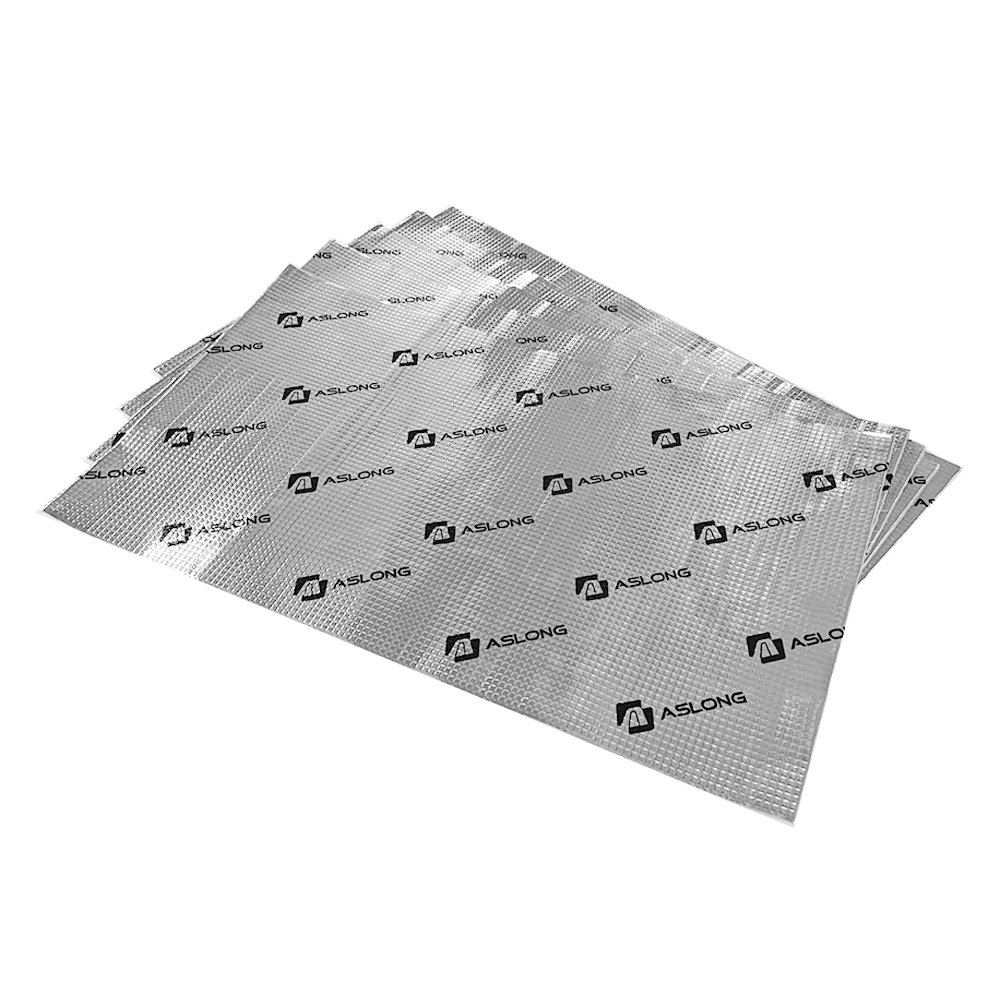
Butyl Rubber sound deadening mat manufacturer for Vehicles/EV cars
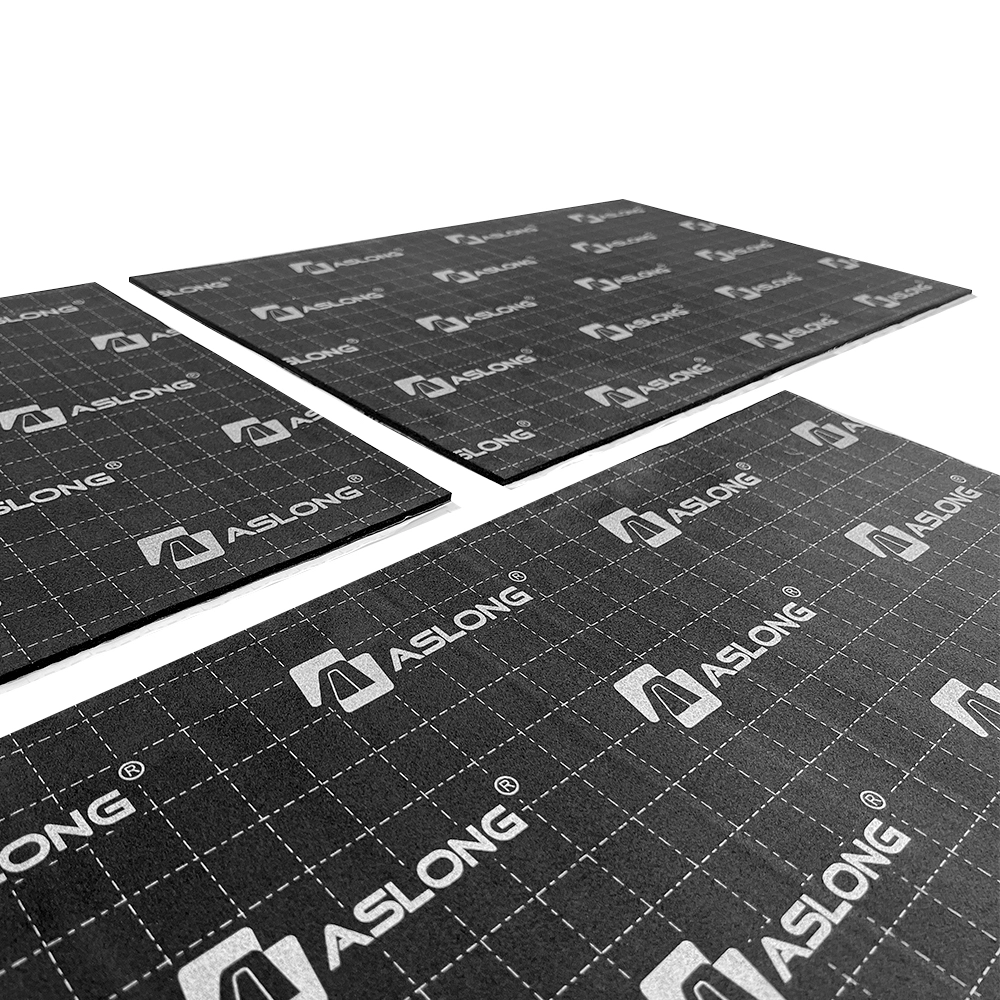
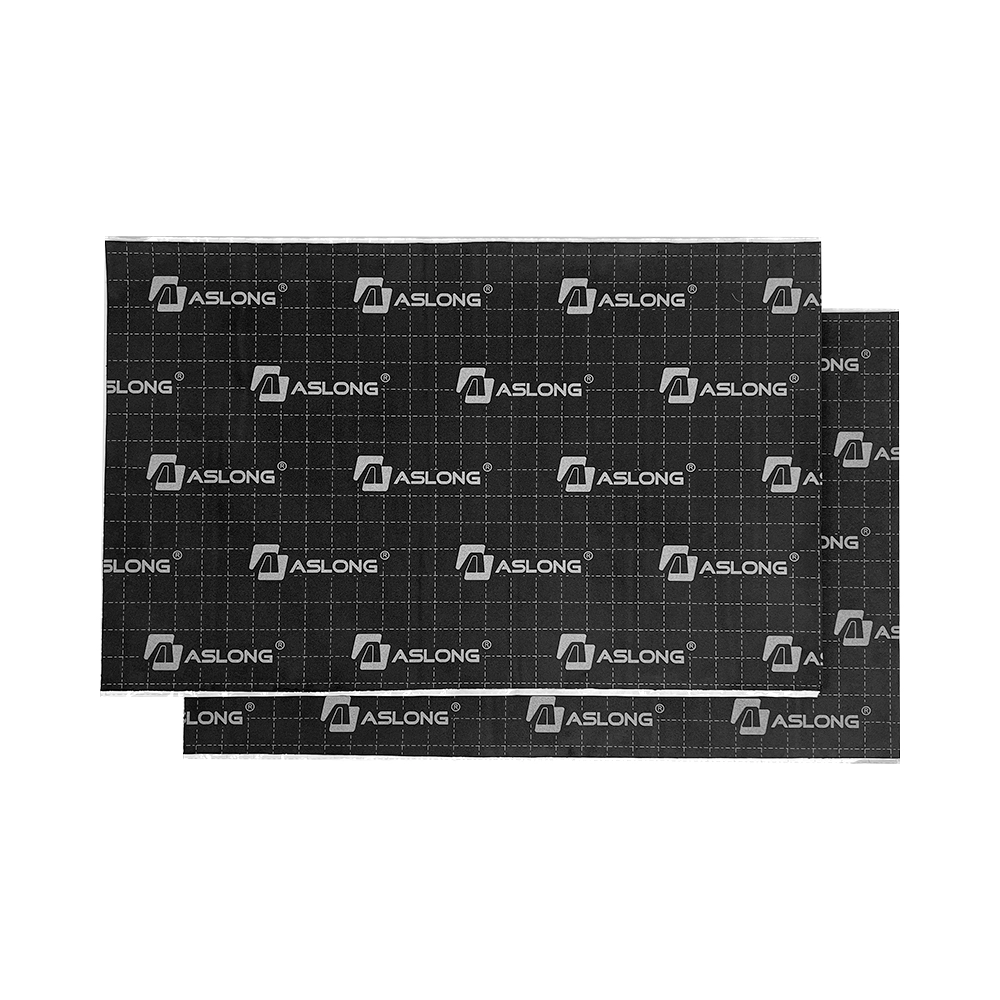
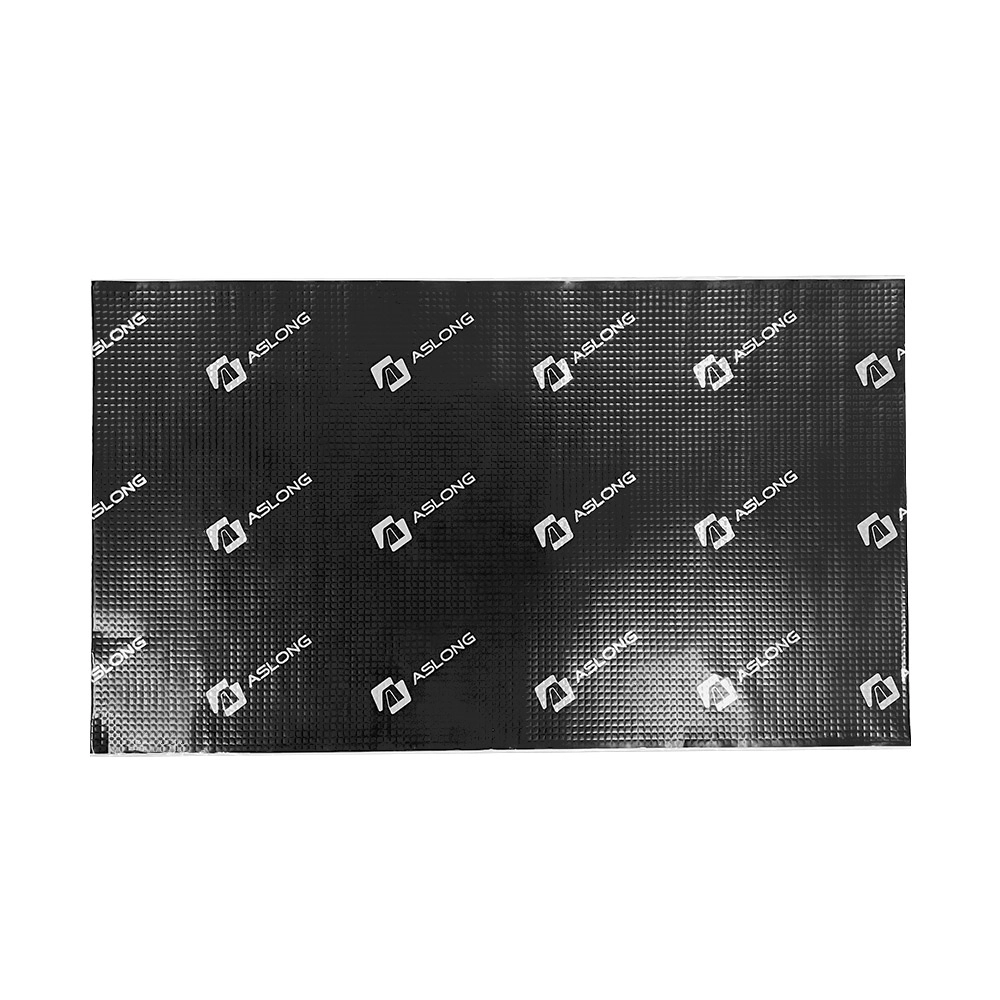
ASLONG Self Adhesive Automotive Sound Deadening and Heat Insulation Mat is designed to help reduce unwanted road noise, vibration and heat transfer inside vehicles.
Featuring an embossed aluminum foil surface and a self-adhesive backing, the material can be applied to various automotive areas such as doors, floors, roofs, trunks, wheel arches and other interior panels.
The flexible construction makes it easy to cut and install according to different vehicle shapes. It is suitable for automotive aftermarket applications as well as OEM projects.
Professional support at any time
Contact us for a free quote on our new soundproofing materials!
© 2026 ASLONG All Rights Reserved. Privacy Policy | Terms and Conditions | Sitemap

 It would be pleasure to receive from you.
Whatsapp: +8613242879341
ASLONG Global
ASLONG
Aslong_global