

Mass Loaded Vinyl for Floors: Buyer's Guide & Specs

- How High-Density Vinyl Floor Barriers Work
- Surface mass and transmission loss
- Airborne noise versus impact noise
- Where the barrier is installed
- Buyer Specifications, Testing, and Installation Controls
- Core technical data to request
- Understanding acoustic test evidence
- Installation risk and quality assurance
- Choosing a Supplier for Commercial Floor Noise Control
- Compare total project value, not roll price
- ASLONG acoustic material capabilities
- Project support and global distribution
- Frequently Asked Questions
- What is mass loaded vinyl used for in a floor assembly?
- Does a thicker vinyl barrier always provide better acoustic performance?
- Can this material eliminate footsteps from the room below?
- What documents should a commercial buyer request from the supplier?
- How should seams and edges be treated?
- Why should buyers assess the supplier’s production capacity?
Mass loaded vinyl for floors is a flexible, high-density sound barrier used beneath floor finishes, floating floors, wall assemblies, ceilings, vehicle platforms, and equipment enclosures to reduce airborne sound transmission. For procurement teams, the correct selection depends on more than nominal thickness: surface mass, dimensional tolerance, tear resistance, fire classification, moisture behavior, compatibility with adhesives and underlayments, laboratory test evidence, installation detailing, and supply continuity all influence project results. A reliable specification should distinguish airborne sound insulation from impact-noise reduction, define the complete floor build-up, and require documentation that allows acoustic performance, safety, and quality to be verified before installation.
How High-Density Vinyl Floor Barriers Work
Surface mass and transmission loss
Mass-loaded vinyl, often abbreviated MLV, is a limp, dense polymer sheet designed to add surface mass without the rigidity and thickness associated with mineral boards, concrete layers, or masonry. Its principal acoustic function is to make a partition or floor assembly harder to excite with airborne sound. In simplified terms, increasing the mass of a separating layer can improve sound transmission loss, but actual field performance depends on the entire assembly, including structural flanking paths, penetrations, joints, resilient connections, and the finish floor.
Buyers should avoid treating a material’s weight alone as a guarantee of room-to-room isolation. A heavy barrier installed with gaps, compressed edges, unsealed service penetrations, or rigid bridges may underperform a lighter system installed continuously and correctly. The procurement brief should therefore state the required mass per unit area, acceptable thickness tolerance, roll dimensions, seam treatment, and installation method rather than relying only on a generic product name.
Airborne noise versus impact noise
Footsteps, dropped objects, furniture movement, and vibration from machinery are impact or structure-borne sources. A limp barrier can contribute to the floor assembly, but it is not a complete impact-isolation solution by itself. Impact control usually requires a resilient layer, floating screed or panel system, perimeter isolation, and a finish that does not create rigid acoustic bridges. For airborne speech, television, music, or equipment noise, the dense barrier works primarily by increasing the mass of the separating construction.
Project teams should define the dominant noise path before selecting a material. For residential apartments, the design may need both airborne separation and impact-sound improvement. For hotels and offices, speech privacy and mechanical-system noise may be the priority. For studios, cinemas, plant rooms, or industrial facilities, low-frequency energy and structure-borne vibration may require additional decoupling and damping treatments.
Where the barrier is installed
Common floor applications include placement below plywood or oriented strand board, between layers of a floating floor, above a structural slab, under carpet systems, and within raised-access floor constructions. The correct position depends on the assembly design and the manufacturer’s installation guidance. The sheet should remain continuous across the designated area, with carefully treated overlaps and perimeter joints. Door thresholds, columns, drainage penetrations, electrical boxes, expansion joints, and changes in floor level require specific detailing because these locations often become the weakest acoustic points.
MLV should not be confused with sound-absorbing cotton, open-cell foam, or thermal insulation. Absorbers reduce reflections inside a cavity or room; dense barriers reduce transmission through a construction. In many successful systems, the barrier is combined with porous absorption, resilient decoupling, vibration control, and airtight sealing. The resulting performance comes from the assembly rather than a single product in isolation.
Buyer Specifications, Testing, and Installation Controls
Core technical data to request
A commercial specification should require a technical data sheet and batch-level quality records covering nominal thickness, mass per unit area, roll width and length, tensile or tear properties, elongation, dimensional stability, temperature range, water behavior, odor, and surface compatibility. For projects with strict indoor-environment requirements, buyers should also request information about volatile emissions, restricted substances, recycled content, and applicable environmental declarations. The relevant criteria vary by country, building type, and certification program, so generic claims such as “green,” “non-toxic,” or “acoustic grade” should not replace test documentation.
- Define the target acoustic outcome, such as improved airborne sound insulation or a specified impact rating for the complete floor assembly.
- State the required surface mass in kilograms per square metre and the permitted tolerance.
- Specify thickness, roll size, joint overlap, adhesive or tape type, and acceptable substrate conditions.
- Confirm fire, smoke, moisture, and indoor-air requirements for the project jurisdiction.
- Require installation drawings showing perimeter isolation, penetrations, transitions, and service openings.
Understanding acoustic test evidence
Laboratory test results should identify the complete tested construction, not only the flexible barrier. ISO 10140-2 addresses laboratory measurement of airborne sound insulation of building elements, while ISO 717-1 provides rating procedures for airborne sound insulation in buildings and building elements. These standards help buyers compare test methods, but a result from one floor build-up cannot automatically be transferred to another slab, joist spacing, finish, or ceiling condition.
Impact performance should be assessed using an appropriate complete-floor test method and rating system. In North American procurement, buyers may encounter ASTM E90 for laboratory airborne sound transmission loss and ASTM E492 for laboratory impact sound transmission through floor-ceiling assemblies. The ASTM E90 standard page and ASTM E492 standard page should be consulted for current editions and scope. Product literature should clearly identify whether reported values are laboratory measurements, calculated estimates, or field observations.
Installation risk and quality assurance
Most floor-barrier failures are caused by discontinuity or poor integration with adjacent materials rather than by the concept of mass addition. Before delivery, the installer should inspect the substrate for protrusions, standing water, dust, oil, cracks, and unevenness. Rolls should be stored flat or according to supplier instructions, protected from excessive heat and direct weather exposure, and acclimatized when required by the adhesive system.
During installation, seams should be overlapped or butted and sealed according to the approved method. Perimeter edges should be isolated where the design requires a floating floor. Fasteners, penetrations, and transitions should be minimized or acoustically treated. A photographic inspection record before covering the barrier can protect the project against disputes and provide evidence that the specified coverage was achieved.
| Procurement item | What it controls | Evidence to request | Common risk if omitted |
|---|---|---|---|
| Surface mass | Primary mass contribution to the floor assembly | Technical data sheet and batch tolerance | Under-designed acoustic separation |
| Thickness and dimensions | Floor height, detailing, and coverage yield | Declared dimensions and inspection records | Threshold conflicts or installation gaps |
| Complete assembly test | Expected airborne or impact performance | Laboratory report identifying all layers | Unrealistic field expectations |
| Fire and emissions data | Regulatory and indoor-environment compliance | Current certificates or test reports | Approval delays or material substitution |
| Adhesive and seam compatibility | Continuity and long-term bonding | Installation instructions and compatibility statement | Peeling, movement, or acoustic leakage |
| Supply capacity | Programme continuity and repeatability | Production lead time and quality plan | Unplanned substitutions and schedule loss |
Choosing a Supplier for Commercial Floor Noise Control
Compare total project value, not roll price
The lowest quoted price per roll may not be the lowest installed cost. Buyers should calculate usable coverage after overlaps, cutting waste, perimeter returns, and damaged sections. Freight density, packaging, unloading requirements, local inventory, technical support, and replacement lead time can materially affect the budget. A supplier that provides consistent roll dimensions and clear installation documentation may reduce labour and rework even when the initial material price is not the lowest.
Supplier evaluation should also consider manufacturing traceability, production capacity, export experience, response time for technical submittals, and the ability to support repeat orders. For distributors and private-label brand owners, packaging, labelling, pallet configuration, minimum order quantity, and regional compliance documents are important commercial factors. A pre-award sample approval and defined change-control procedure can prevent an unannounced alteration in polymer formulation, thickness, colour, or backing.
ASLONG acoustic material capabilities
ASLONG, operated by Welllink Guangdong New Material Co., Ltd., was founded in 2000 and is a high-tech enterprise specializing in the research and development, production, and sales of acoustic materials, sound insulation materials, shock-absorbing materials, and related products. Our modern production base covers more than 10,000 square meters and supports efficient, environmentally responsible, and high-performance material solutions for customers in international markets.
Our product portfolio includes Mass Loaded Vinyl for building and industrial sound-barrier applications, Butyl Rubber Sound Damping Mat for panel resonance control, NBR Foam for resilient and sealing functions, Sound Absorbing White Cotton for porous absorption, Tire Silent Foam for automotive noise reduction, Butyl waterproof tape for sealing and moisture-control details, and Electric auxiliary material for selected electrical installation needs. This combination allows project teams to coordinate complementary layers instead of sourcing every acoustic component from unrelated suppliers.
Project support and global distribution
Our engineering and manufacturing approach is suited to construction, automotive, residential, industrial, and entertainment-facility applications. ASLONG products have been exported to Europe, North America, Asia, Africa, and other regions, giving distributors and project owners a practical basis for international sourcing discussions. Product selection remains dependent on the assembly, regulations, and installation conditions of each project; therefore, technical documents, samples, and application details should be reviewed before purchase.
For large developments, our team can help buyers organize a material schedule around acoustic barriers, damping layers, resilient foam, absorptive products, and sealing accessories. This approach supports more consistent procurement, clearer site instructions, and easier quality control. Brand owners and distributors seeking a long-term manufacturing partner can also discuss packaging, agent cooperation, market development, and recurring supply planning. ASLONG is recruiting agents worldwide. Product information is available at the ASLONG official website, and commercial inquiries can be directed to king@aslong.cc.
Frequently Asked Questions
What is mass loaded vinyl used for in a floor assembly?
It is used as a dense, flexible sound barrier that adds surface mass and helps reduce airborne sound transmission through a floor or floor-ceiling construction. It may be combined with resilient underlayments, floating layers, absorbers, and damping materials when the project also needs impact or structure-borne noise control.
Does a thicker vinyl barrier always provide better acoustic performance?
Not necessarily. Thickness often correlates with surface mass, but the complete assembly, continuity, decoupling, flanking paths, and installation quality determine field performance. Buyers should compare surface mass and complete-system test evidence rather than thickness alone.
Can this material eliminate footsteps from the room below?
No single sheet can guarantee elimination of footstep noise. Footstep control generally requires a properly designed impact-isolation system with resilient layers, floating construction, perimeter separation, and suitable floor finishes. A dense barrier may contribute to the system but should not be specified as the sole impact solution.
What documents should a commercial buyer request from the supplier?
Request a technical data sheet, dimensional and mass tolerances, safety and fire information where applicable, emissions or restricted-substance documentation, installation instructions, adhesive compatibility information, quality-control records, and laboratory reports that identify the tested floor assembly and measurement standard.
How should seams and edges be treated?
Seams and edges should follow the approved installation design. Depending on the assembly, this may involve controlled overlaps, acoustic tape, compatible adhesive, sealed penetrations, and perimeter isolation. Unsealed joints, rigid bridges, and untreated service openings can create acoustic leakage.
Why should buyers assess the supplier’s production capacity?
Floor projects often require repeat deliveries, consistent dimensions, and matching material properties across several construction phases. Confirmed production capacity, batch traceability, lead times, packaging standards, and change-control procedures reduce the risk of substitution, delays, and inconsistent acoustic results.
Contact ASLONG at king@aslong.cc or visit https://www.aslong.cc to discuss project specifications, samples, distribution opportunities, and sound insulation material solutions.
How to Choose the egg crate foam roll manufacturer and supplier ?
Installation Techniques for Nitrile Rubber Foam Soundproofing
High Density NBR Foam Buyer's Guide for Sound Insulation
Tips for buy anti puncture tire sealant from China
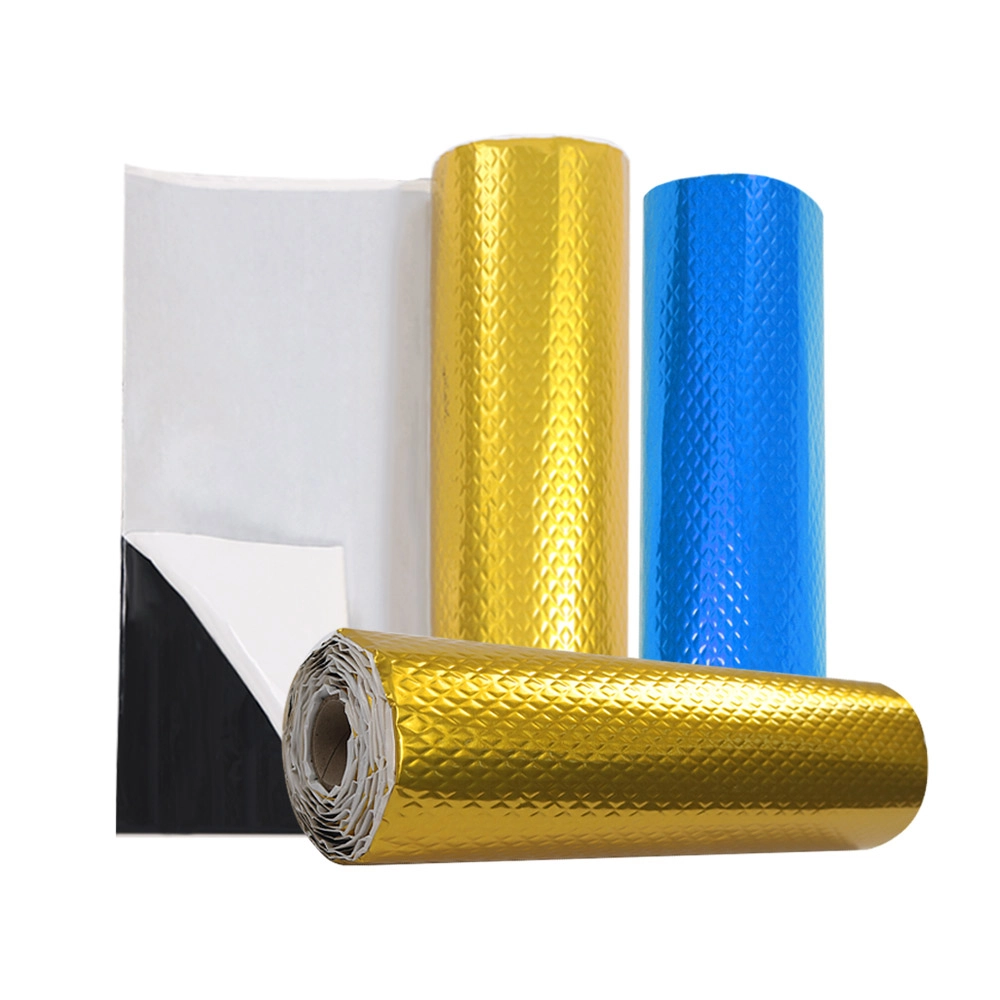
Butyl Rubber Sound Damping Mat
ASLONG Butyl Rubber Sound Damping Mat for sale. Effectively reduces noise and vibrations. High-quality butyl rubber ensures superior performance and durability. Ideal for automotive, industrial, and home applications.
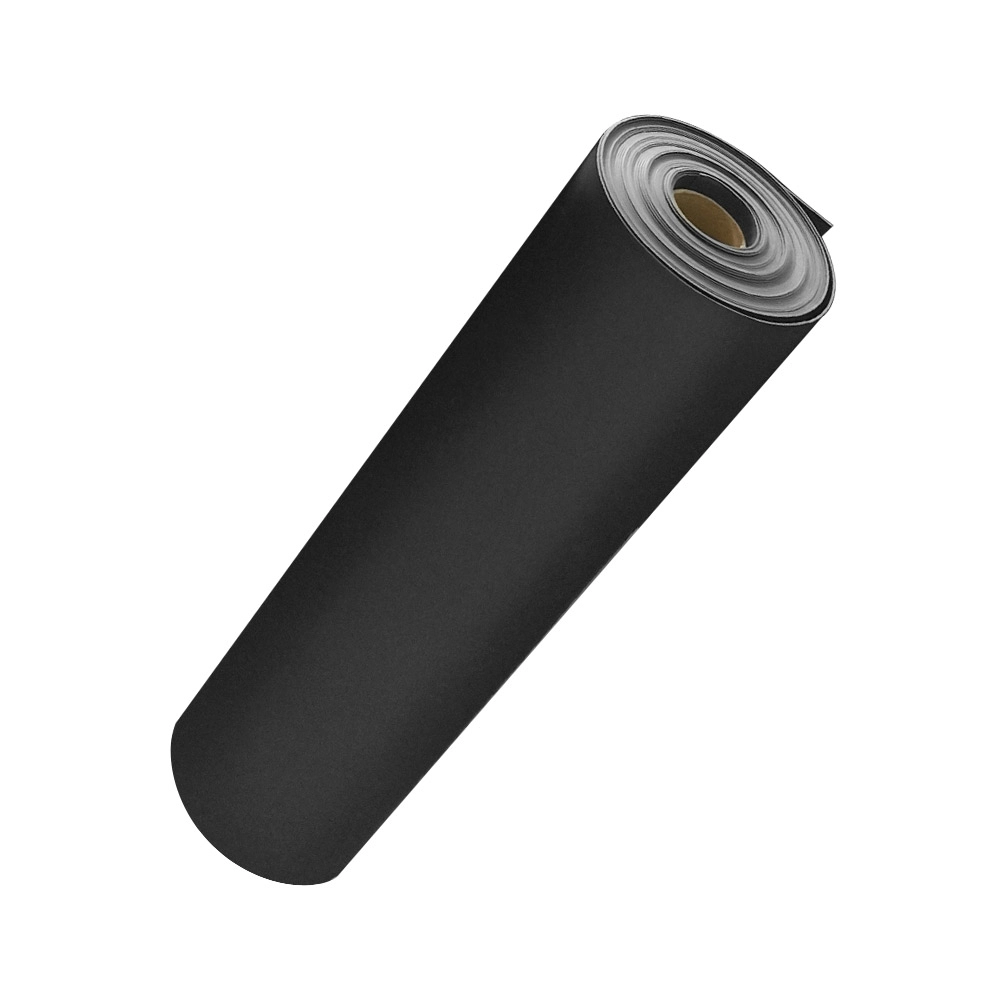
Mass Loaded Vinyl
ASLONG Mass Loaded Vinyl for sale. Reduce noise pollution effectively with our high-quality, mass-loaded vinyl. Ideal for soundproofing walls, floors, and more. Buy now and experience the difference!
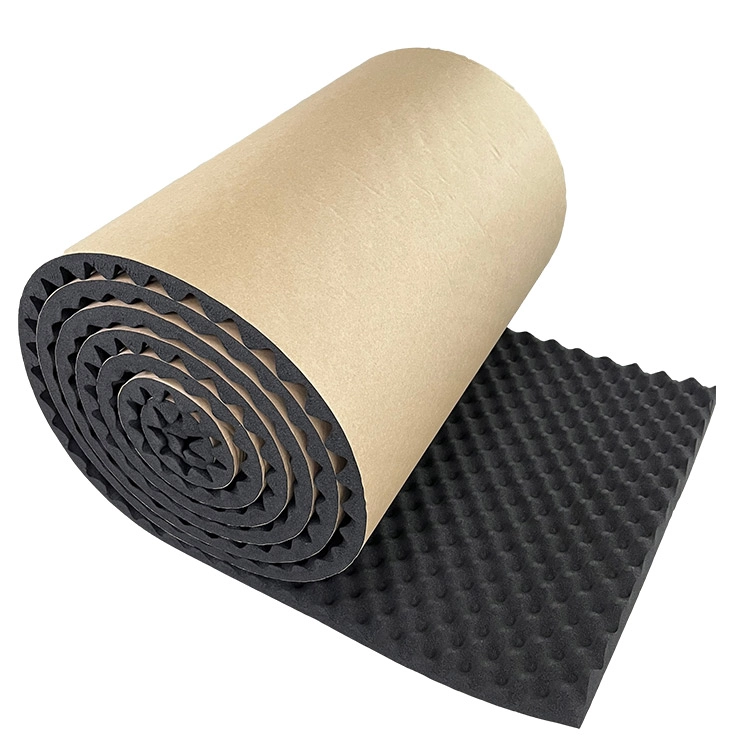
Egg Crate Foam
ASLONG Egg Crate Foam for sale. Lightweight, breathable, and comfortable, our egg crate foam provides superior support and pressure relief. Perfect for mattresses, cushions, cars, construction industry, KTV, factories, etc.
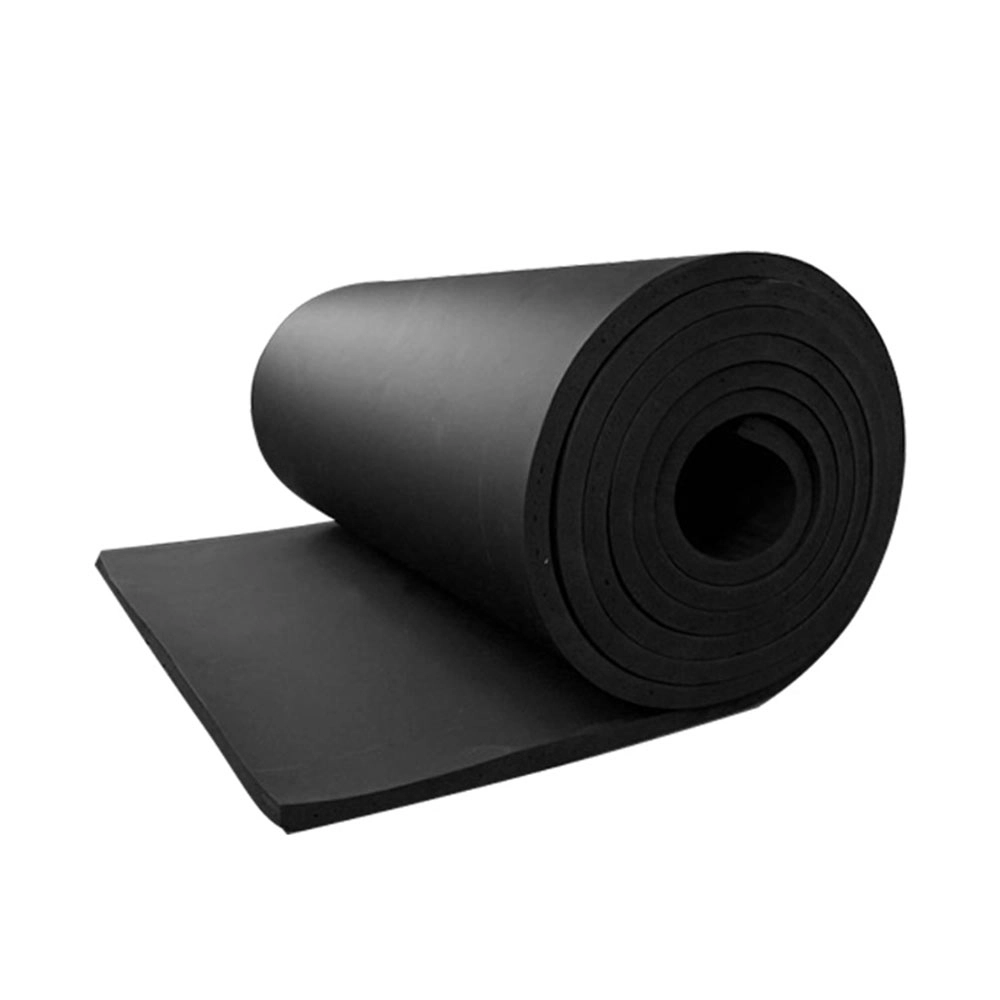
NBR Foam
ASLONG NBR Foam: Wholesale NBR foam solutions for diverse applications. High-quality, durable, and competitively priced. Contact us today for bulk orders.
Professional support at any time
If you have any comments or good suggestions, please leave us a message; later our professional staff will contact you as soon as possible.
© 2026 ASLONG All Rights Reserved. Privacy Policy | Terms and Conditions | Sitemap

 It would be pleasure to receive from you.
Whatsapp: +8613242879341
ASLONG Global
ASLONG
Aslong_global